Share with friends:
The engine is located in the front, and the drive is full on all wheels. The body is a three- or five-door SUV with a load-bearing frame (first two generations). The main classmates and competitors at the moment are Audi Q7, BMW X6, Chevrolet Suburban, Dodge Durango, Ford Explorer, Infiniti QX80, Jeep Wrangler, Kia Mohave, Lexus GX, Land Rover Range Rover, Mercedes G-Class, Nissan Patrol, Porsche Cayenne, SsangYong Rexton, Suzuki Grand Vitara, Toyota Land Cruiser, UAZ Patriot, Volkswagen Touareg and VAZ-2121.
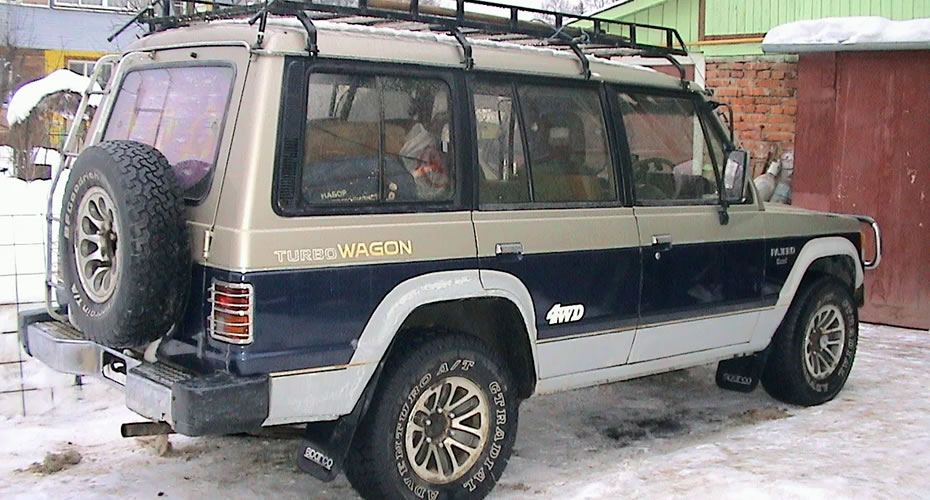
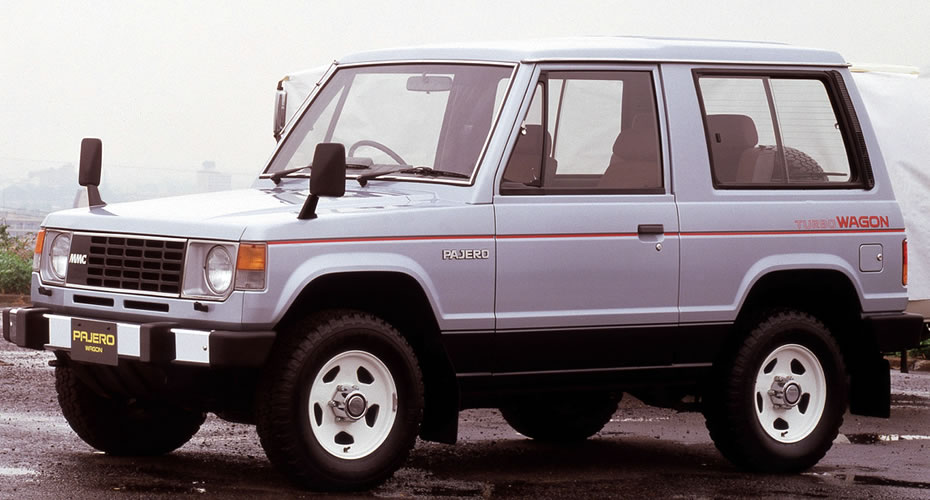
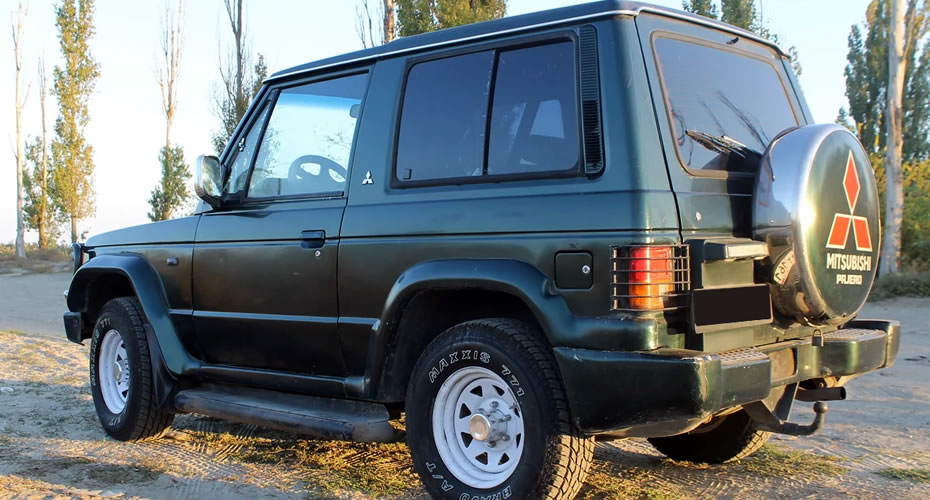
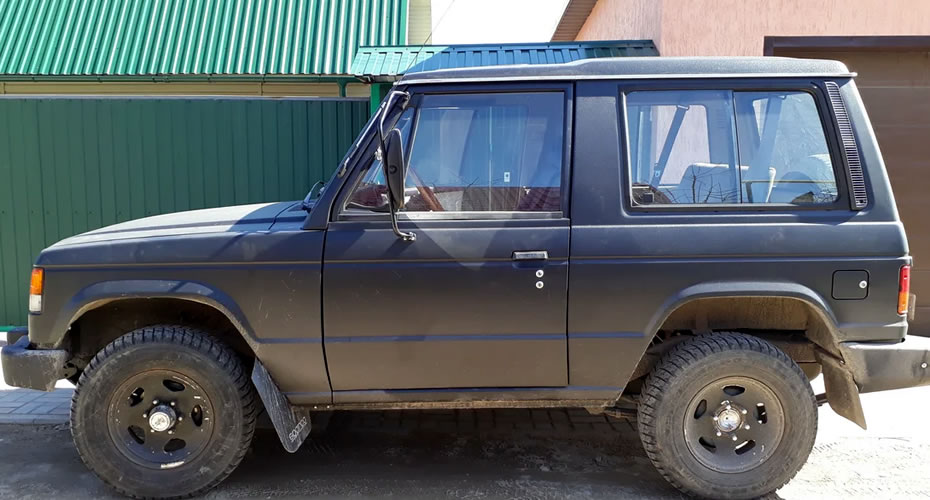
First generation (L040, 1982-1991)
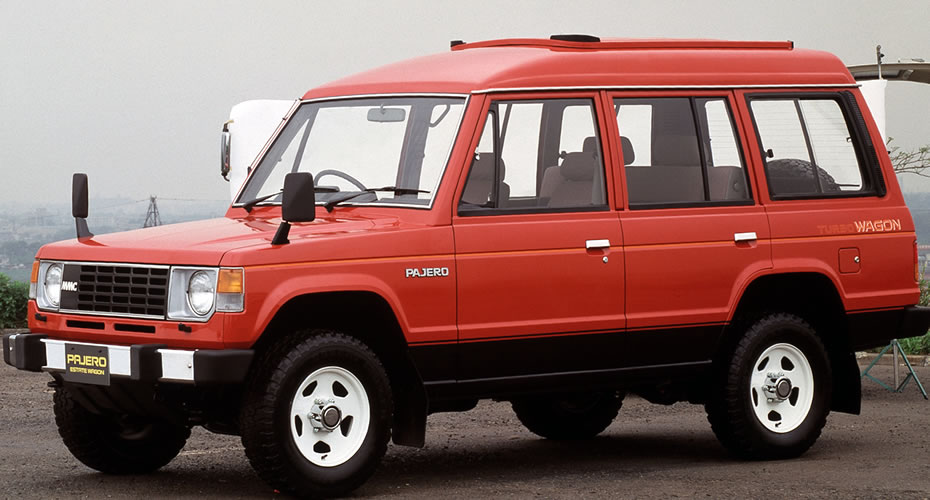
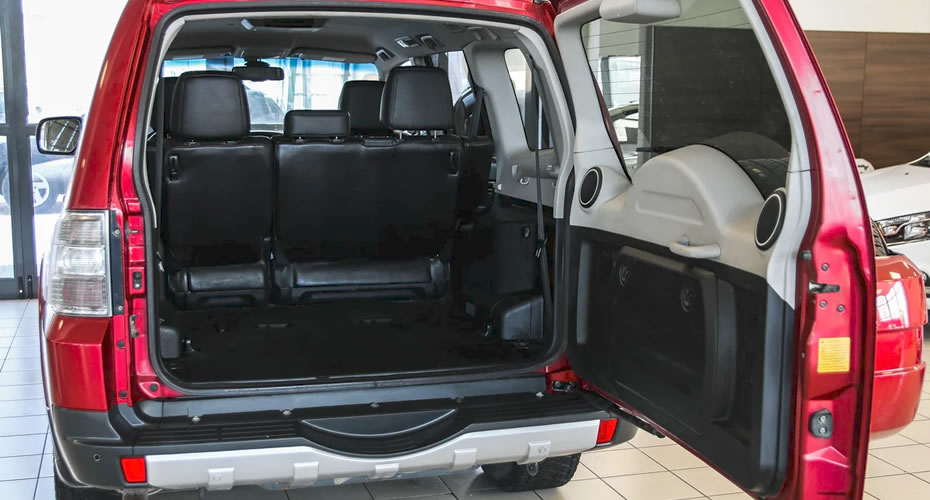
The first prototype of the Pajero was shown at the Tokyo Motor Show in November 1973, and again in 1978, five years later. The production version of the car was presented at the Tokyo Motor Show in October 1981, and sales began in May 1982. Initially, it was a three-door body with a short wheelbase with a metal or open top with an overall length of 3995 mm, a width of 1679 mm and a height of 1849 mm. In February 1983, a five-door model with a long wheelbase and an overall length of 4650 mm, a width of 1692 mm and a height of 1890 mm appeared. This car had three rows of seats and seven seats. In 1991, Hyundai acquired a license to produce the Pajero and began producing the SUV "Hyundai Galloper" until 2003.
There were two 2.0-liter models of the four-cylinder petrol engines (1997 cm³, 4G63, 110 hp) and 2.6 liters (2555 cm³, 4G54, 103 hp), and there was also one 3.0-liter V6 engine (2972 cm³, 6G72, 141 hp). There were four versions of the four-cylinder diesel engines, two naturally aspirated 2.3-liter units (2346 cm³, 4D55, 75 hp) and 2.5 liters (2476 cm³, 4D56, 95 hp), as well as two turbocharged 2.3-liter units (2346 cm³, 4D55T, 95 hp) and 2.5 liters (2476 cm³, 4D56T, 99 hp). The transmission is a five-speed manual or a four-speed automatic "Aisin".
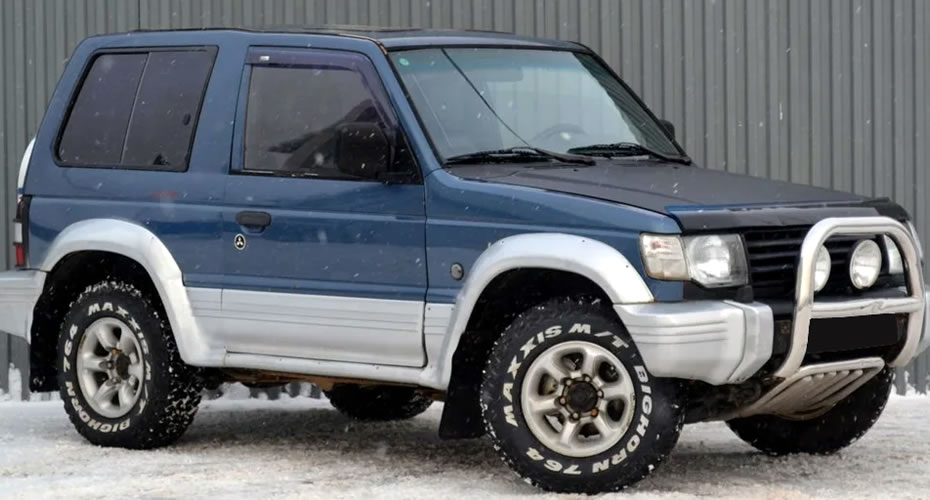
Second generation (V20, 1991-1999)
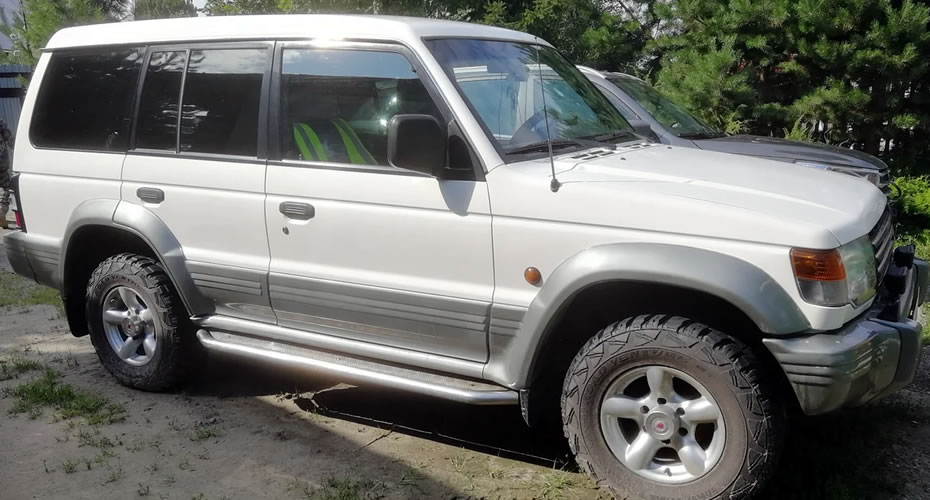
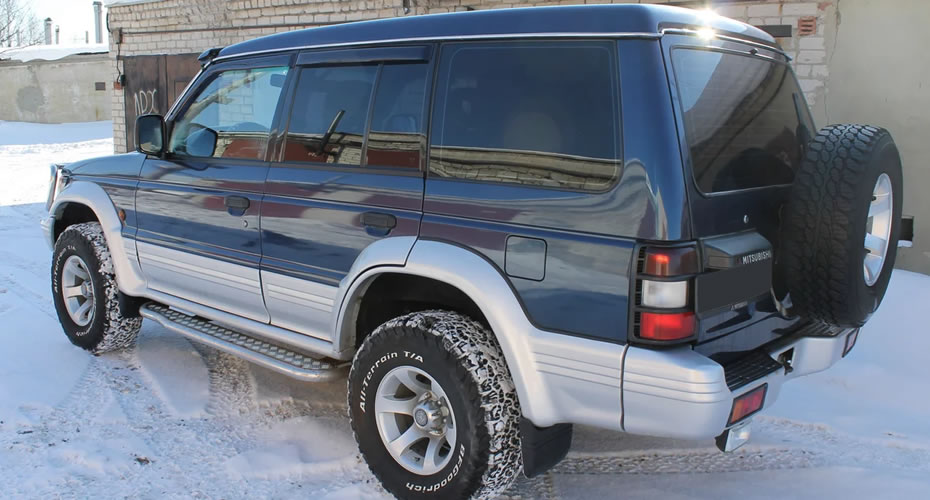
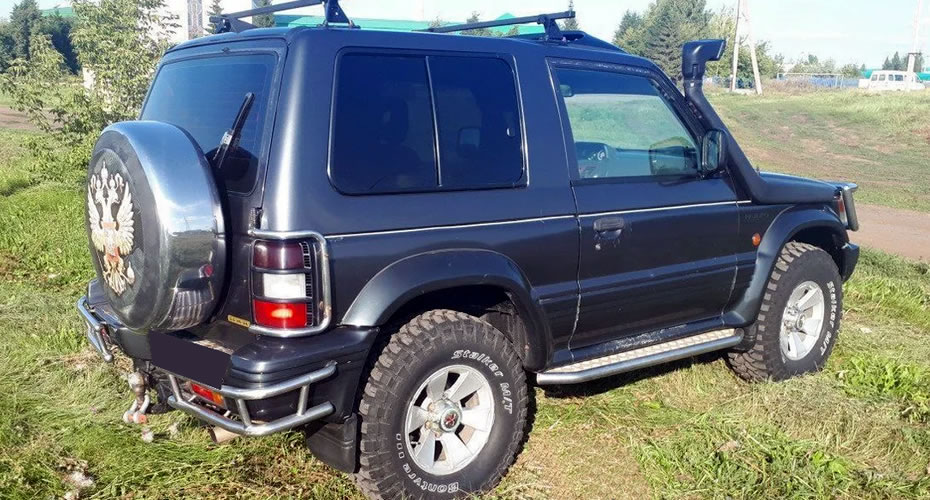
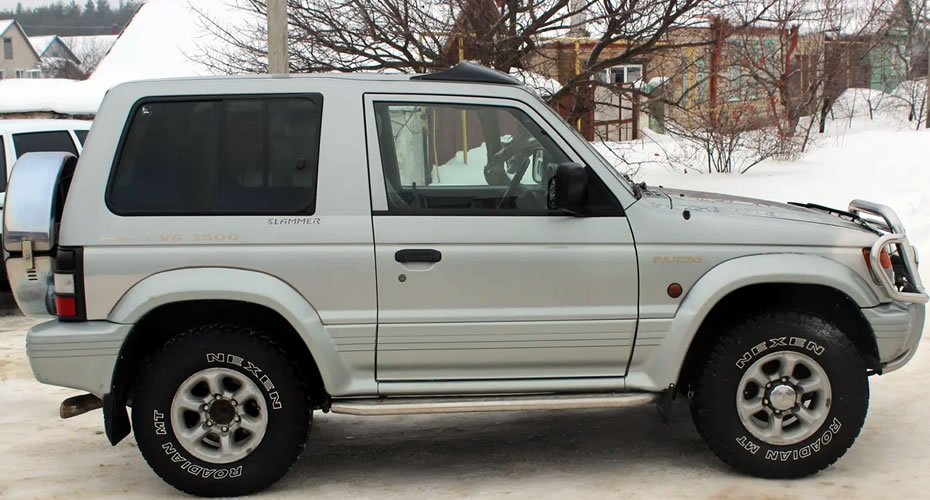
In January 1991, the second generation of Pajero appeared in Japan, export to other countries began later. The dimensions of the car have increased slightly. The three-door body was 4075 mm long, 1695 mm wide and 1835 mm high. The five-door body was 4655 mm long, 1695 mm wide and 1890 mm high. The curb weight was 1875 kg. The body was available in four versions - metal top, open top, semi-high and high roof. Options such as a mechanical winch, adjustable shock absorbers, hydraulic system for changing ground clearance, multi-mode ABS, etc. have become available. New transmission "Super-Select 4WD" (SS4) allows switching from rear to all-wheel drive at speeds up to 100 km/h. On the first generation, the car must be stationary for this operation. The differential lock was standard equipment.
There were two 2.4-liter four-cylinder petrol engines (2350 cm³, 4G64, 112 hp) and 2.6 liters (2555 cm³, 4G54, 103 hp). There were also two six-cylinder V-shaped petrol engines with a volume of 3.0 liters (2972 cm³, 6G72, 150-181 hp) and 3.5 liters (3497 cm³, 6G74, 194-208 hp). Diesel engines were four-cylinder turbocharged 2.5-liter units (2498 cm³, DK4A, 75 hp), 2.5 liters (2476 cm³, 4D56, 105 hp) and 2.8 liters (2835 cm³, 4M40, 125-140 hp). The gearbox was a five-speed manual, as well as a four- or five-speed automatic.
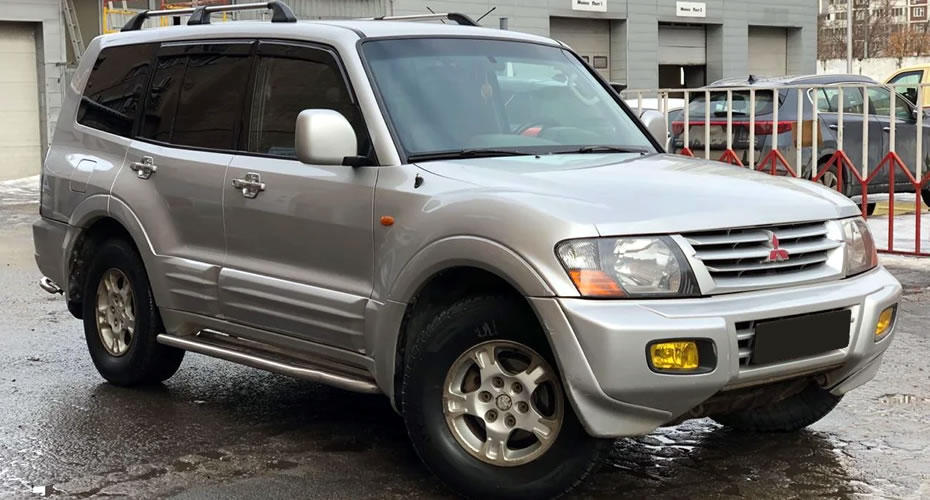
In 1998, export models received an update. The fenders have become wider, there are new headlights and fog lights, and the bumpers, radiator grille and side steps have also been changed. The interior trim has also undergone some changes. The first generation of the Pajero was also sold in parallel at the same time as "Hyundai Galloper" in Korea, Europe and other countries.
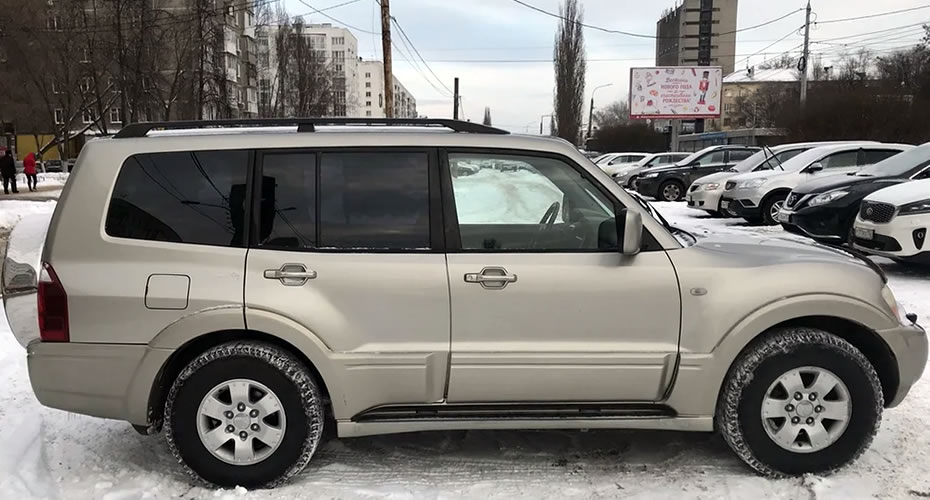
Third generation (V60, 1999-2006)
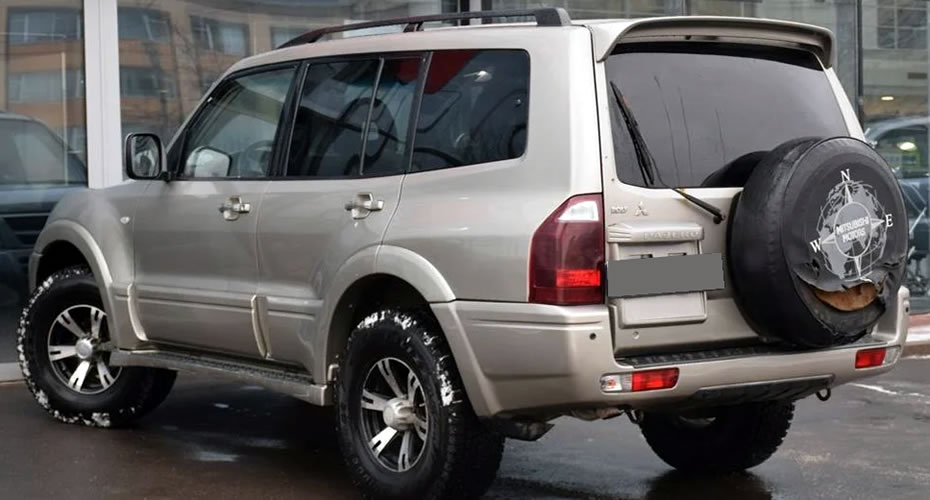
The third generation appeared in Japan in August 1999, and the car began to be exported at the end of 2000. The body became load-bearing, that is, the frame became integrated. They abandoned the use of a rear axle, replacing it with a gearbox. The body was still three-door (length 4219 mm, width 1875 mm, height 1844 mm) or five-door (length 4798-4831 mm, width 1877-1900 mm, height 1857-1885 mm), that is, the car became a little longer, wider and lower than the second generation. The curb weight was 1900-2075 kg. The steering became rack and pinion instead of the recirculating ball system of previous generations. The suspension became independent spring on all wheels.
The petrol engines were only six-cylinder V-shaped with a volume of 3.0 liters (2972 cm³, 6G72, 173 hp), 3.5 liters (3497 cm³, 6G74, 208 hp) and 3.8 liters (3828 cm³, 6G75, 231 hp). The diesel engines were all four-cylinder turbocharged 2.5-liter units (2476 cm³, 4D56, 105 hp), 2.8 liters (2835 cm³, 4M40 140, hp) and 3.2 liters (3200 cm³, 4M41, Di-D, 165 hp). Gearbox: five-speed manual, four-speed automatic "INVECS-II" and five-speed automatic "Tiptronic INVECS-II". Transmission "Super Select 4WD II" (SS4-II) included an electronically controlled center differential that automatically redistributed torque between the rear and front wheels.
In 2003, the car underwent a minor update.
Fourth generation (V80, 2006-present)
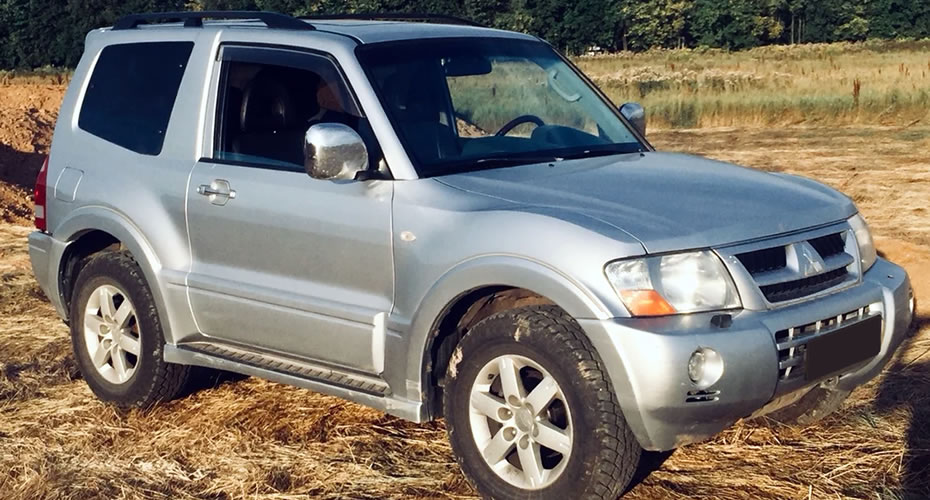
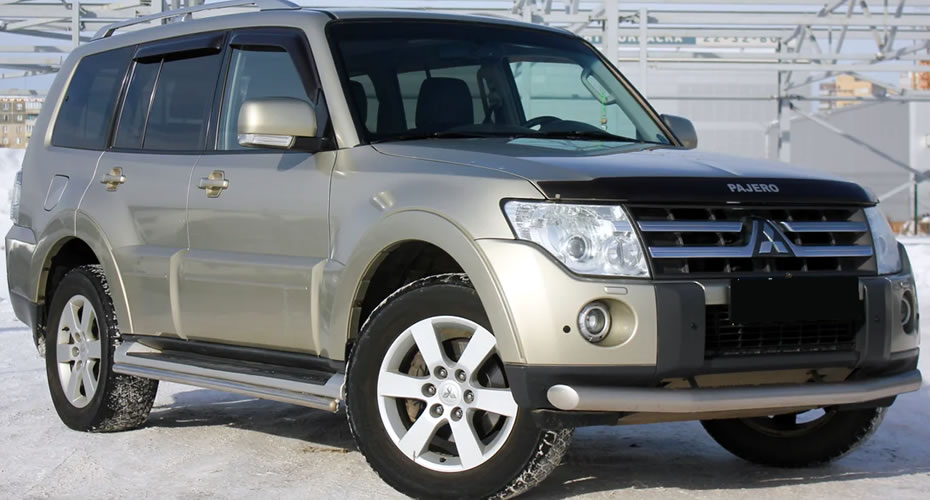
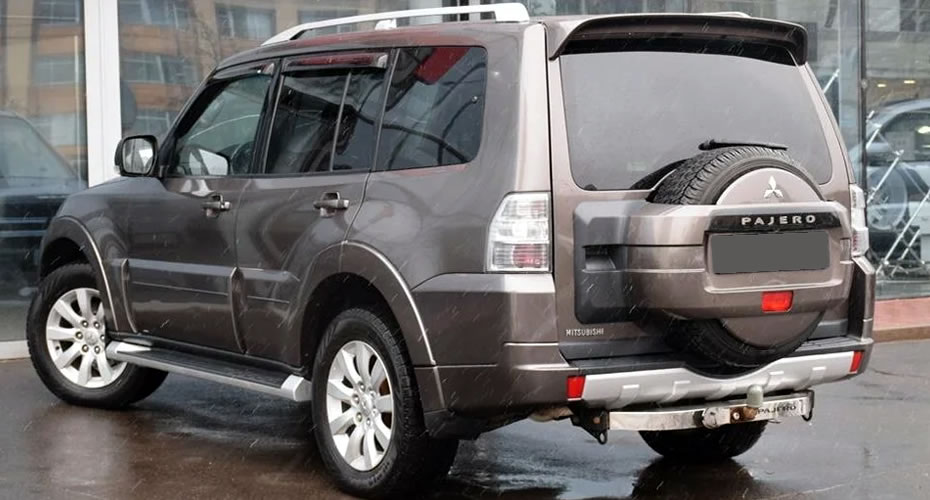
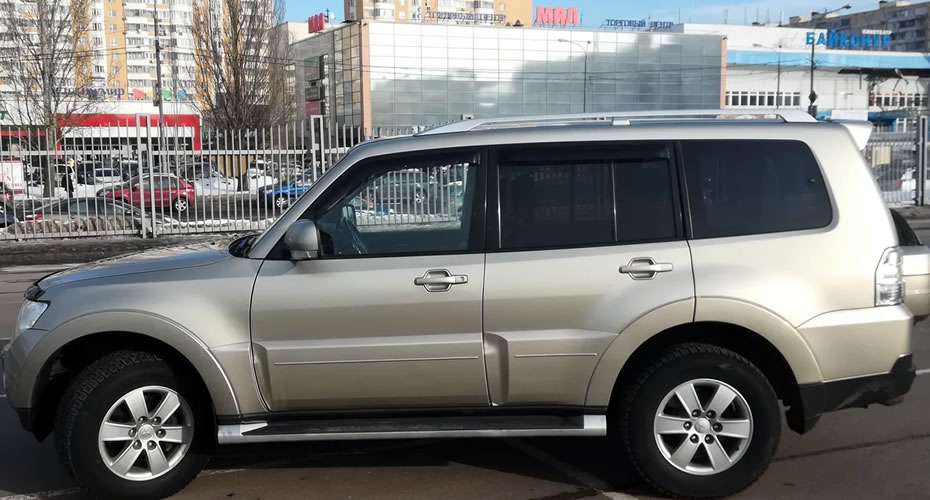
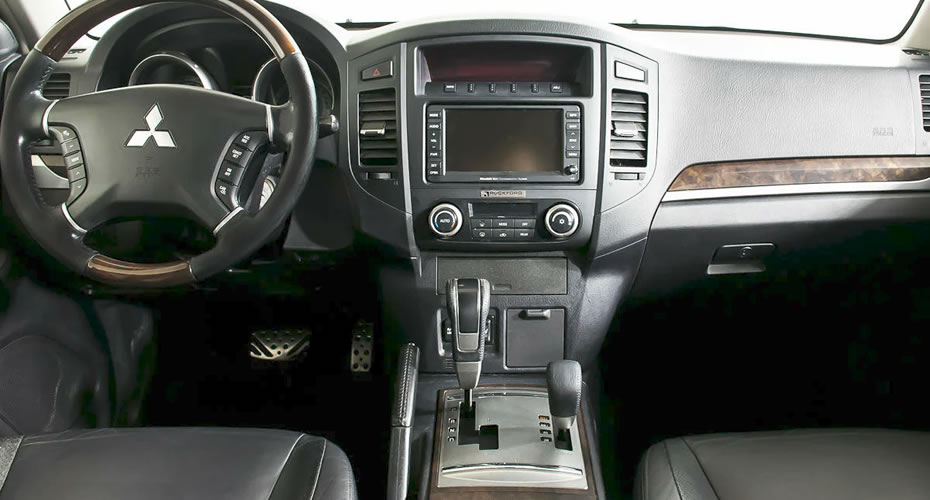
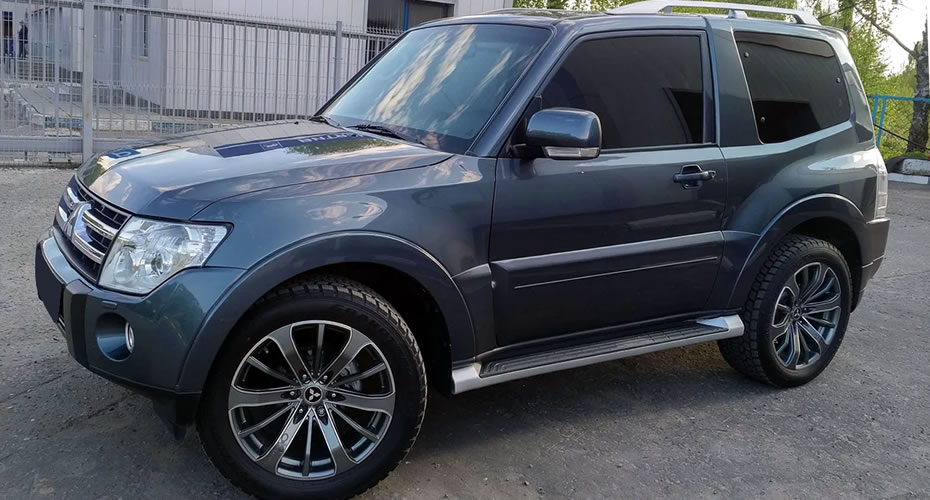
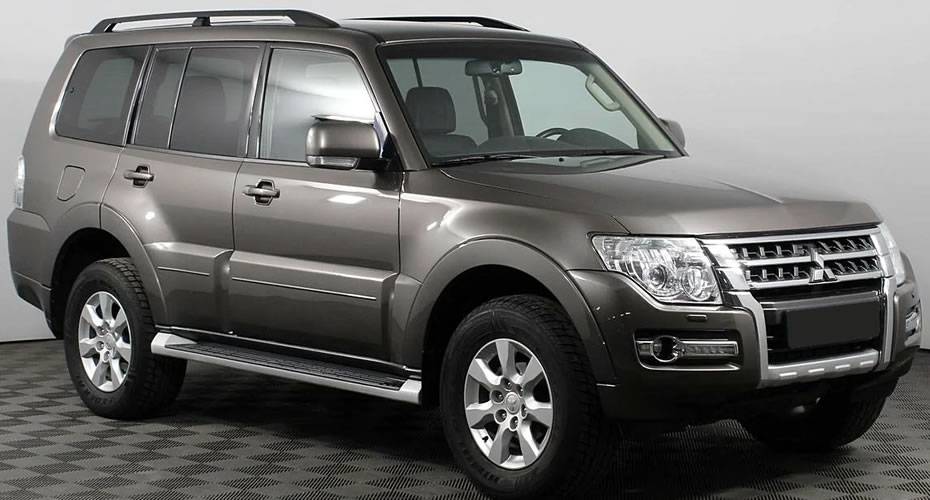
In September 2006, the fourth generation of Pajero was presented at the Paris Motor Show. The body was also a shortened three-door (length 4385 mm, width 1875 mm, height 1840 mm) and a regular five-door (length 4900 mm, width 1875 mm, height 1890 mm). The curb weight of the five-door car was 2265-2335 kg. From these figures it is clear that the car became longer and heavier. In the basic configuration, the front airbags became two-stage, and side airbags and curtain airbags also appeared. All-wheel drive system "Super-Select 4WD II" improved by electronic stability control and electronic brake force distribution. Production took place only in Japan.
Petrol engines were mainly V-6s with a capacity of 3.0 litres (2998 cm³, 6B31, 220 hp), 3.0 liters (2972 cm³, 6G72, 173 hp), 3.5 liters (3497 cm³, 6G74, 220 hp) and 3.8 liters (3828 cm³, 6G75, 250 hp). The Chinese market had a 2.4-liter four-cylinder engine (2350 cm³, 4G64, 112 hp). There were two diesel models, both four-cylinder turbocharged 2.8-liter units (2835 cm³, 4M40, TD, 140 hp) and 3.2 liters (3200 cm³, 4M41, Di-D, 200 hp). The transmission is a five-speed manual, as well as a four- and five-speed automatic.
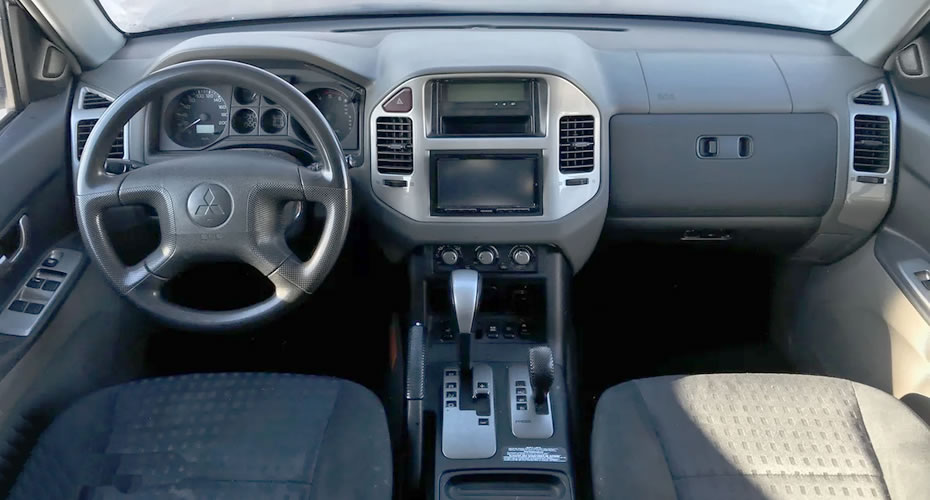
In the 2010 model year, they began installing a Rockford acoustic system and two interior color options - black and beige. In 2012, the car underwent a minimal update and received an improved monocoque body and updated suspension. During the 2015 model year, the front end of the car was updated - the radiator grille was changed, LED daytime running lights were installed, and a new spare tire cover was installed. The interior has also been updated.