Share with friends:
The main competitors and classmates of Mitsubishi Lancer at present are Chevrolet Cruze, Fiat Linea, Ford Focus, Honda Civic, Kia Ceed, Hyundai Elantra, Lada Vesta, Mazda 3, Nissan Sentra, Opel Astra, Peugeot 301, Renault Megane, Seat Toledo, Skoda Rapid, Subaru Impreza, Toyota Corolla, Volkswagen Golf.
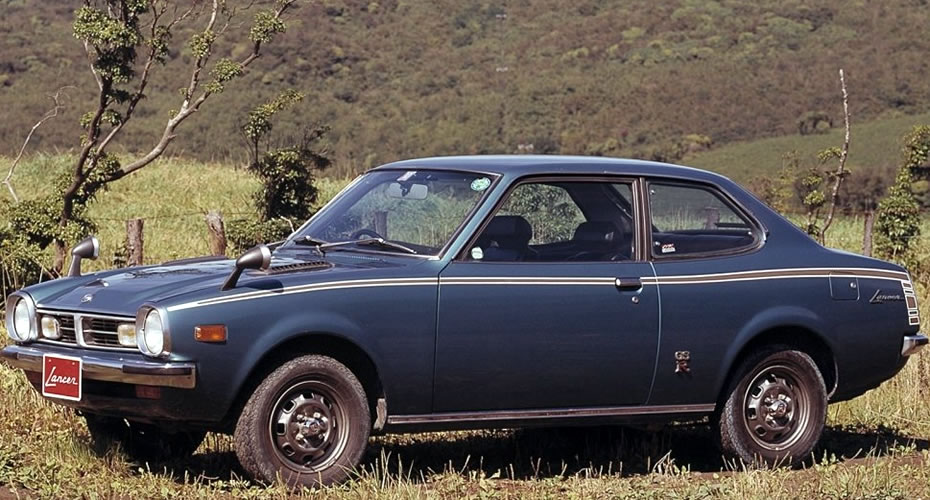
First generation (A70, 1973-1979)
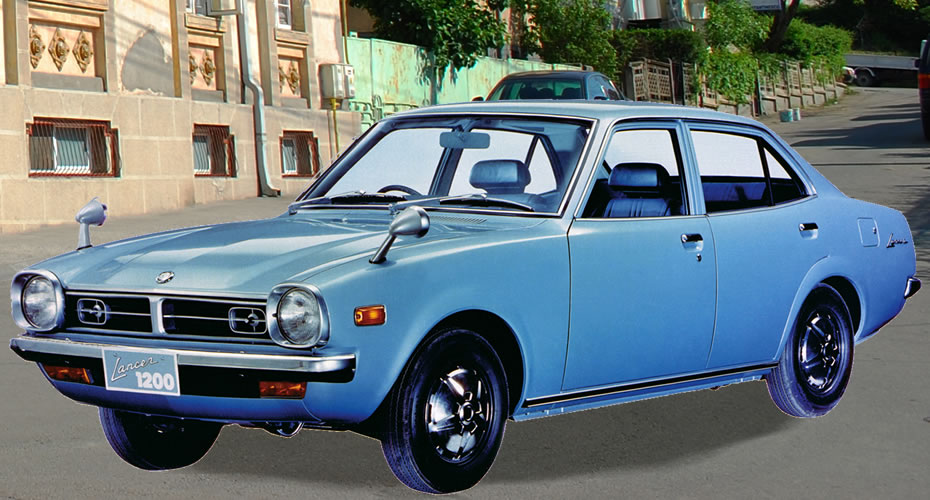
The first generation began production in February 1973, which replaced "Colt 1100". At first it was only a two- and four-door sedan. In September 1973, a five-door station wagon appeared (it was produced in small quantities), and in February 1975, a three-door coupe-hatchback called "Lancer Celeste" appeared. The length of the car was 3960-4105 mm, the width was 1525-1545 mm, the height was 1360-1385 mm and the curb weight was 765-900 kg. The design of the sedan and station wagon body includes the "Coke bottle style", a popular trend at that time. In most European countries, the car was sold under the name "Colt Lancer", in Latin American countries "Dodge Lancer". This was caused by the rejection of the "Mitsubishi" brand by buyers, since many remembered and fought with the "Mitsubishi A6M Zeros" fighters during World War II.
Engines were installed only petrol four-cylinder with the following characteristics - 1.2 liters (1187 cm³, 4G42, 70 hp), 1.2 liters (1238 cm³, 4G36, 73 hp), 1.2 liters (1244 cm³, 4G11 / G11B, 55 hp), 1.4 liters (1410 cm³, 4G12 / G12B, 68 hp), 1.4 liters (1439 cm³, 4G33 / G33B, 91 hp), 1.6 liters (1597 cm³, 4G32 / G32B, 99-108 hp) and 2.0 liters (1995 cm³, 4G52 / G52B, 100 hp). In November 1975, the entire engine line lost about eight to nine percent of its power, which was a consequence of the introduction of stricter emission standards in 1976. The transmission is only a mechanical four- or five-speed.
In November 1976, the car was modernized, the L-shaped rear lights were removed, replacing them with wide rectangular ones. The front direction indicators were changed, new large rubber shock absorbers were also added, and a new radiator grille.
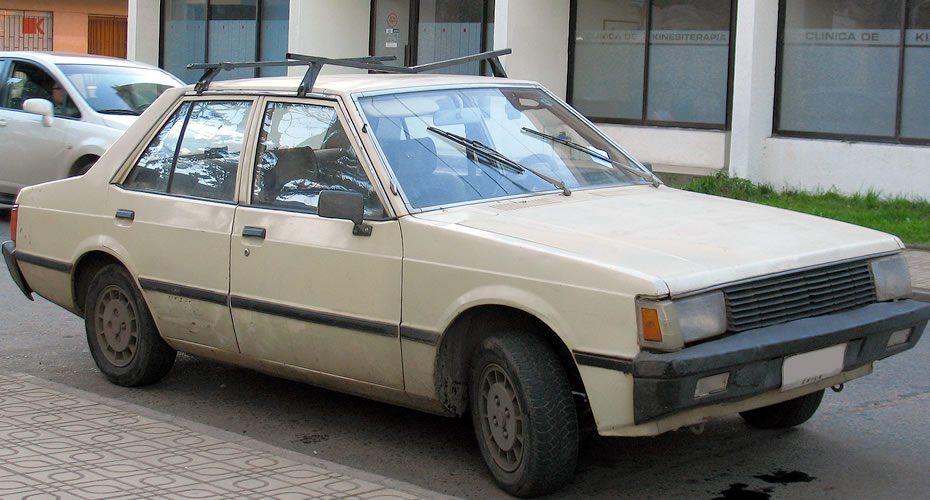
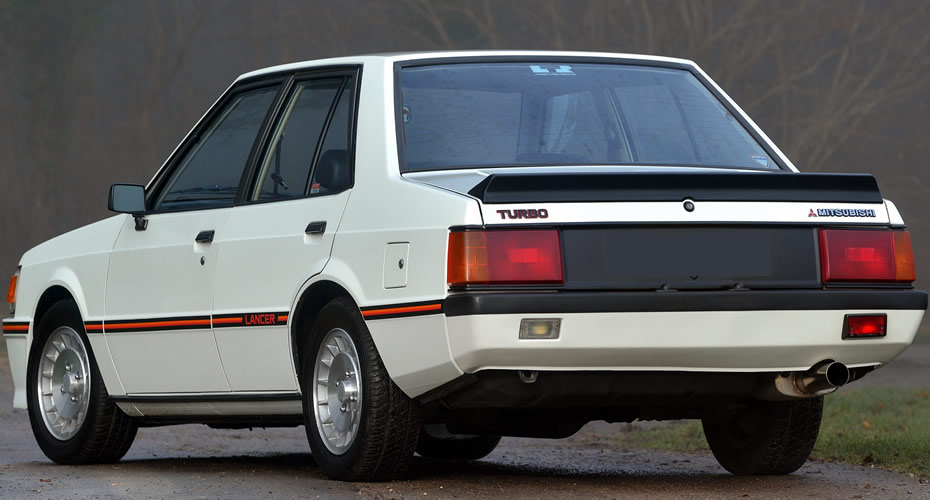
Second generation (A170, 1979-1987)
The second generation of the Lancer EX with a new aerodynamic design was presented in Japan in 1979. In Europe, the car was presented at the Frankfurt International Motor Show in September 1979. The plastic bumpers were now part of the body. The body was only a four-door sedan with rear-wheel drive and a front engine. The length of the car was 4230 mm, the width was 1620 mm, the height was 1390 mm and the curb weight was 1170-1295 kg. These figures show that the dimensions had increased compared to the first generation, which resulted in an increase in interior space. Production was carried out only in Japan.
The four-cylinder petrol engines had the following capacities: 1.2 litres (1244 cm³, 4G11, 54 hp), 1.4 litres (1439 cm³, 4G33, 80 hp), 1.4 litres (1410 cm³, 4G12, MCA-Jet, 68 hp), 1.6 litres (1597 cm³, 4G32, 83 hp) and 1.8 litres (1795 cm³, 4G62, 99 hp). There were also two turbocharged engines with a capacity of 1.8 litres (1795 cm³, 4G62T, 133-157 hp) and 2.0 litres (1997 cm³, 4G63T, 167 hp). The transmission is a four- or five-speed manual, as well as a three-speed automatic.
The engines are built using the Silent Shaft technology, which is two balancing shafts. This reduces engine noise and vibration, and provides smoother rotation. The MCA-Jet power system (Mitsubishi Clean Air) allowed to reduce emissions and fuel consumption.
Third and fourth generation (1982-1987)
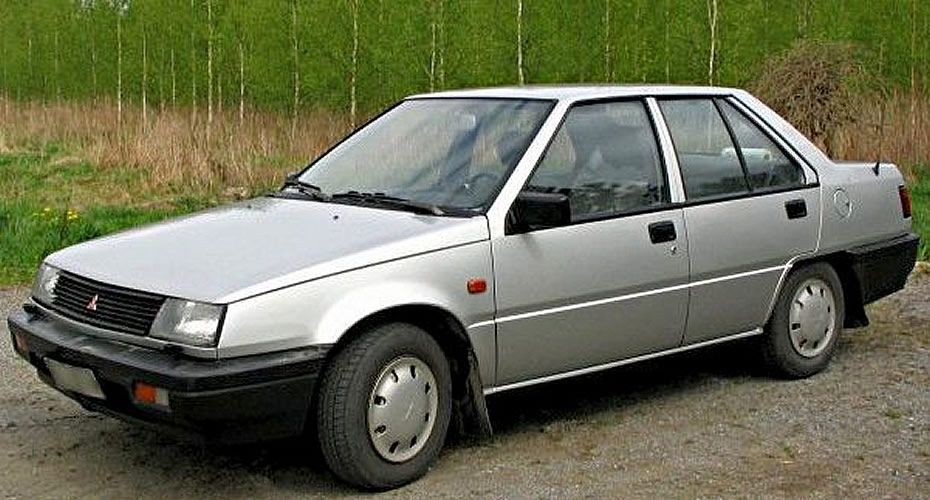
Since 1982, they have been selling the "Lancer Fiore", based on "Mirage", so the division into generations can be called conditional. The body was a four-door sedan or a three-door hatchback. The length of the third generation car was 3890 mm, width 1590 mm and height 1350 mm. The fourth generation significantly increased in size and the length became 4230 mm, width 1620 mm and height 1390 mm. In some markets it was sold under the name "Colt Sedan", which differed only slightly. The names "Mirage" and "Colt" were mainly used for hatchbacks, and "Lancer" for the rest. In 1984, they updated, and in 1985 they added a five-door station wagon body.
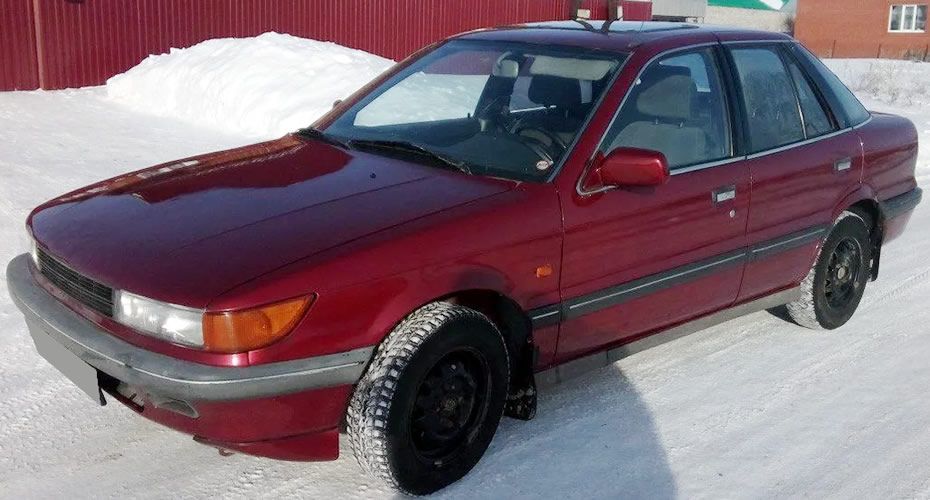
Fifth generation (1988-1994)
In 1988, a new body design was introduced, similar to "Galant" fifth generation. A five-door hatchback was added to the existing bodies. The station wagon was produced on the same platform. The names "Mirage" and "Lancer" were still offered in different markets. The addition of "Fiore" to the name was removed. In the US, the car was sold as "Dodge Lancer", and in Japan, the sedan was called "Mirage Aspire". The length of the car was 4235 mm, the width was 1670 mm and the height was 1405 mm, that is, the dimensions were almost the same as those of the fourth generation.
Sixth generation (1991-2000)
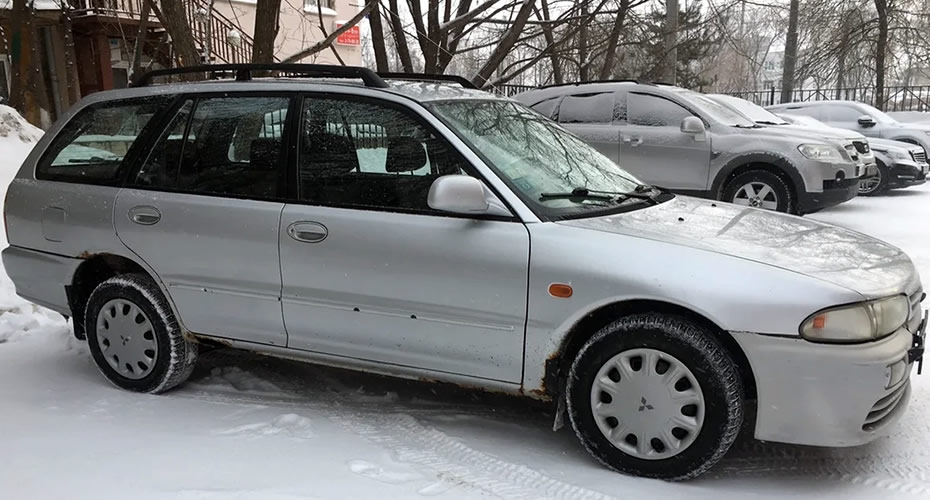
The sixth generation appeared in 1991 and became even more different from the Mirage in appearance, although they are based on the same platform. The Space Runner and Chariot minivans are also based on this platform. At first, there were only four-door sedans, 4,270 mm long, 1,690 mm wide and 1,385 mm high. In 1993, a five-door station wagon appeared in Japan, sold under the name Libero, 4,275 mm long, 1,690 mm wide and 1,470 mm high. There was also a two-door coupe, which was sold in Japan as the Mirage Asti Coupé.
The engines were petrol four-cylinder with a volume of 1.3 liters (1298 cm³, 4G13, 80 hp), 1.5 liters (1468 cm³, 4G15, 90 hp), 1.6 liters (1597 cm³, 4G92, 117 hp), 1.8 liters (1834 cm³, 4G93, 117 hp), as well as a turbocharged 1.8 liter (1834 cm³, 4G93T, 192 hp). There were two modifications of diesel engines with a volume of 1.8 liters (1795 cm³, 76 hp) and 2.0 liters (1998 cm³, 88 hp). The gearbox was a five-speed manual or a four-speed automatic. Models with all-wheel drive appeared.
Seventh generation (1995-2000)
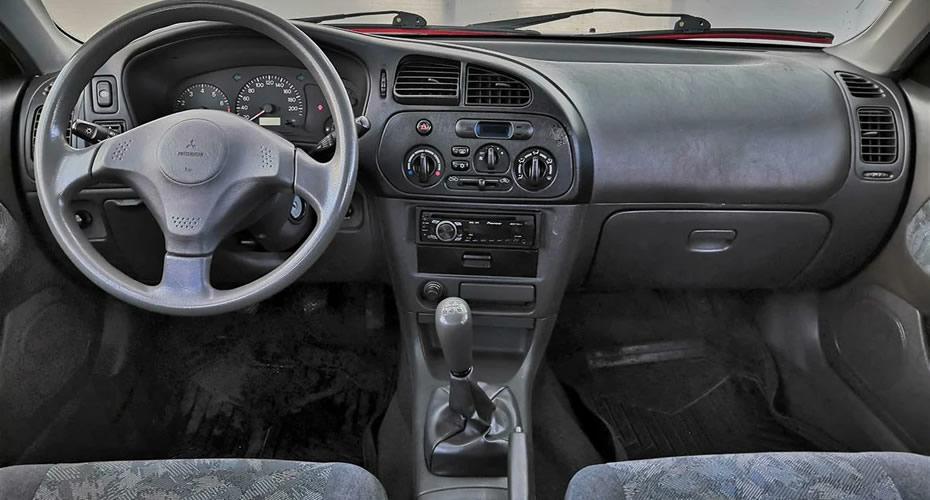
The seventh generation appeared in March 1995 with a four-door sedan and three-door hatchback body. The length of the car was 4295 mm, width 1690 mm, height 1395 mm and the curb weight was 940 kg. The engine is located transversely in front, the drive is front or all-wheel drive. The basic configuration now includes a driver's airbag.
The engines were only petrol four-cylinder with a volume of 1.3 liters (1298 cm³, 88 hp), 1.5 liters (1468 cm³, 110 hp), 1.8 liters (1829 cm³, 125 hp), as well as two turbocharged with a volume of 1.6 liters (1597 cm³, 175 hp) and 1.8 liters (1834 cm³, 205 hp). The gearbox was a five-speed manual or a four-speed adaptive automatic.
Ninth generation (2000-2007)
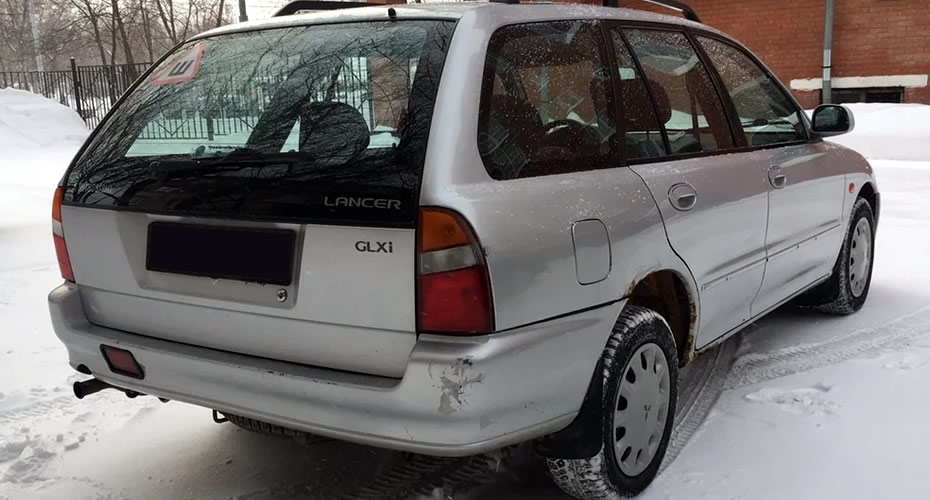
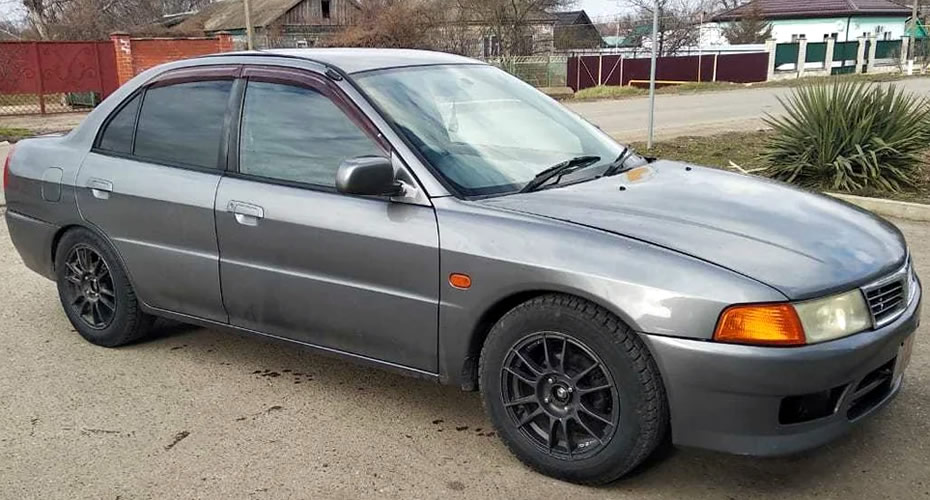
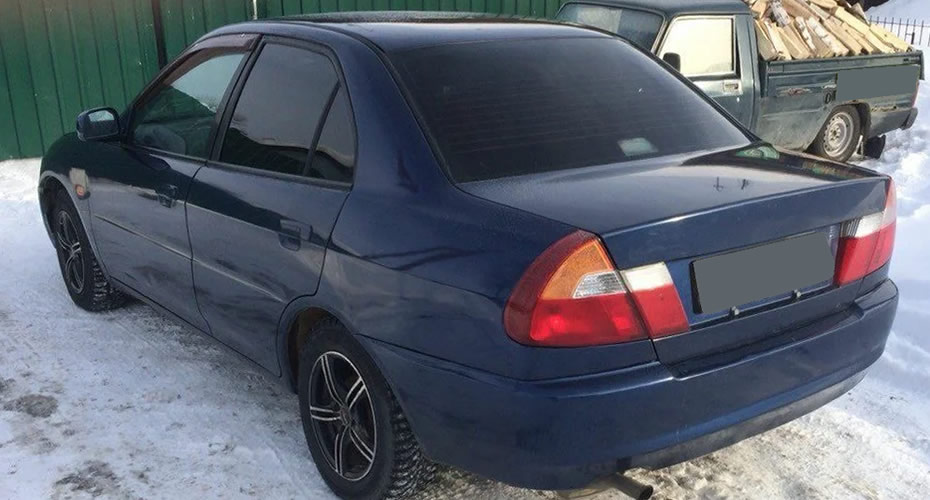
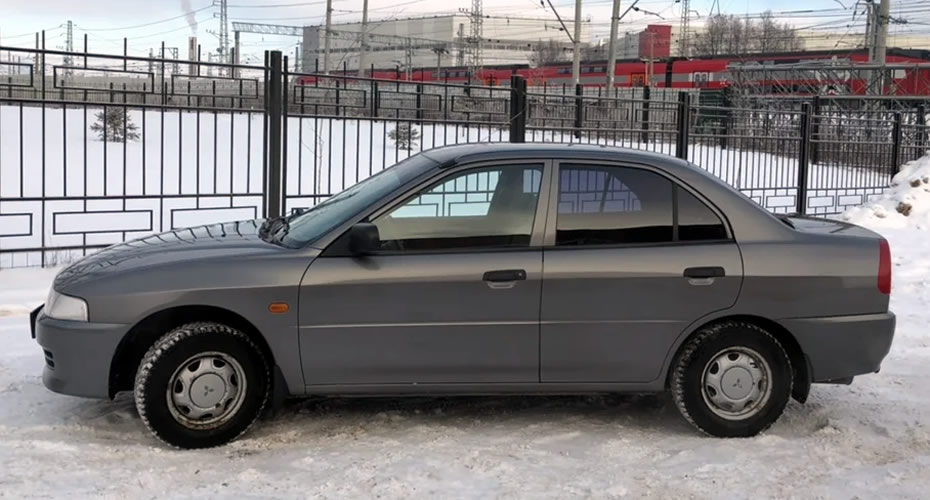
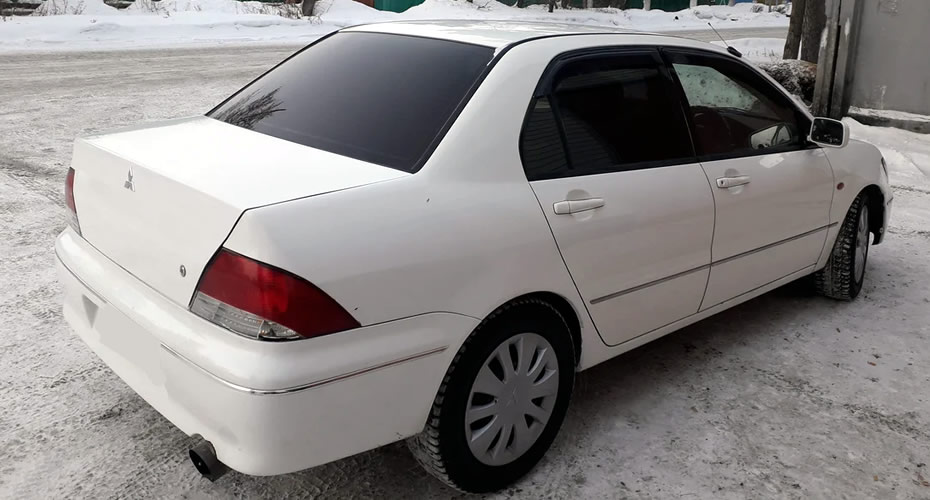
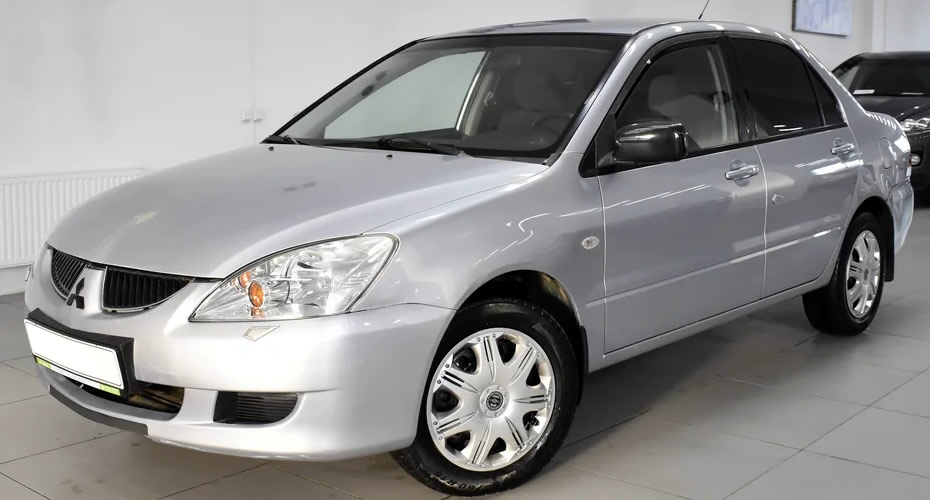
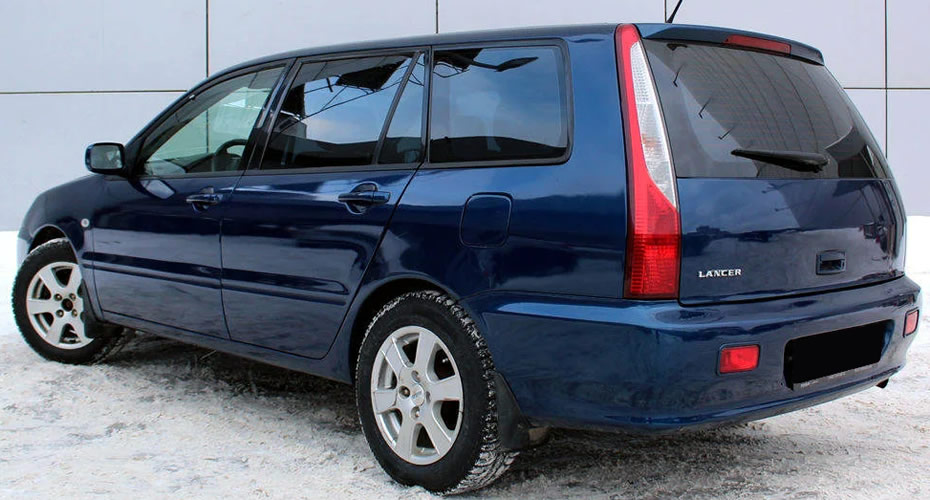
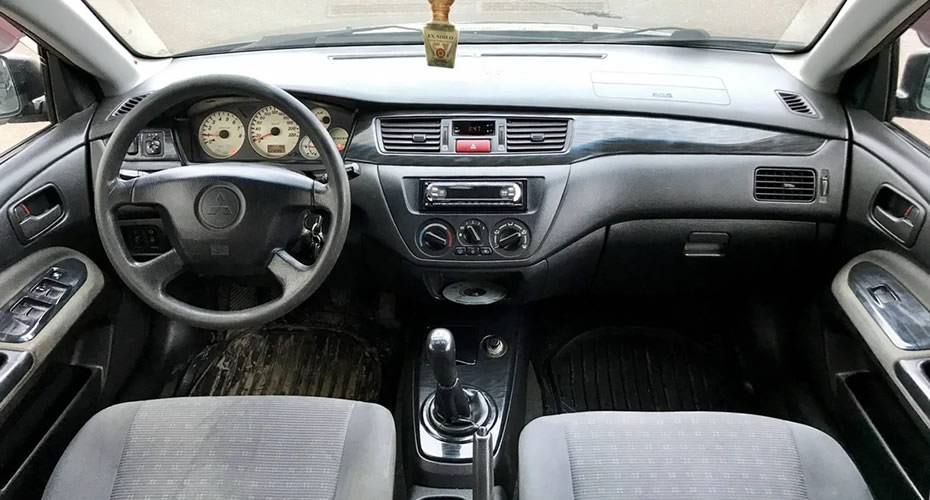
In November 2000, the Lancer Cedia was launched in Japan (from century diamond, which translates from English as "diamond of the century"), and the car entered the European market under the name "Lancer 9". The body was a four-door sedan and a five-door station wagon with a length of 4495-4605 mm, a width of 1695 mm, a height of 1375-1425 mm and a curb weight of 1399 kg. The significantly increased length transferred the Lancer from a small car (B-segment) to a compact car (C-segment). In some countries, it was not sold, since it became almost the same size as the "Carisma" and could compete with it.
The engine was located transversely at the front, with drive only to the front wheels. Only four-cylinder petrol engines were installed with the following characteristics and volumes: 1.3 liters (1299 cm³, 4G13, 82 hp), 1.5 liters (1468 cm³, 4G15, 91 hp), 1.6 liters (1584 cm³, 4G18, 98 hp), 1.8 liters (1834 cm³, 4G93, 130 hp), 2.0 liters (1999 cm³, 4G94, 120 hp), 2.0 liters (1997 cm³, 4G63, 135 hp), 2.4 liters (2378 cm³, 4G69, 162 hp), as well as a turbocharged 1.8 liter (1834 cm³, 4G93T, 165 hp). The gearbox was a five-speed manual, four-speed semi-automatic or continuously variable CVT (INVECS-III).
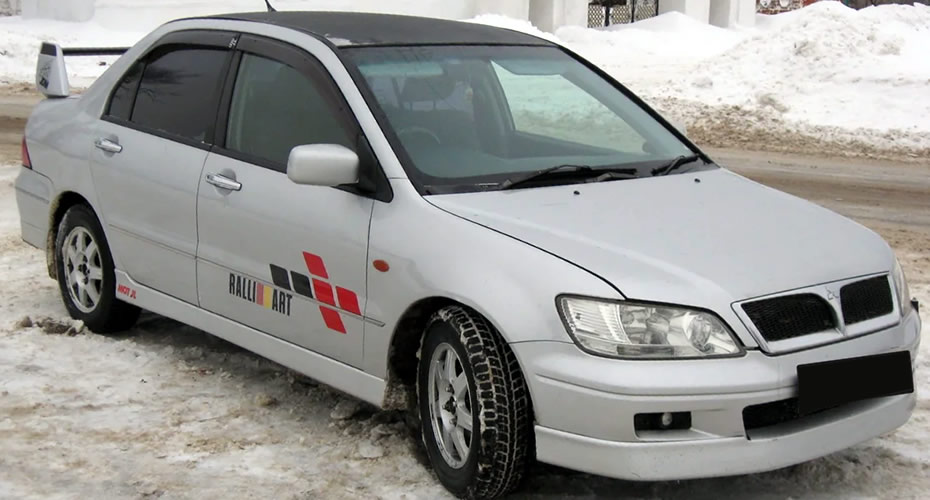
In February 2003, the model underwent a major restyling, affecting the front design, which brought the car into line with the Mitsubishi corporate style, and also updated the rear. In 2005, another update was carried out, affecting the radiator grille.
Tenth generation (2007-2017)
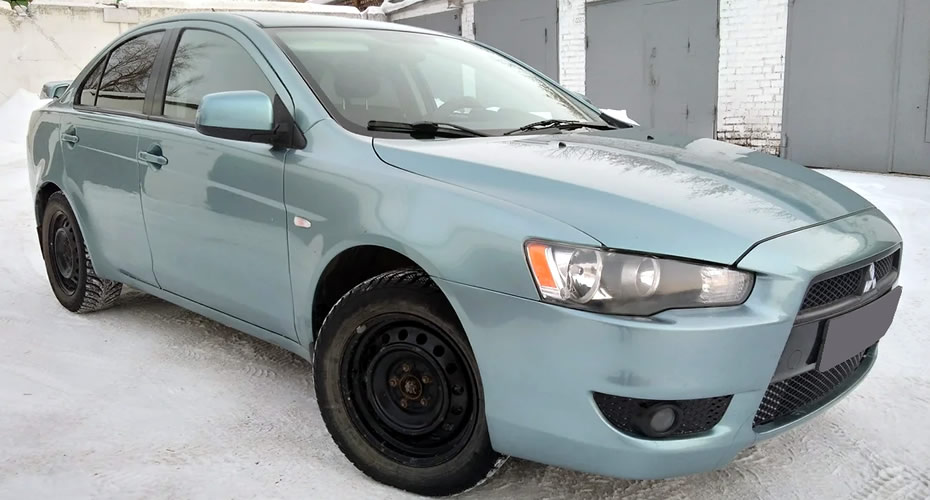
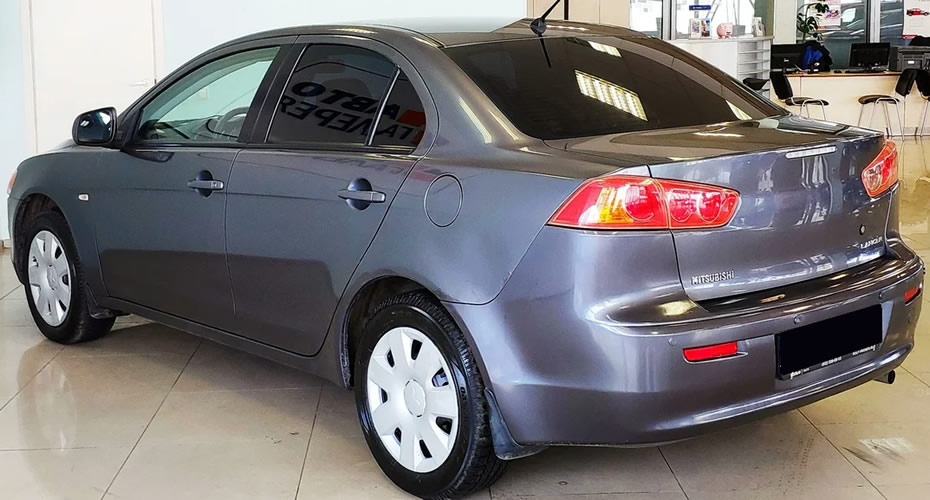
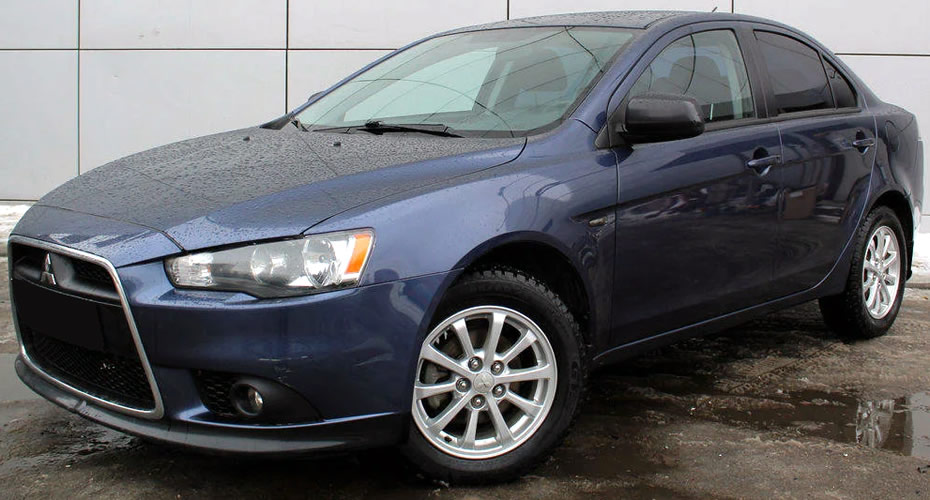
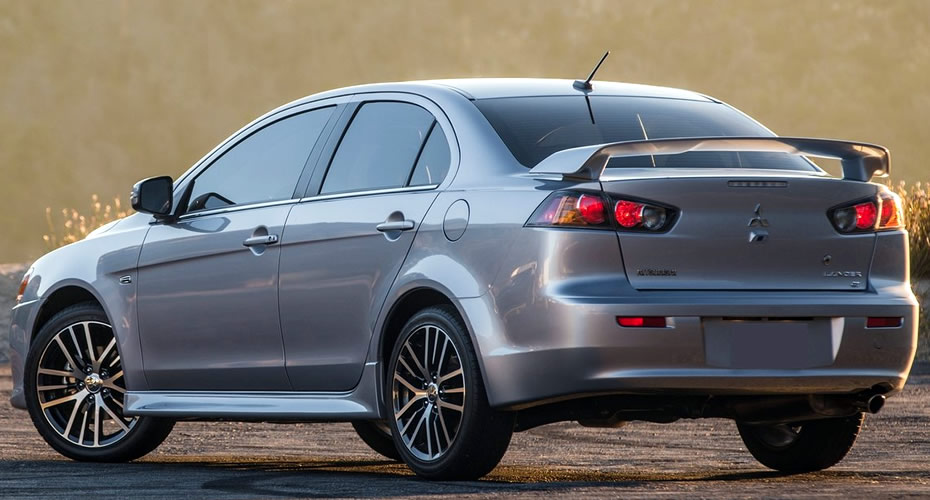
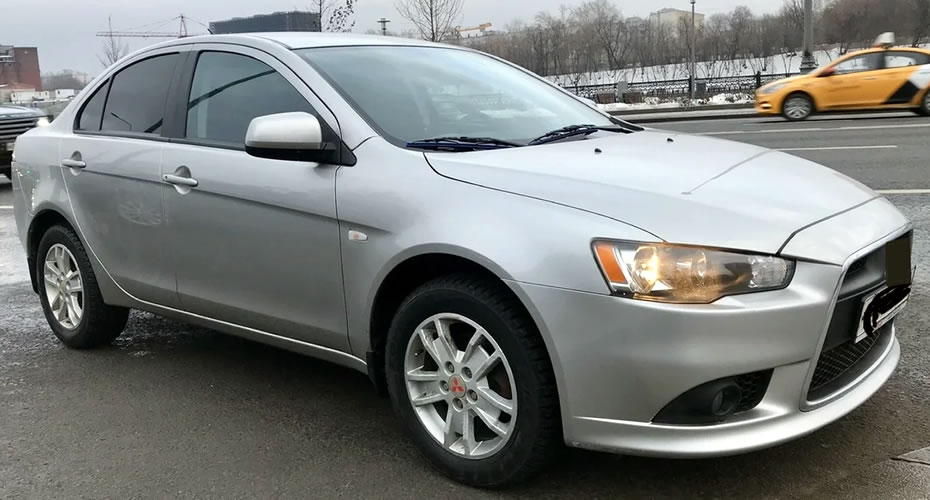
In 2005, Mitsubishi unveiled the Concept X at the Tokyo Motor Show and the Concept Sportback at the Frankfurt Motor Show. The new Lancer was officially unveiled in January 2007 at the North American International Auto Show in Detroit and went on sale in North American markets in March 2007 as a 2008 model. The car features Mitsubishi's next-generation RISE safety body. It is sold in Japan as the Galant Fortis, in Singapore and China as the Lancer EX, in Malaysia as the Proton Inspira, in Taiwan as the Lancer iO and Lancer Fortis, and in Iran as the Lancer Type 4. The body was a four-door sedan (length 4570 mm, width 1760 mm, height 1490 mm) or a five-door hatchback (length 4585 mm, width 1760 mm, height 1515 mm).
The engine was installed transversely at the front, front-wheel drive or all-wheel drive. All engines were four-cylinder in-line petrol and diesel. The petrol engines had the following capacities: 1.5 litres (1499 cm³, 4A91, 109 hp), 1.6 litres (1590 cm³, 4A92, 117 hp), 1.8 litres (1798 cm³, 4B10, 143 hp), 2.0 litres (1998 cm³, 4B11, 150 hp), 2.4 litres (2360 cm³, 4B12, 168 hp) and a turbocharged 2.0 litre (1998 cm³, 4B11T, 237 hp). There were two models of diesel engines - 1.8 liters (1798 cm³, 4N13, 114 hp) and 2.0 liters from Volkswagen (1968 cm³, EA 188, 138 hp). The gearbox was a five-speed manual, six-speed semi-automatic (Ralliart), four-speed automatic (INVECS-II) or continuously variable transmission CVT (INVECS-III).
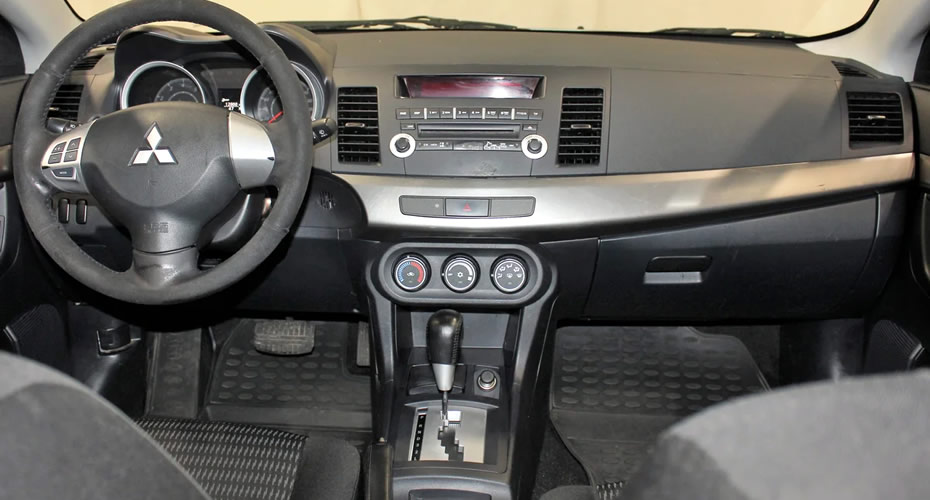
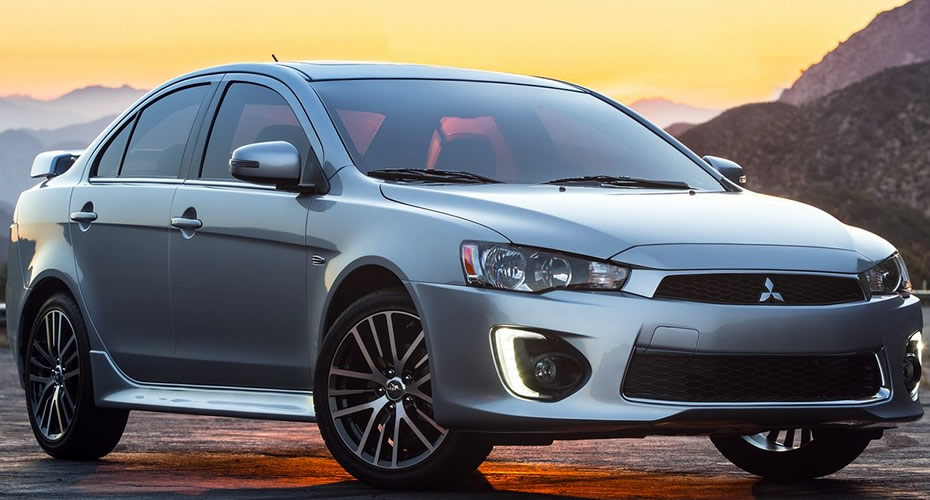
In October 2015, the car was updated for the 2016 model year. The front part (bumper, grille) was changed, as well as new LED daytime running lights and fog lights. The interior received a high-contrast instrument cluster, a new front center console with silver and black accents, and a new audio system with a color touch screen and digital radio "DAB".
In January 2017, it was announced that the Lancer would be discontinued in August 2017 without any sequel or successor. Mitsubishi will focus on the production of crossovers and SUVs. The car is also being produced "Mirage/Colt".
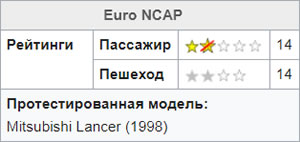
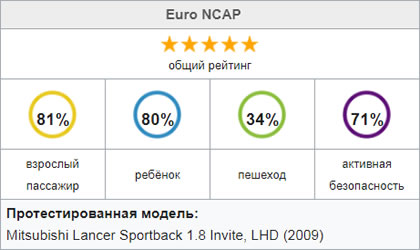
Euro NCAP Safety Test Results
![]() | ![]() |