



Share with friends:
Vehicle Maintenance Mitsubishi Pajero 1 and 2

Maintenance frequency
Every 12,000 km or 12 months Changing engine oil and oil filter. Every 24,000 km (12 months) Checking and adjusting idle speed. Checking and adjusting valve clearances....
Every 12,000 km or 12 months Changing engine oil and oil filter. Every 24,000 km (12 months) Checking and adjusting idle speed. Checking and adjusting valve clearances....


Replacing the engine air filter
On 4-cylinder engines Removal 1. Disconnect the hose from the filter. 2. Unscrew the wing nut. 3. Disconnect the latches. 4. Lift the lid. 5. Remove the filter element....
On 4-cylinder engines Removal 1. Disconnect the hose from the filter. 2. Unscrew the wing nut. 3. Disconnect the latches. 4. Lift the lid. 5. Remove the filter element....

Replacing the fuel filter
Fuel filter for carburetor and injection engines On the left is the fuel filter on carburetor engines. On the right is the fuel filter on injection engines. Fuel filter...
Fuel filter for carburetor and injection engines On the left is the fuel filter on carburetor engines. On the right is the fuel filter on injection engines. Fuel filter...

Crankcase ventilation valve (petrol engines)
The crankcase ventilation valve is designed to redirect crankcase gases into the intake manifold for afterburning in the engine cylinders. The valve stem is screwed into...
The crankcase ventilation valve is designed to redirect crankcase gases into the intake manifold for afterburning in the engine cylinders. The valve stem is screwed into...
Battery care
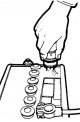
Cleaning the terminal from corrosion Cleaning the pole piece Battery maintenance consists of checking the condition of the poles and terminals, the presence of...
Cleaning the terminal from corrosion Cleaning the pole piece Battery maintenance consists of checking the condition of the poles and terminals, the presence of...

Drive Belts — Checking and Adjusting Tension
To check the condition of the belt, turn the engine with the starter, looking at the belt along its entire length. If any defects or signs of wear are found, replace the...
To check the condition of the belt, turn the engine with the starter, looking at the belt along its entire length. If any defects or signs of wear are found, replace the...
Cooling system hoses
Check hoses annually for cracks, hardening, swelling or other damage. It is recommended to change the hoses after 80,000 km. To replace the hose, loosen the clamp and...
Check hoses annually for cracks, hardening, swelling or other damage. It is recommended to change the hoses after 80,000 km. To replace the hose, loosen the clamp and...
Checking CV joint boots
Check the covers for cracks and damage to the rubber. For the procedure for replacing covers, see the subsection 9.3.16 .
Check the covers for cracks and damage to the rubber. For the procedure for replacing covers, see the subsection 9.3.16 .

Air conditioning maintenance
Correct positioning of the clamp when putting on the hose Sight glass on cars filled with R12 refrigerant Sight glass on vehicles filled with R134a refrigerant Air...
Correct positioning of the clamp when putting on the hose Sight glass on cars filled with R12 refrigerant Sight glass on vehicles filled with R134a refrigerant Air...
Windscreen wiper blades — replacement
Several modifications of brushes are installed on cars. Scrapers must be replaced if glass cleaning is not satisfactory. For convenience, move the brushes to a vertical...
Several modifications of brushes are installed on cars. Scrapers must be replaced if glass cleaning is not satisfactory. For convenience, move the brushes to a vertical...

Wheels and tires — check and rotation
Checking the tread depth Checking tire wear and damage Tire maintenance consists of checking the tread depth and tire pressure (tested on cold tires), identifying signs...
Checking the tread depth Checking tire wear and damage Tire maintenance consists of checking the tread depth and tire pressure (tested on cold tires), identifying signs...

Recommended Fuels, Fluids and Lubricants
Fuel Petrol engines Only unleaded petrol with an octane rating of at least 87 is permitted (by research method). If knocking (detonation) or unstable engine operation...
Fuel Petrol engines Only unleaded petrol with an octane rating of at least 87 is permitted (by research method). If knocking (detonation) or unstable engine operation...

Checking the engine oil level
Markings on the oil dipstick (2.4L engine) Markings on the oil dipstick (3.0L engine) 1. Place the vehicle on a level surface. 2. 3 minutes after the engine has stopped...
Markings on the oil dipstick (2.4L engine) Markings on the oil dipstick (3.0L engine) 1. Place the vehicle on a level surface. 2. 3 minutes after the engine has stopped...

Changing engine oil and oil filter
Timely oil change is the most effective measure taken by the owner himself to avoid premature engine wear due to oil aging, dilution and contamination. Before starting...
Timely oil change is the most effective measure taken by the owner himself to avoid premature engine wear due to oil aging, dilution and contamination. Before starting...
Checking the oil level in a manual transmission
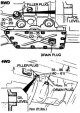
Drain and inspection plugs on the gearbox of rear-wheel drive and all-wheel drive vehicles At the top are the drain and inspection plugs for rear-wheel drive vehicles....
Drain and inspection plugs on the gearbox of rear-wheel drive and all-wheel drive vehicles At the top are the drain and inspection plugs for rear-wheel drive vehicles....

Changing oil in manual transmission
1. Warm up the engine. 2. Unscrew the drain plug and drain the oil. 3. Replace the plug and tighten. 4. Fill with recommended grade oil up to the bottom edge of the hole.
1. Warm up the engine. 2. Unscrew the drain plug and drain the oil. 3. Replace the plug and tighten. 4. Fill with recommended grade oil up to the bottom edge of the hole.
Automatic transmission fluid level
The automatic transmission fluid level should be checked every 48,000 km. Checking and restoring the fluid level 1. Drive and warm up the fluid. 2. Place the car on a...
The automatic transmission fluid level should be checked every 48,000 km. Checking and restoring the fluid level 1. Drive and warm up the fluid. 2. Place the car on a...

Automatic Transmission Fluid Replacement
Please note: The transmission drain plug is only available on some vehicles. The procedure for replacing the fluid in this case is no different from that described...
Please note: The transmission drain plug is only available on some vehicles. The procedure for replacing the fluid in this case is no different from that described...

Changing the oil in the transfer case
Recommended oil grade: GL4 or SAE 75W-85W. Transfer case oil caps 1. Drain 2. Refueling 3. Level Procedure 1. Raise the vehicle and place it on stands. Place a tray...
Recommended oil grade: GL4 or SAE 75W-85W. Transfer case oil caps 1. Drain 2. Refueling 3. Level Procedure 1. Raise the vehicle and place it on stands. Place a tray...

Front and rear axle gearboxes
Control plugs (refueling) and the drain hole of a conventional reducer 1. Filling caps 2. Front axle 3. Rear axle The fluid level in a standard gearbox is checked every...
Control plugs (refueling) and the drain hole of a conventional reducer 1. Filling caps 2. Front axle 3. Rear axle The fluid level in a standard gearbox is checked every...

Gearbox oil change
Cleaning the gearbox before draining the oil Replacement 1. Raise the vehicle completely and place it on stands. Place a tray under the gearbox. First unscrew the filler...
Cleaning the gearbox before draining the oil Replacement 1. Raise the vehicle completely and place it on stands. Place a tray under the gearbox. First unscrew the filler...

Checking the coolant level
Markings on the expansion tank The level is checked using the marks on the expansion tank. Procedure for restoring the liquid level 1. When the engine has cooled down,...
Markings on the expansion tank The level is checked using the marks on the expansion tank. Procedure for restoring the liquid level 1. When the engine has cooled down,...
Replacing the coolant
The fluid is replaced on a warm engine. Procedure 1. Open the drain tap (or unscrew the plug) at the bottom of the radiator. 2. When the flow of liquid weakens, unscrew...
The fluid is replaced on a warm engine. Procedure 1. Open the drain tap (or unscrew the plug) at the bottom of the radiator. 2. When the flow of liquid weakens, unscrew...

Checking the brake and clutch hydraulic fluid level
Power steering reservoir and dipstick Checking the fluid level in the power steering reservoir The hydraulic drive of the brakes and clutch is filled only with fluid...
Power steering reservoir and dipstick Checking the fluid level in the power steering reservoir The hydraulic drive of the brakes and clutch is filled only with fluid...

Power steering fluid reservoir
Power steering fluid reservoir dipstick Only Dexron II transmission fluid is poured into the power steering reservoir. Filling with liquids of other brands is not...
Power steering fluid reservoir dipstick Only Dexron II transmission fluid is poured into the power steering reservoir. Filling with liquids of other brands is not...

Lubrication of the chassis
Lubrication points of the chassis using syringes 1. Bipod 2. Tie rod end 3. Upper suspension arm Lubricated units are equipped with special oilers. Lubrication points...
Lubrication points of the chassis using syringes 1. Bipod 2. Tie rod end 3. Upper suspension arm Lubricated units are equipped with special oilers. Lubrication points...

Lubrication of body elements
Hood locks and hinges The spring, spring anchor and bonnet hinges are lubricated with engine oil. The lock drum is lubricated with graphite grease using a key. Door...
Hood locks and hinges The spring, spring anchor and bonnet hinges are lubricated with engine oil. The lock drum is lubricated with graphite grease using a key. Door...

Spark plugs — removal and installation
Removal and installation Attention! On some vehicles, to remove the spark plugs, you will need to remove the equalizing chamber and other parts. 1. Label the wires for...
Removal and installation Attention! On some vehicles, to remove the spark plugs, you will need to remove the equalizing chamber and other parts. 1. Label the wires for...
Checking high voltage wires
The wires are changed, or at least checked after 80,000 km or 5 years. 1. Remove the wire by holding the tip. 2. Check for corrosion, cracks and traces of burning on the...
The wires are changed, or at least checked after 80,000 km or 5 years. 1. Remove the wire by holding the tip. 2. Check for corrosion, cracks and traces of burning on the...
This section is available on: russian, bulgarian, belarusian, ukrainian, serbian, croatian, romanian, polish, slovak, hungarian
Similar materials for other Mitsubishi models
➤ General information: Maintenance Mitsubishi Colt 2 and 3 (1983-1993)
➤ General information: Maintenance Mitsubishi Lancer 3 and 5 (1984-1992)
➤ General information: Maintenance Mitsubishi Galant 6 and 7 (1987-1998)
➤ General information: Maintenance Mitsubishi L200 4 (2005-2014, diesel)
➤ General information: Maintenance Mitsubishi Carisma (1995-2004)
Link in different formats to this section
TEXTHTMLBB Code
- General information
- User manual
- Troubleshooting
- Maintenance
- Technical specifications
- Power unit
- Engine repair
- Cooling system
- Lubrication system
- Fuel system
- Engine management system
- Intake and exhaust system
- Engine electrical equipment
- Transmission
- Clutch
- Manual gearbox
- Automatic gearbox
- Drive shafts
- Chassis and running gear
- Front suspension
- Rear suspension
- Brake system
- Steering
- Body and interior
- Exterior (external elements)
- Interior (internal elements)
- Doors, locks and windows
- Body dimensions
- Electrical equipment
- Safety system (SRS)
- Air conditioner
- Equipment and devices
- Electrical diagrams
- General information
- User manual
- Seats and seat belts
- Instruments and controls
- Driving and operation
- Maintenance
- Power unit
- Gasoline engines
- Diesel engines
- Ignition system
- Engine electrical equipment
- Cooling and lubrication system
- Power and exhaust system
- Fuel system (gasoline)
- Fuel system (diesel)
- Transmission
- Clutch
- Mechanical gearbox
- Automatic gearbox
- Drive shafts and axles
- Chassis and running gear
- Front suspension
- Rear suspension
- Steering
- Brake system
- Body and interior
- Exterior (external elements)
- Interior (internal elements)
- Doors, locks and windows
- Electrical equipment
- Equipment and devices
- Heater and air conditioner
- Cruise control
- Headlights and lighting
- Electrical circuits