



Contents: Correct positioning of the clamp…⤓ Sight glass on cars filled with R12…⤓ Sight glass on vehicles filled with…⤓ Examination ⤓
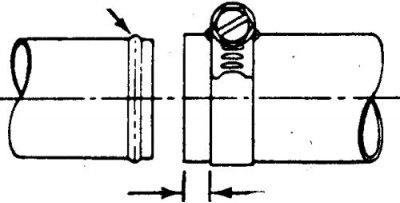
Correct positioning of the clamp when putting on the hose
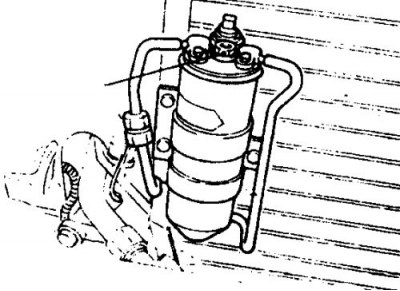
Sight glass on cars filled with R12 refrigerant
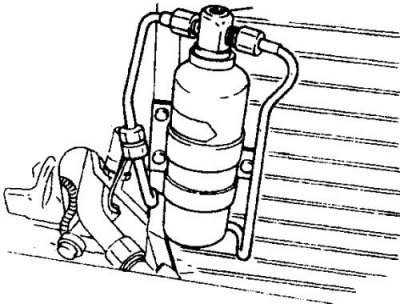
Sight glass on vehicles filled with R134a refrigerant
Air conditioning maintenance is performed in a specialized workshop by qualified personnel. The need for disassembly, refilling or repair of the components of this system is indicated by a noticeable decrease in cooling efficiency or severe freezing of the evaporator.
The air conditioning system uses refrigerant R12 or R134a, mixing of which is not permitted.
You can check the air conditioner refrigerant charge yourself. For this purpose, a viewing window is provided, mounted on the moisture separator located in the engine compartment.
Examination
1. The test is performed at an ambient temperature of approximately 21°C (this test is not acceptable if the vehicle is equipped with a "non-standard" air conditioner).
2. Start the engine.
3. Turn on the air conditioner by pressing the button, move the fan lever to the HIGH position, and the thermostat lever to the far left position.
4. After a few minutes, check the condition of the refrigerant through the sight glass.
5. If there are no disturbances in the sight glass, the compressor is on, the compressor outlet pipe is warm and the inlet pipe is cold, then the system is fully charged.
6. If there are no disturbances in the sight glass, the compressor is on (the magnetic clutch has been activated), and the difference in temperature between the pipes is small, then the system is filled. not completely.
7. If there are no disturbances in the sight glass and the compressor does not turn on (the magnetic clutch did not work), then either the coupling is faulty or there is no refrigerant in the system.
8. If foaming or bubbles are observed in the sight glass, the system needs to be refilled or the moisture separator is clogged.
9. Take your car to a car service center.
10. Please note that foaming or bubbling is acceptable at ambient temperatures above 43°C or below 21°C.