



Contents: Air flow distribution diagram in the…⤓ Direction of air flow depending on…⤓ Air supply to the upper zone of the…⤓ Air supply to the upper and lower…⤓ Air supply to the lower part of the…⤓ Supply of air to the lower part of…⤓ Glass heating ⤓ Control panel for heating and air…⤓ Fan speed switch ⤓ Air temperature control switch ⤓ Air supply mode selection knob ⤓ Air circulation mode selection switch ⤓ Using the air conditioning system ⤓ Interior heating ⤓ Air cooling ⤓ Simultaneous supply of cool and warm…⤓ Heated windshield and side windows ⤓ Removal moisture from glass in…⤓ Accelerated removal of moisture from…⤓ Supply of outside air ⤓ Automatic air conditioning control…⤓ Fan speed controller ⤓ Air temperature regulator ⤓ Air supply mode selection switch ⤓ Air circulation mode selection button ⤓ Turning the air conditioner on/off ⤓ The system operates in automatic mode ⤓ Controlling the system operation in…⤓ Removal moisture from glass in…⤓ Accelerated removal of moisture from…⤓ Air conditioner operating rules ⤓ Recommendations for choosing…⤓ If the air conditioner is not used…⤓
Air flow distribution diagram in the car interior
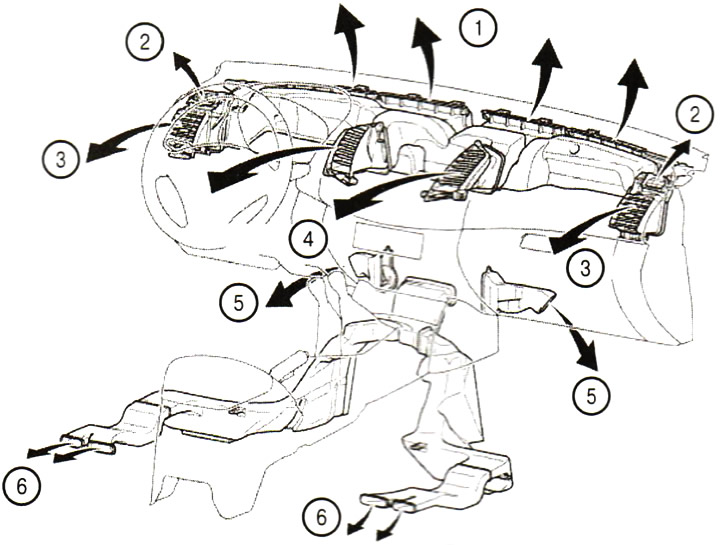
1. Windshield air ducts; 2. Door glass blowing grilles; 3. Side deflectors; 4. Central deflectors; 5. Air ducts for blowing air into the lower area of the front seats; 6. Air ducts for the lower area of the rear seats (optional for Club Cab and Double Cab modifications)
The car is equipped with a ventilation and heating system.
Air conditioning is installed as an option. The air conditioning can be manual or automatic.
The ventilation, heating and air conditioning system is a single functional complex designed to provide a comfortable microclimate in the car, regardless of weather conditions and outside air temperature. The heater and electric heater provide an increase in temperature, the air conditioning system unit provides a decrease in temperature and humidity in the cabin.
The heater or air conditioner can only be turned on when the engine is running.
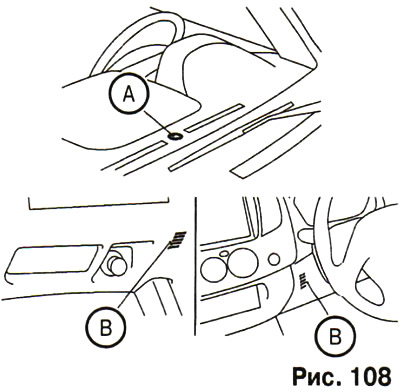
Note: The instrument panel contains a light sensor (A) and a cabin temperature sensor (B), which are part of the ventilation and air conditioning system. Do not place any objects on them - this will cause the system to malfunction.
Direction of air flow depending on the position of the air supply mode selection regulator
The direction of the air flow and the intensity of air supply to different areas of the cabin are changed by the mode selection switch.
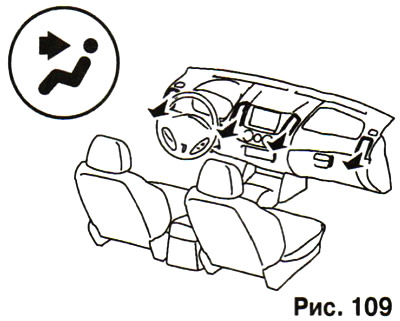
Air supply to the upper zone of the cabin
Air flows are directed only to the upper zone of the cabin.
Air supply to the upper and lower parts of the cabin
Air flows are directed to the upper zone of the cabin and the lower zone (to the feet of the driver and passengers).
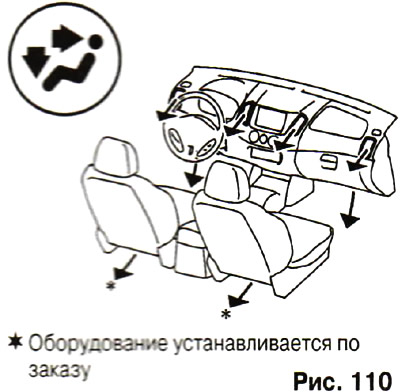
Air supply to the lower part of the cabin
Most of the air flow is directed to the lower area (towards the feet).
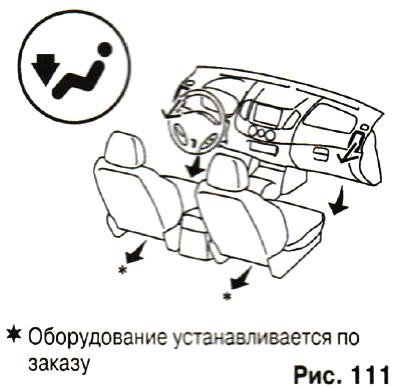
Note: If the switch is between positionsи
, most of the air enters the upper part of the cabin.
If the switch is between positions
и  , most of the air goes to the feet.
Supply of air to the lower part of the passenger compartment and heating of the windows
Air is supplied to the feet, windshield and front door windows.
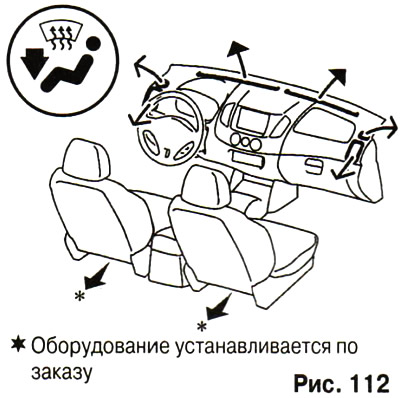
Glass heating
Most of the air flow is directed to the windshield and front door windows.
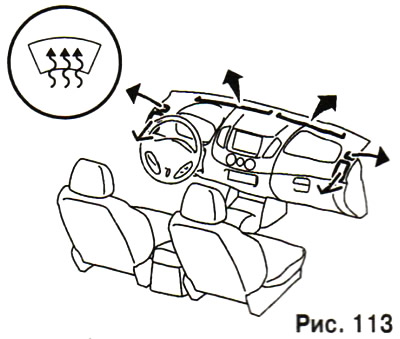
Note: If the switch is between positions, most of the air goes to the feet. If the switch is between positions
, most of the air goes to the windshield and front door windows.
Control panel for heating and air conditioning with manual control
The heater/air conditioner can only be switched on when the engine is running.
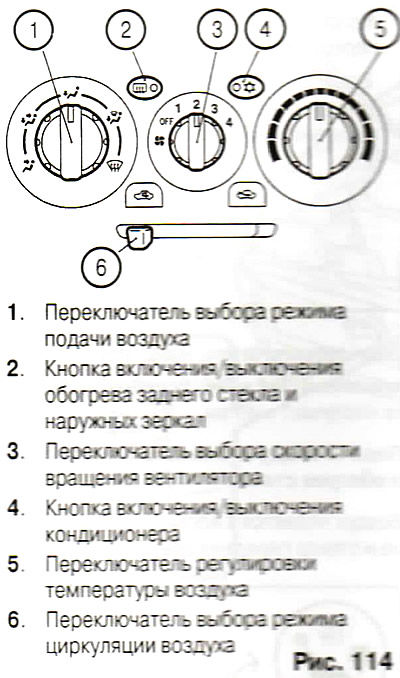
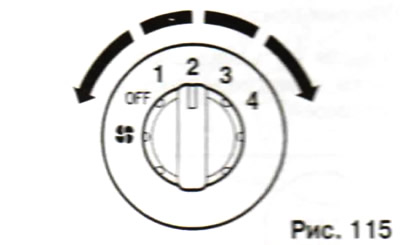
Fan speed switch
The fan speed is selected by turning the control knob clockwise or counterclockwise. When turning the control knob to the right, the fan speed gradually increases. When moving the speed control knob to the OFF position, the fan stops supplying air.
Air temperature control switch
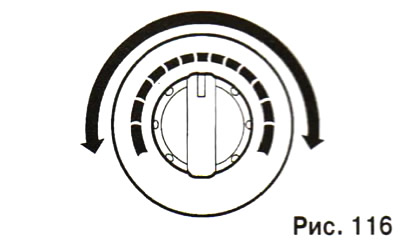
To increase the temperature of the supplied air, turn the switch clockwise; to decrease the temperature, turn it counterclockwise.
Note: When the engine coolant temperature is low, the air supplied by the heater will also be cool or cold, even if the temperature control is set to the position corresponding to the supply of warm air.
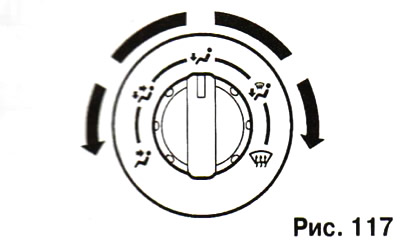
Air supply mode selection knob
The direction and intensity of air supply through the various air ducts of the interior ventilation system is changed by turning the mode selection knob and changing the position of the deflector flaps.
Air circulation mode selection switch
The air circulation mode is changed by moving this handle.
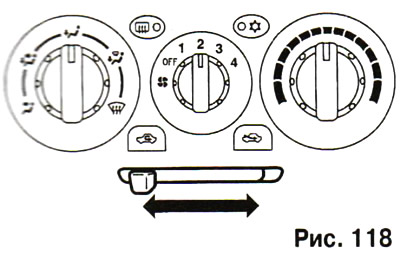
 - Outside air is supplied to the passenger compartment.
 - The flow of outside air into the passenger compartment stops and it is recirculated inside the vehicle.
Under normal conditions, the outside air intake mode
should be used to prevent fogging of the windshield and side windows and to quickly remove condensation or ice from the windshield.
If you need to quickly cool the air in the cabin or if the outside air contains a lot of dust or other pollutants, turn on the recirculation mode
. In this case, you should switch to the outside air intake mode from time to time to ensure ventilation of the interior and prevent fogging of the windows.
Long-term operation in air recirculation mode may cause the windows to fog up.
Using the air conditioning system
Interior heating
Set the air supply mode selection knob to the position
, and the circulation mode switch is set to the outside air intake position .
Turn the temperature control to set the desired temperature. Select the desired fan speed.
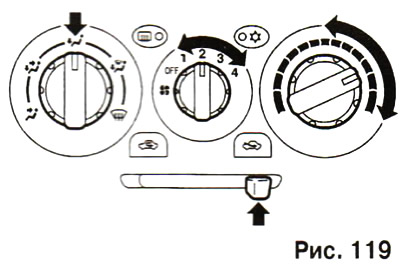
Air cooling
1. Set the air supply mode selection knob to the position
.
2. Set the air circulation mode selection knob to the position
(outside air intake).
3. Press the air conditioner switch (B).
4. Turn the temperature control to set the desired temperature.
5. Select the required fan speed.
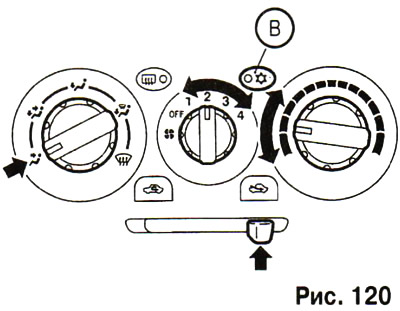
If you need to quickly cool the air in the cabin or if the outside air contains a lot of dust or other pollutants, turn on the recirculation mode
, and turn the temperature control knob to the far left position.
In this case, you should switch to the outside air intake mode from time to time
, to ensure ventilation of the interior and prevent fogging of the windows.
Simultaneous supply of cool and warm air
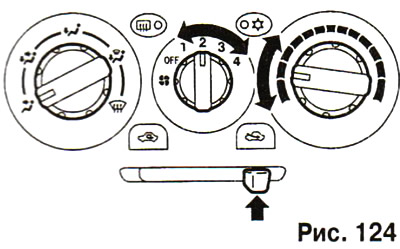
Set the air supply mode selection knob to the position shown in the figure and the recirculation mode switch to the outside air supply mode
.
The air flow will be directed towards the feet and the upper part of the cabin. Select the required fan speed.
Warm air is supplied to the feet, and cold air (or cool, depending on the position of the temperature regulator) is supplied to the upper part of the cabin.
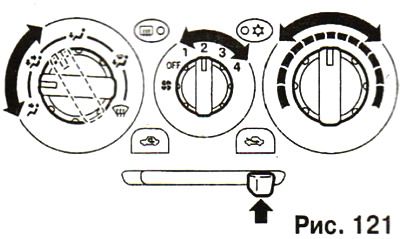
Heated windshield and side windows
Caution: For safety reasons, all measures should be taken to prevent the glass from fogging up.
To remove ice or moisture from the windshield and door windows, set the air flow selector knob to the position
or .
Removal moisture from glass in normal mode
To prevent fogging of the windshield and side windows, and to warm your feet (in rain or snow), set the controls to the position shown in the figure.
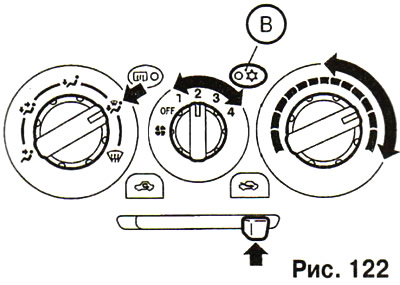
1. Set the air circulation mode selection knob to the position
(outside air intake).
2. Set the air supply mode selection knob to the position
.
3. Turn the knob to select the required fan speed.
4. Turn the knob to set the required air temperature.
5. Press the air conditioning switch (B) (on vehicles equipped with air conditioning).
Accelerated removal of moisture from glass
1. Set the air circulation mode selection knob to the position
(outside air intake).
2. Set the air supply mode selection knob to the position
.
3. Set the fan speed to maximum.
4. Turn the knob to set the maximum air temperature.
5. Press the air conditioning switch (B) (on vehicles equipped with air conditioning).
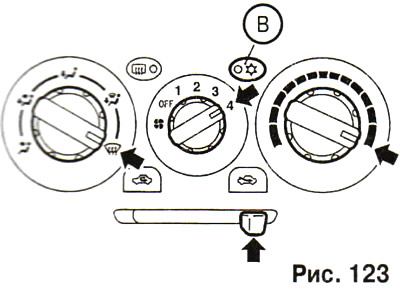
Note: For more effective moisture removal, point the side deflectors towards the front door windows.
Do not set the temperature control to the coldest setting. This will blow cold air onto the windows, causing them to fog up.
Supply of outside air
To supply outside air to the vehicle interior in hot weather, set the recirculation mode switch to the outside air supply position
.
The temperature regulator should be set to the extreme left position.
Select the required fan speed.
Automatic air conditioning control panel
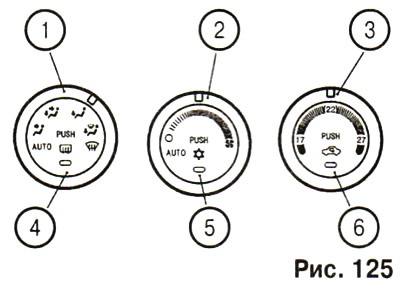
1. Air supply mode selection switch.
2. Fan speed selection switch.
3. Air temperature control switch.
4. Button for turning on/off the heated rear window and outside mirrors.
5. Air conditioner on/off button.
6. Air circulation mode selection button.
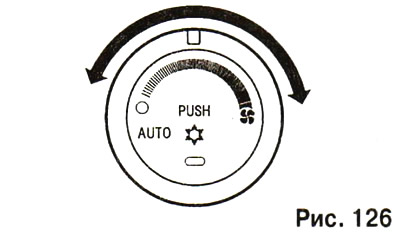
Fan speed controller
The fan speed is selected by turning the control knob clockwise or counterclockwise. When turning the control knob to the right, the fan speed gradually increases.
When the speed control handle is moved to the position О (Off) The fan stops supplying air.
Air temperature regulator
To increase the temperature of the supplied air, turn the knob clockwise. To decrease the temperature, turn the knob counterclockwise.
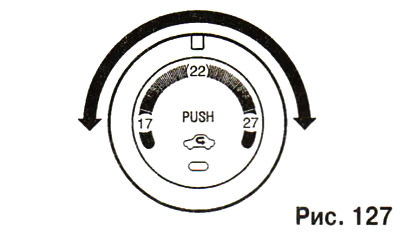
Note: When the engine coolant temperature is low, the air supplied by the heater will also be cool or cold, even if the temperature control is set to the warm air position.
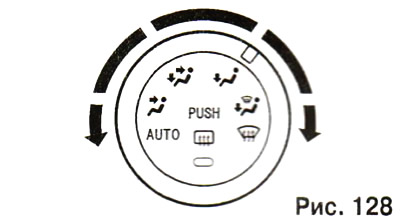
Air supply mode selection switch
By turning this switch, the direction and intensity of air flow through the various air ducts and deflectors of the interior ventilation system are set.
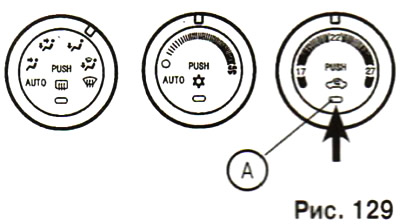
Air circulation mode selection button
When the button is off (the indicator light A is not lit), outside air is supplied - circulation mode.
The recirculation mode is activated by pressing the button (the indicator light A lights up), and the supply of outside air to the passenger compartment is stopped.
Caution: Under normal conditions, use the outside air intake mode to prevent fogging of the windshield and side windows and to quickly remove condensation or ice from the windshield.
If you need to cool the air in the cabin quickly or if the outside air contains a lot of dust or other pollutants, turn on the recirculation mode. At the same time, you should switch to the outside air intake mode from time to time to ensure ventilation of the cabin and prevent fogging of the windows.
Long-term operation in air recirculation mode may cause the windows to fog up.
Turning the air conditioner on/off
The air conditioner is switched on by pressing the button, and the air conditioner indicator light (A) lights up. When the button is pressed again, the air conditioner is switched off, and the indicator light goes out.
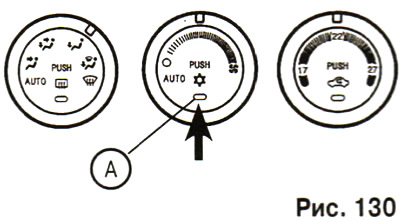
Attention. When the air conditioner is turned on, the engine idle speed increases slightly, the air conditioner compressor turns on and off automatically. At the same time, if the car equipped with an automatic transmission is stationary, it is necessary to press the brake pedal all the way to prevent the car from accidentally moving away.
The system operates in automatic mode
Under normal conditions, use the system in automatic mode, following these steps.
1. Set the fan speed selection knob to the AUTO position.
2. Use the temperature control knob to set the desired air temperature. The possible temperature setting range is from 17 to 27. When turning the control knob to the right, the temperature gradually increases.
3. Move the air supply mode selection knob to the AUTO position.
4. Press the button to turn on the air conditioner. When the air conditioner is running, the indicator light (A) in the control knob lights up.
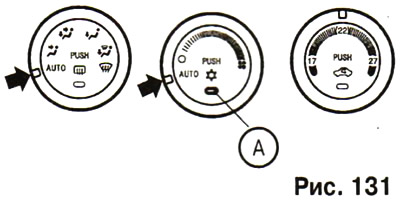
Control of air deflectors (except mode
), fan speed and air conditioner on/off will be controlled automatically.
Note:
- Under normal conditions, set the air temperature to approximately 22 degrees.
- If you set the minimum or maximum temperature in the automatic mode, the air intake mode, air supply mode, fan speed and air conditioner on/off control will be performed as described below. In addition, if you change the air intake mode manually after automatic selection, it will switch to manual control mode.
- Quick warm-up (when selecting the maximum temperature). Outside air will be taken in, air will be supplied to the foot area and the air conditioner will be turned off.
- Rapid cooling (when minimum temperature is selected). The air recirculation mode will be activated, air will be supplied to the upper part of the cabin, and the air conditioner will be turned on.
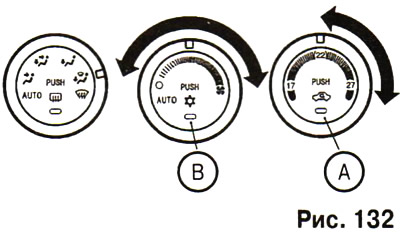
Controlling the system operation in manual mode
You can control the fan speed and air supply mode manually by setting the fan speed and air supply mode controls to the desired positions. To return to automatic mode, set these controls to the AUTO position.
Heated windshield and front door windows.
Caution: For safety reasons, all measures should be taken to prevent glass fogging.
To remove ice or moisture from the windshield and front door windows, set the air flow selector knob to the
or .
Removal moisture from glass in normal mode
To prevent the windshield and front door windows from fogging up, and to warm your feet (in rain or snow), set the controls to the position shown in the illustration.
1. Set the recirculation mode switch (A) to the outside air supply position.
2. Set the air supply mode selection knob to the position
.
3. Turn the knob to select the required fan speed.
4. Turn the knob to set the required air temperature.
5. Press the air conditioner switch (B).
Accelerated removal of moisture from glass
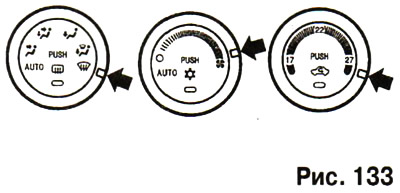
1. Set the air supply mode selection knob to the position
.
2. Set the fan speed to maximum.
3. Turn the knob to set the maximum air temperature.
Note:
- When the mode selector knob is set to position
- For more effective removal of moisture, direct the side deflectors towards the front door windows.
- Do not set the temperature control to the coldest setting. This will blow cold air onto the windows, causing them to fog up.
Accelerated interior heating (only for left-hand drive vehicles)*.
This system can only be activated when the engine is running. Use it at low coolant temperatures if you want to increase the intensity of interior heating.
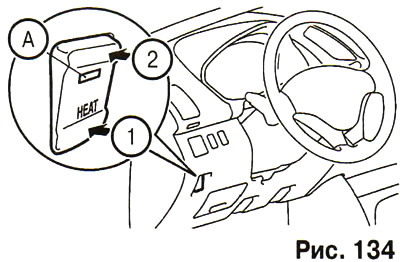
1. Set the air supply mode selection knob to the position
, or .
2. Turn the knob to set the maximum air temperature.
3. Set the fan speed control knob to AUTO or select the desired fan speed.
4. To turn on the system, press the bottom side of the switch (1).
During operation, the indicator light (A) comes on.
Note: When the coolant temperature is low, the electric heater in the air conditioning system will automatically turn on to increase the heating intensity.
Note:
- On vehicles with a manual transmission, when the heater is turned on, the engine speed increases if the gearshift lever is in position N (neutral).
- On vehicles with an automatic transmission, when the heater is turned on, the engine speed increases if the selector lever is in position P (park) or N (neutral).
If you need to use the heater while parked, move the selector lever to position P (park) to prevent the vehicle wheels from turning.
5. To turn off the system, press the top side of the switch (2).
Air conditioner operating rules
Try to park your car in the shade. When parked in the sun, the car interior heats up very much and will take longer to cool down. If you do have to leave your car in the sun, open the windows for a few minutes after turning on the air conditioner to let the hot air out of the car.
Close the windows when the air conditioner is running. The flow of outside air through open windows reduces the efficiency of the air conditioner's cooling effect.
Too much cooling is harmful to health. The air temperature in the cabin should be only 5-6°C lower than the outside air temperature.
When turning on the air conditioner, make sure that the air intake located in front of the windshield is not blocked by anything (such as leaves). Leaves accumulated at the entrance to the air intake can reduce the air supply and block the condensation drain holes.
Recommendations for choosing refrigerant and lubricants for air conditioners
A possible cause of decreased air conditioning efficiency is a refrigerant leak. It is recommended to have the system checked by an authorized MITSUBISHI MOTORS service center. The vehicle's air conditioning system must be filled with HFC-134 refrigerant and ZXL-1OOPG lubricant. Using any other refrigerant or lubricant may cause serious damage, requiring replacement of the entire air conditioning system. It is not recommended to release refrigerant into the atmosphere.
It is recommended to return the refrigerant for recycling and reuse.
If the air conditioner is not used for a long time
It is necessary to turn on the air conditioner for at least five minutes a week, even in cold weather. This is done to lubricate the compressor parts and keep the system in working order. If the air conditioner is not turned on for a long time, a foreign smell may appear when it is turned on. This is not a sign of a malfunction of the system.