



Share with friends:
Vehicle Maintenance Mitsubishi Colt 2 and 3
This chapter provides a complete plan for the routine maintenance of the vehicle and a description of the necessary operations.

Recommended types of lubricants and fluids
Motor oil Type Universal oil that meets API SF or SF/CC standards Viscosity See the table Quantity (approximately) 4.0 l Fuel Unleaded gasoline with an octane rating of...
Motor oil Type Universal oil that meets API SF or SF/CC standards Viscosity See the table Quantity (approximately) 4.0 l Fuel Unleaded gasoline with an octane rating of...

Adjustment operations and special maintenance
Engine performance may deteriorate if routine maintenance has been neglected. In this case, the following operations should be performed: Primary operations a) Clean and...
Engine performance may deteriorate if routine maintenance has been neglected. In this case, the following operations should be performed: Primary operations a) Clean and...

Maintenance schedule
While service intervals are based on the manufacturer's recommendations, most can be shortened to keep your vehicle in peak condition. Every 400 km or weekly Check the...
While service intervals are based on the manufacturer's recommendations, most can be shortened to keep your vehicle in peak condition. Every 400 km or weekly Check the...

Checking oil and fluid levels
Motor oil 4.1a The oil level dipstick is located near the clamp on some models 4.1b Location of oil dipstick on Galant models 4.1c The oil level should be between the...
Motor oil 4.1a The oil level dipstick is located near the clamp on some models 4.1b Location of oil dipstick on Galant models 4.1c The oil level should be between the...

Checking the condition of the tread and tire pressure
1. Periodically checking the tread condition can provide important information about the condition of the suspension and steering. 5.2 Use a special indicator to check...
1. Periodically checking the tread condition can provide important information about the condition of the suspension and steering. 5.2 Use a special indicator to check...

Checking the power steering fluid level
6.1 The hydraulic fluid reservoir for the power steering system is located on the left side of the engine compartment - unscrew the cap to check the fluid level 1. The...
6.1 The hydraulic fluid reservoir for the power steering system is located on the left side of the engine compartment - unscrew the cap to check the fluid level 1. The...

Checking the fluid level in the automatic transmission
1. Monitor the automatic transmission fluid level carefully. Low fluid levels can cause loss of drive, and overfilling can cause fluid to boil, leak fluid, and damage...
1. Monitor the automatic transmission fluid level carefully. Low fluid levels can cause loss of drive, and overfilling can cause fluid to boil, leak fluid, and damage...

Changing engine oil and oil filter
1. Changing the engine oil and oil filter is one of the most important operations that a car enthusiast can perform to extend the life of the engine. It is recommended...
1. Changing the engine oil and oil filter is one of the most important operations that a car enthusiast can perform to extend the life of the engine. It is recommended...

Inspection and replacement of windshield wiper blades
1. Wiper blades and arms should be inspected periodically for signs of wear or damage. Wash the blades regularly with a mild soap solution to remove oil film and check...
1. Wiper blades and arms should be inspected periodically for signs of wear or damage. Wash the blades regularly with a mild soap solution to remove oil film and check...

Checking and adjusting the free travel of the clutch pedal
1. Press the clutch pedal and check the amount of free play. 2. To adjust the pedal free play in the engine compartment, tighten the cable housing adjusting nut (located...
1. Press the clutch pedal and check the amount of free play. 2. To adjust the pedal free play in the engine compartment, tighten the cable housing adjusting nut (located...

Checking, maintaining and charging the battery
Warning! Hydrogen vapors contained in the battery sections are explosive. The electrolyte is diluted sulfuric acid, which will cause chemical burn if it comes into...
Warning! Hydrogen vapors contained in the battery sections are explosive. The electrolyte is diluted sulfuric acid, which will cause chemical burn if it comes into...

Checking, adjusting and replacing the drive belt
Examination 1. The drive belts are V-belts. They are located on the left side of the engine and their condition and correct tension are very important for the operation...
Examination 1. The drive belts are V-belts. They are located on the left side of the engine and their condition and correct tension are very important for the operation...
Checking and replacing hoses in the engine compartment
General description 1. High temperatures in the engine compartment can cause deterioration of rubber and plastic hoses. Therefore, it is necessary to periodically check...
General description 1. High temperatures in the engine compartment can cause deterioration of rubber and plastic hoses. Therefore, it is necessary to periodically check...
Checking the cooling system
1. The cooling system should be checked when the engine is cold. Remove the radiator cap and clean it. Check the coolant. If it has a rusty tint, replace the coolant and...
1. The cooling system should be checked when the engine is cold. Remove the radiator cap and clean it. Check the coolant. If it has a rusty tint, replace the coolant and...
Wheel rotation
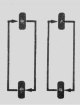
1. Wheels must be rotated at regular intervals and when uneven tire wear is detected. 15.2 Wheel rotation diagram 2. Wheels with radial tires must be rotated according...
1. Wheels must be rotated at regular intervals and when uneven tire wear is detected. 15.2 Wheel rotation diagram 2. Wheels with radial tires must be rotated according...

Checking the brakes
1. It is recommended to check the brakes every time the wheels are removed or if they do not function properly, as indicated by the following signs: the car pulls to the...
1. It is recommended to check the brakes every time the wheels are removed or if they do not function properly, as indicated by the following signs: the car pulls to the...

Replacing the air filter and crankcase ventilation filter
Models with carburetor engine 17.1 The air filter cover can be removed by releasing the clips on the sides of the cover and unscrewing the wing nut on top 1. The air...
Models with carburetor engine 17.1 The air filter cover can be removed by releasing the clips on the sides of the cover and unscrewing the wing nut on top 1. The air...

Checking the throttle position sensor
18.1 The cam on the left side of the carburetor (indicated by the arrow) should move smoothly and gradually press on the throttle position sensor 1. Ask an assistant to...
18.1 The cam on the left side of the carburetor (indicated by the arrow) should move smoothly and gradually press on the throttle position sensor 1. Ask an assistant to...

Checking and adjusting valve clearances
19.1. Rocker arms of engines on which it is not necessary to adjust valve clearances look like this (indicated by arrows) - they do not have adjusting screws 1. Valve...
19.1. Rocker arms of engines on which it is not necessary to adjust valve clearances look like this (indicated by arrows) - they do not have adjusting screws 1. Valve...

Checking and adjusting idle speed (for models with carburetor)
1. Connect a tachometer. Warm up the engine to normal operating temperature and check the ignition timing. 2. Increase the engine speed to 2000-3000 rpm for 5 seconds...
1. Connect a tachometer. Warm up the engine to normal operating temperature and check the ignition timing. 2. Increase the engine speed to 2000-3000 rpm for 5 seconds...
Checking the power supply system
Caution: Be careful when working with gasoline. 1. Check the filler cap and replace it if necessary. 2. Check the fuel hoses for cracks and ensure that the connections...
Caution: Be careful when working with gasoline. 1. Check the filler cap and replace it if necessary. 2. Check the fuel hoses for cracks and ensure that the connections...

Checking the steering and suspension
When the car is on the ground 1. Stop the car and set the wheels straight. Rock the steering wheel left and right. If the free play is too large, then the front wheel...
When the car is on the ground 1. Stop the car and set the wheels straight. Rock the steering wheel left and right. If the free play is too large, then the front wheel...

Checking axle shaft covers
1. The covers protect the CV joint from dirt and foreign particles. 23.2 Pull apart the folds of the cover and check for cracks or signs of leakage 2. Inspect the covers...
1. The covers protect the CV joint from dirt and foreign particles. 23.2 Pull apart the folds of the cover and check for cracks or signs of leakage 2. Inspect the covers...

Checking the exhaust system of growing gases
24.1 Check the rubber exhaust pipe mounts for cracks or wear - replace worn mounts 1. When the engine is cold, check all exhaust pipes for leaks, corrosion or damage....
24.1 Check the rubber exhaust pipe mounts for cracks or wear - replace worn mounts 1. When the engine is cold, check all exhaust pipes for leaks, corrosion or damage....

Checking the oil level in a manual transmission
25.1 Remove the plug from the rear of the gearbox - the oil should be level with the bottom edge of the hole 1. There is no dipstick on the manual transmission to check...
25.1 Remove the plug from the rear of the gearbox - the oil should be level with the bottom edge of the hole 1. There is no dipstick on the manual transmission to check...

Replacing the fuel filter
Models with carburetor engine 26.1 On most models with a carburetor engine, the fuel filter is located on the rear wall of the engine compartment under the charcoal...
Models with carburetor engine 26.1 On most models with a carburetor engine, the fuel filter is located on the rear wall of the engine compartment under the charcoal...

Replacing spark plugs
27.1a Tools needed to replace spark plugs 1. Spark plug replacement socket; 2. Torque wrench; 3. Ratchet wrench; 4. Extension cord; 5. Wire sensor 27.1b Use a wire gauge...
27.1a Tools needed to replace spark plugs 1. Spark plug replacement socket; 2. Torque wrench; 3. Ratchet wrench; 4. Extension cord; 5. Wire sensor 27.1b Use a wire gauge...

Checking and replacing high voltage wires, distributor cap and rotor
1. It is recommended to check the high tension wires every time the spark plugs are replaced. 2. Inspect the wires visually. Inspect the wires in the dark with the...
1. It is recommended to check the high tension wires every time the spark plugs are replaced. 2. Inspect the wires visually. Inspect the wires in the dark with the...

Checking and cleaning the carburetor air damper
Examination 1. The check must be carried out when the engine is cold. 29.3 The air damper is located at the top of the carburetor 2. Remove the air filter. The air...
Examination 1. The check must be carried out when the engine is cold. 29.3 The air damper is located at the top of the carburetor 2. Remove the air filter. The air...

Checking the hot air supply system
1. Disconnect the air hose from the air cleaner intake pipe. Start the engine and observe the flap with a mirror through the hole in the pipe. When the engine is cold,...
1. Disconnect the air hose from the air cleaner intake pipe. Start the engine and observe the flap with a mirror through the hole in the pipe. When the engine is cold,...

Cooling system maintenance
1. Periodically, the coolant must be replaced and the cooling system flushed to prevent corrosion and rust. Draining the coolant 31.2 Before opening the drain valve,...
1. Periodically, the coolant must be replaced and the cooling system flushed to prevent corrosion and rust. Draining the coolant 31.2 Before opening the drain valve,...

Checking, replacing grease and adjusting rear wheel bearings (with drum brakes)
32.1 Tools and materials required for servicing rear wheel bearings 1. Hammer; 2. Lubrication; 3. Wooden block; 4. Needle-nose pliers; 5. Torque wrench; 6. Screwdriver;...
32.1 Tools and materials required for servicing rear wheel bearings 1. Hammer; 2. Lubrication; 3. Wooden block; 4. Needle-nose pliers; 5. Torque wrench; 6. Screwdriver;...

Automatic transmission fluid and filter replacement
1. Automatic transmission fluid must be replaced at certain intervals. 2. Drive the vehicle to warm up the automatic transmission fluid. 3. Raise the vehicle and support...
1. Automatic transmission fluid must be replaced at certain intervals. 2. Drive the vehicle to warm up the automatic transmission fluid. 3. Raise the vehicle and support...

Manual transmission oil change
35.1 The drain plug of the manual transmission (indicated by the arrow) is located in the lower part of the housing 1. Remove the drain plug and drain the oil (35.1). 2....
35.1 The drain plug of the manual transmission (indicated by the arrow) is located in the lower part of the housing 1. Remove the drain plug and drain the oil (35.1). 2....

Checking the fuel vapor collection system and replacing the carbon filter
36.1 The carbon filter is usually located on the rear wall of the engine compartment - check the hoses for cracks and other damage - disconnect the hoses and spring clip...
36.1 The carbon filter is usually located on the rear wall of the engine compartment - check the hoses for cracks and other damage - disconnect the hoses and spring clip...

Checking and adjusting the ignition timing angle
37.1 Tools required for checking and adjusting the ignition timing 1. Plugs; 2. Stroboscope; 3. Special shaped wrench 1. Special equipment is required to check and...
37.1 Tools required for checking and adjusting the ignition timing 1. Plugs; 2. Stroboscope; 3. Special shaped wrench 1. Special equipment is required to check and...

Checking and replacing the crankcase ventilation valve
1. The crankcase ventilation valve is located in the valve cover. 38.2a Disconnect the hose from the crankcase ventilation valve... 38.2b...then unscrew the valve 2....
1. The crankcase ventilation valve is located in the valve cover. 38.2a Disconnect the hose from the crankcase ventilation valve... 38.2b...then unscrew the valve 2....

Replacing the oxygen sensor
39.1 Before removing the oxygen sensor (1), disconnect the wire from the connection connector (2), unscrew the bolts (3) and remove the exhaust manifold heat shield 1....
39.1 Before removing the oxygen sensor (1), disconnect the wire from the connection connector (2), unscrew the bolts (3) and remove the exhaust manifold heat shield 1....
This section is available on: russian, bulgarian, belarusian, ukrainian, serbian, croatian, romanian, polish, slovak, hungarian
Similar materials for other Mitsubishi models
➤ General information: Maintenance Mitsubishi Lancer 3 and 5 (1984-1992)
➤ General information: Maintenance Mitsubishi Galant 5 (1983-1989, petrol)
➤ General information: Maintenance Mitsubishi L200 4 (2005-2014, diesel)
➤ General information: Maintenance Mitsubishi Pajero 4 (2006-2021)
➤ General information: Maintenance Mitsubishi Carisma (1995-2004)
Link in different formats to this section
TEXTHTMLBB Code
- General information
- User manual
- Specifications
- Gasoline engines
- 4G1 engines until 1995
- 4G1 engines since 1995
- Repair of 4G9 engines
- Cooling system
- Reduced exhaust gas toxicity
- Engine electrical equipment
- Injection system MPI
- Carburetors
- Transmission
- Clutch and drive shafts
- Manual gearbox F4M21/F5M21
- Manual gearbox F4M41
- Automatic gearbox F4A21
- Automatic gearbox F4A41
- Chassis and running gear
- Car suspension
- Steering
- Brake system
- Body
- Exterior (external elements)
- Electrical equipment
- Equipment and devices
- Electrical circuits
- General information
- Maintenance
- Power unit
- Engine in a car
- Engine repair (gasoline)
- Engine repair (diesel)
- Lubrication system
- Cooling system
- Carburetor
- Fuel injection MPI
- Fuel injection GDI
- Emission reduction
- Fuel system (diesel)
- Ignition system
- Exhaust system
- Transmission
- Clutch
- Manual gearbox
- Automatic gearbox
- Drive shafts
- Chassis and running gear
- Chassis malfunctions
- Front suspension
- Rear suspension
- Steering
- Wheels and tires
- Brake system
- Body and interior
- Body elements
- Electrical equipment
- Equipment and devices
- Power devices
- Heating and air conditioning
- Electrical circuits
- General information
- User manual
- Daily care
- Maintenance
- Power unit
- Engine in a car
- Engine overhaul
- Cooling system
- Heater and air conditioner
- Power and exhaust system
- Engine electrical equipment
- Emission reduction
- Transmission
- Mechanical gearbox
- Automatic gearbox
- Clutch and axles
- Chassis and running gear
- Brake system
- Car suspension
- Steering
- Body and interior
- Body and elements repair
- Electrical equipment
- Equipment and devices
- Electrical circuits