



Warning! Hydrogen vapors contained in the battery sections are explosive. The electrolyte is diluted sulfuric acid, which will cause
chemical burn if it comes into contact with skin or eyes. When disconnecting battery cables, always disconnect the negative battery cable first and reconnect it last.
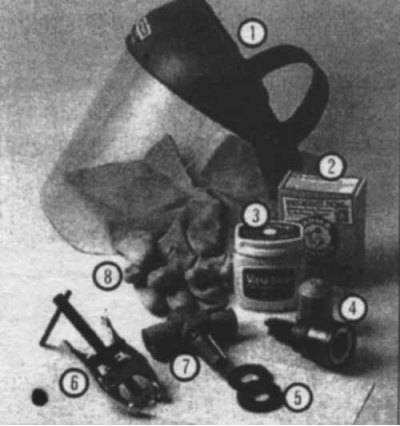
11.1 Tools and materials required for battery maintenance
1. Safety glasses or shield; 2. Baking soda; 3. Technical petroleum jelly; 4. Battery contact cleaning tool; 5. Felt washers; 6. Puller; 7. Contact cleaning tool; 8. Rubber gloves
Checking, maintenance
1. If the car has a factory battery that does not require maintenance, you do not need to check the electrolyte level or add distilled water. If the battery has been replaced with a regular one, the following maintenance operations must be performed.
2. Remove the caps and check the electrolyte level in the battery sections. It should completely cover the plates. Add distilled water if necessary.
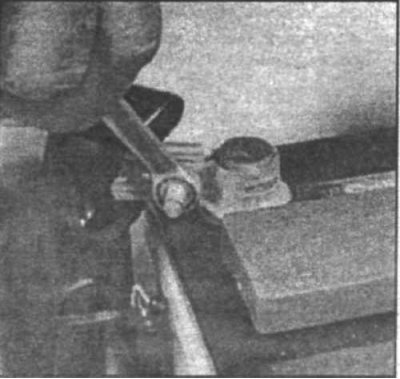
11.3a Using a wrench, check that the cable clamp bolt is tightly tightened
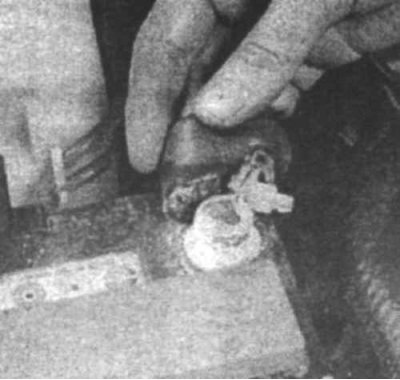
11.3b Corrosion on the battery terminal
[The article is reprinted from this source: mitsubishiman.ru]
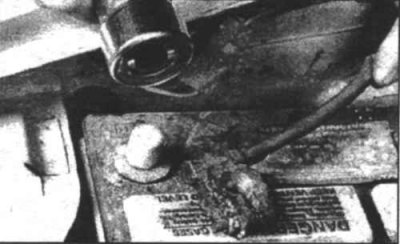
11.3g Clean the battery terminals thoroughly
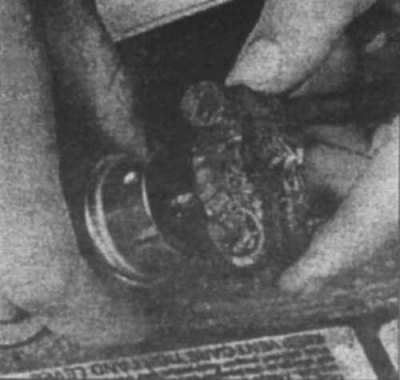
11.3c When cleaning the contacts, it is necessary to remove all traces of corrosion
3. Check the condition of the battery case, reliability and cleanliness of the contacts (11.3a, 11.3b, 11.3c and 11.3g).
4. Check the battery tray and the reliability of the mounting clamp. Remove any corrosion that has formed with baking soda.
Recharging the battery
5. Remove all battery caps. Disconnect the negative terminal wire and connect the charger.
6. If the charging current is higher than 2 Amperes, check the battery regularly to ensure that it does not overheat. If you use a charger with a low charging current, the battery can be left to charge overnight.
7. Check the specific gravity of the electrolyte with a hydrometer every hour during the last few hours of charging. The battery is considered charged when the specific gravity of the electrolyte does not change for two hours. The specific gravity of the electrolyte should be approximately the same in all sections of the battery. If not, some sections are probably damaged.