



Disc brakes
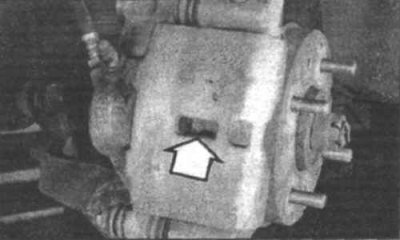
16.2 Check the thickness of the brake pads through the hole in the caliper (indicated by the arrow)
2. Check the thickness of the brake linings through the inspection hole in the caliper (16.2).
3. For a more detailed check, remove the caliper and pads and measure their thickness.
(The article was taken from the website: MitsubishiMan.ru)
4. Check the brake disc for scratches or burnt areas.
5. Before installing the wheels, check all tubes and hoses for damage, signs of wear, deformation, cracks, signs of leakage or corrosion. Check the reliability of the connections.
Rear drum brakes
6. Remove the brake drum.
Warning! Dust from brake wear contains asbestos, which is hazardous to health. Do not inhale it.
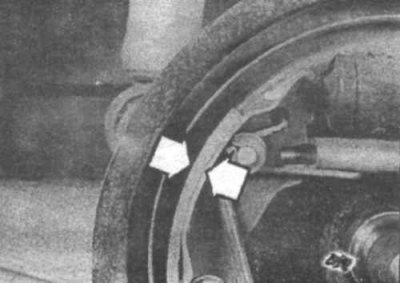
16.7 The thickness of the friction material of the brake pads is measured from the outer surface to the metal base
7. Check the thickness of the friction material on the brake pads and replace them if the distance from the surface to the rivets is less than 1-2 mm. Replace the pads if they are contaminated with oil or cracked (16.7).
8. Check the return and pressure springs, as well as the adjustment mechanism.
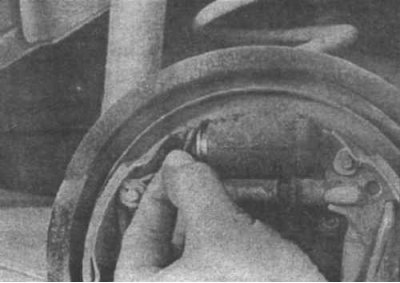
16.9 Carefully bend back the wheel cylinder boot and check for leaks
9. Inspect the wheel cylinder for leaks by bending back the rubber boots (16.9).
10. Inspect the brake drum for cracks, scratches and signs of excessive wear.
Parking brake
8. To check the parking brake, test its operation by stopping the car on a steep slope.