



2. Inspect the wires visually. Inspect the wires in the dark with the engine running, if there is a break in the wire, sparks will be visible in this place.
3. High voltage wires must be checked one by one to avoid mixing them up.
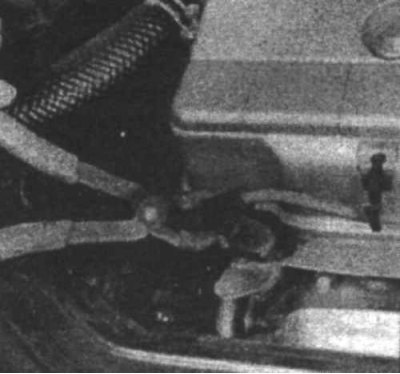
27.2 When disconnecting high voltage wires, grasp the cap, not the wires
4. Disconnect the wire from the spark plug (27.2).
5. Check the cap for corrosion and to ensure it fits tightly on the spark plug.
6. Wipe the entire length of the wire and check for cracks, burns or other damage.
7. Disconnect the wire from the distributor. Check the connection for reliability and absence of corrosion.
8. Check the remaining high voltage wires in the same manner.
9. Replace wires if necessary.
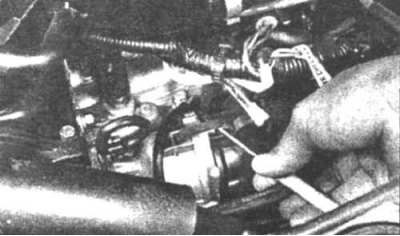
28.10a Using a small screwdriver, disconnect the distributor cap retaining clips
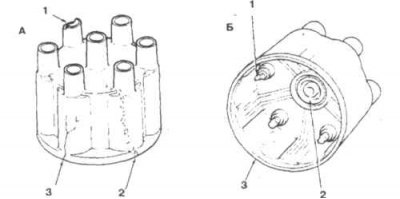
28.10b Main defects of the ignition distributor cap
A
1. Broken edge
2. Spark marks
3. Crack in the distributor cap
B
1. Erased contacts
2. The carbon is worn out or damaged
3. Spark marks
10. Remove the distributor cap by disconnecting the two fastening clamps (28.10a). Inspect the inner surface of the cap for cracks, traces of sparks, check the contacts (28.10b).
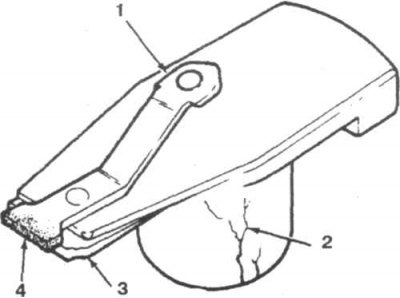
28.11 Check the distributor rotor for signs of wear or corrosion
1. Insufficient spring stiffness; 2. Cracks; 3. Traces of friction on the lid; 4. Corrosion on the tip of the runner
11. Remove the runner from the axle and inspect it for cracks and spark marks (28.11). Replace the cover and runner if damaged.