



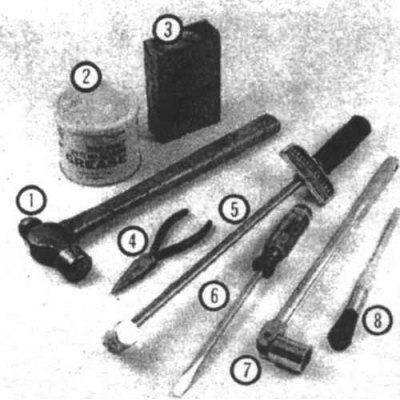
32.1 Tools and materials required for servicing rear wheel bearings
1. Hammer; 2. Lubrication; 3. Wooden block; 4. Needle-nose pliers; 5. Torque wrench; 6. Screwdriver; 7. Open-end wrench; 8. Brush
Examination
1. Raise the rear of the vehicle and support it on jack stands. Spin the wheel and check that it rotates without noise, resistance or excessive free play. Try moving the wheel back and forth on the axle. If the free play is too great, the bearings must be checked and the grease replaced (32.1).
Lubricant replacement
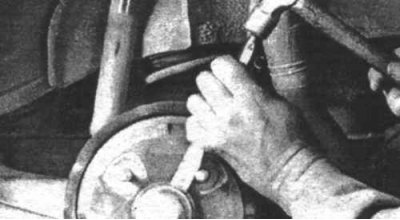
32.2 Remove the dust cap
2. Remove the dust cap from the hub (32.2).
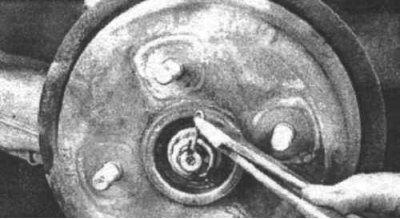
32.3a Take out the check
3. Remove the pin and remove the retaining ring (32.3a and 32.3b).
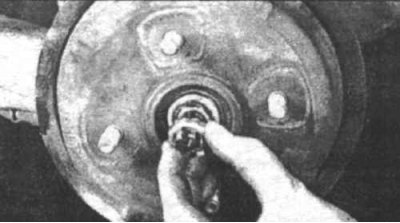
32.3b Remove the retaining ring
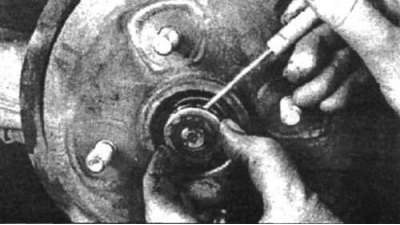
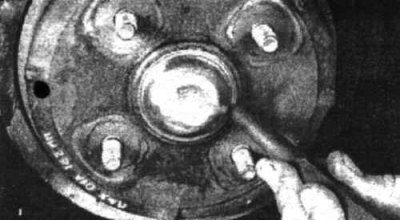
32.4 Remove the washer using a small screwdriver
4. Unscrew and remove the hub mounting nut and washer (32.4).
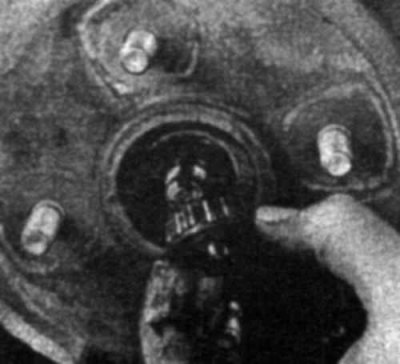
32.5 Remove the outer bearing
5. Pull the hub towards you and return it back to its original position. Remove the outer bearing (32.5).
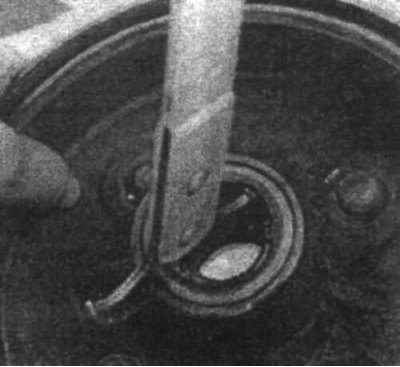
32.6 Remove the oil seal
6. Remove the hub and remove the seal from the back of the hub. Remove the inner bearing.(32.6)
7. Using solvent and a brush, clean the bearings, hub and axle. Inspect the bearings for cracks and signs of wear.
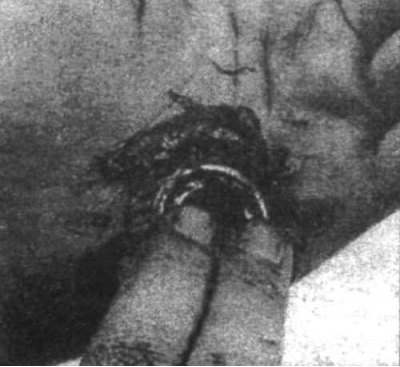
32.8 Apply grease to the bearing rollers
8. Fill the bearings and hub with new grease (32.8). Install the inner bearing into the hub and install a new seal.
9. Carefully install the hub onto the axle and install the outer bearing into place.
Adjustment - crown nut
10. Install the washer and nut. Tighten the nut lightly.
11. Rotate the hub forward several times and loosen the nut.
12. Tighten the nut securely. Install the retaining ring and insert a new pin. Bend the ends of the pin.
32.13 Replace the dust cap
13. Install the dust cap (32.13).