
Share with friends:
Vehicle Maintenance Mitsubishi Galant 6 and 7

Location of components in the engine compartment
Engine Compartment Layout - 2.4L Models 1 - Steering pump drive belt; 2 - Glass washer fluid reservoir; 3 - Power steering fluid reservoir; 4 - Engine oil filler cap; 5...
Engine Compartment Layout - 2.4L Models 1 - Steering pump drive belt; 2 - Glass washer fluid reservoir; 3 - Power steering fluid reservoir; 4 - Engine oil filler cap; 5...
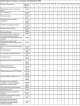
Car maintenance schedule
The intervals of routine maintenance of the vehicle specified in this Section are designed for the independent performance by the owner of the vehicle of all necessary...
The intervals of routine maintenance of the vehicle specified in this Section are designed for the independent performance by the owner of the vehicle of all necessary...

Maintenance Specifications
Type and properties of working fluids Note. Listed below are the lubricants and fluids recommended by the vehicle manufacturer at the time of writing this manual. More...
Type and properties of working fluids Note. Listed below are the lubricants and fluids recommended by the vehicle manufacturer at the time of writing this manual. More...

General information about settings and adjustments
Entitled "settings" this Manual does not imply a single procedure for adjusting any of the parameters of the car's systems, but a whole range of adjustments to achieve...
Entitled "settings" this Manual does not imply a single procedure for adjusting any of the parameters of the car's systems, but a whole range of adjustments to achieve...

Checking fluid levels
Note. Some special maintenance procedures that require additional fluid level checks are also described below. Check under the vehicle regularly for signs of fluid...
Note. Some special maintenance procedures that require additional fluid level checks are also described below. Check under the vehicle regularly for signs of fluid...

Checking the condition of tires and their inflation pressure
1. A conscientious attitude to regularly checking the condition of the tires will allow the driver to avoid annoying delays associated with the failure of the wheel...
1. A conscientious attitude to regularly checking the condition of the tires will allow the driver to avoid annoying delays associated with the failure of the wheel...

Changing the engine oil and oil filter
A set of tools needed to change the engine oil and oil filter 1 - Drain container - should be shallow and wide enough to minimize the chance of spilling oil on the...
A set of tools needed to change the engine oil and oil filter 1 - Drain container - should be shallow and wide enough to minimize the chance of spilling oil on the...

Checking, servicing and charging the battery
Tools and Materials Required for Battery Maintenance 1 - Face shield/goggles - when removing corrosion with a stiff brush, crystallized acid particles can easily get...
Tools and Materials Required for Battery Maintenance 1 - Face shield/goggles - when removing corrosion with a stiff brush, crystallized acid particles can easily get...
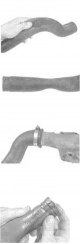
Checking the Condition of the Cooling System Components
Examples of typical defects in radiator hoses 1 - Check hoses for frayed areas. 2 - The softening of rubber indicates the beginning of its destruction as a result of...
Examples of typical defects in radiator hoses 1 - Check hoses for frayed areas. 2 - The softening of rubber indicates the beginning of its destruction as a result of...
Check of a condition and replacement of the hoses located in an impellent compartment
Attention! The replacement of A/C refrigeration line hoses should be left to a car service workshop with the necessary equipment and qualifications to safely discharge...
Attention! The replacement of A/C refrigeration line hoses should be left to a car service workshop with the necessary equipment and qualifications to safely discharge...

Checking the condition and replacing the wiper blades
1. The condition of the windshield wiper assemblies should be checked regularly in accordance with the vehicle's routine maintenance schedule (see Section Mitsubishi...
1. The condition of the windshield wiper assemblies should be checked regularly in accordance with the vehicle's routine maintenance schedule (see Section Mitsubishi...

Wheel rotation
1. Wheel rotation should be carried out regularly in accordance with the vehicle maintenance schedule, as well as when signs of uneven tread wear are detected. When...
1. Wheel rotation should be carried out regularly in accordance with the vehicle maintenance schedule, as well as when signs of uneven tread wear are detected. When...

Checking the Condition of Suspension and Steering Components
Note. Suspension and steering components should be checked regularly as wear or damage can shorten tire life, reduce vehicle handling and increase fuel consumption....
Note. Suspension and steering components should be checked regularly as wear or damage can shorten tire life, reduce vehicle handling and increase fuel consumption....

Lubrication of chassis components
List of materials needed to lubricate chassis components 1 - Liquid motor oil - used to lubricate door hinges 2 - Graphite aerosol - used to lubricate lock cylinders 3 -...
List of materials needed to lubricate chassis components 1 - Liquid motor oil - used to lubricate door hinges 2 - Graphite aerosol - used to lubricate lock cylinders 3 -...

Replacement of ATF automatic transmission and final drive differential
ATF replacement 1. ATF replacement should be carried out on a regular basis, in accordance with the vehicle's routine maintenance schedule (see Section Mitsubishi...
ATF replacement 1. ATF replacement should be carried out on a regular basis, in accordance with the vehicle's routine maintenance schedule (see Section Mitsubishi...
Checking the condition of the brake lines
1. Checking the condition of the metal lines and flexible hoses of the brake system should be carried out on a regular basis in accordance with the vehicle's routine...
1. Checking the condition of the metal lines and flexible hoses of the brake system should be carried out on a regular basis in accordance with the vehicle's routine...

Checking the condition / maintenance of disc brakes
Warning! Remember that the dust generated during the operation of the brake mechanisms may contain asbestos, which is extremely harmful to human health. Never blow off...
Warning! Remember that the dust generated during the operation of the brake mechanisms may contain asbestos, which is extremely harmful to human health. Never blow off...

Check of a condition of protective covers of power shafts
1. Protective covers are used to prevent dirt from entering the constant velocity joints (CV joints) drive shafts of the car, and also keep grease stuffed into the...
1. Protective covers are used to prevent dirt from entering the constant velocity joints (CV joints) drive shafts of the car, and also keep grease stuffed into the...

Checking and adjusting valve clearances — Mirage only
Note. Regular adjustment of valve clearances is carried out only on Mirage 1.5 l models 1990÷1995. issue and 1.8 l 1993÷1995 issue Attention! Violation of the adjustment...
Note. Regular adjustment of valve clearances is carried out only on Mirage 1.5 l models 1990÷1995. issue and 1.8 l 1993÷1995 issue Attention! Violation of the adjustment...

Replacing the air cleaner element
The filter element is replaced regularly in accordance with the car's routine maintenance schedule. During the operation of the vehicle, the condition of the filter...
The filter element is replaced regularly in accordance with the car's routine maintenance schedule. During the operation of the vehicle, the condition of the filter...

Maintenance of the cooling system
Do not allow antifreeze to come into contact with exposed areas of the body and painted surfaces of the car. Wash off accidental splashes with plenty of water without...
Do not allow antifreeze to come into contact with exposed areas of the body and painted surfaces of the car. Wash off accidental splashes with plenty of water without...

Fuel filter replacement
When servicing power system components, remember that gasoline is a highly flammable liquid. Do not smoke near the place of work, do not approach it with an open flame!...
When servicing power system components, remember that gasoline is a highly flammable liquid. Do not smoke near the place of work, do not approach it with an open flame!...

Checking and replacing the valve of the controlled crankcase ventilation (PCV) system
* The compilers of this Guide recommend checking the condition of the PCV valve every 24,000 km! The operating principle of the PCV system is detailed in Chapter Engine...
* The compilers of this Guide recommend checking the condition of the PCV valve every 24,000 km! The operating principle of the PCV system is detailed in Chapter Engine...

Checking the condition and replacing spark plugs
Tools needed when changing spark plugs 1 - Candle head - Equipped with a special elastic insert, which excludes the possibility of accidental damage to the porcelain...
Tools needed when changing spark plugs 1 - Candle head - Equipped with a special elastic insert, which excludes the possibility of accidental damage to the porcelain...
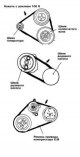
Checking the condition, adjusting the tension and replacing the drive belts
Examination 1. Drive belts are located at the front of the power unit and play an important role in the operation of the engine and many other vehicle systems. Belts...
Examination 1. Drive belts are located at the front of the power unit and play an important role in the operation of the engine and many other vehicle systems. Belts...

Check of a condition of components of system of release of the fulfilled gases
1. After waiting for the complete cooling of the exhaust system (at least three hours after stopping the engine), carefully inspect all its components, starting from the...
1. After waiting for the complete cooling of the exhaust system (at least three hours after stopping the engine), carefully inspect all its components, starting from the...

Replacement of transmission oil manual transmission
1. Transmission oil change must be carried out in strict accordance with the vehicle maintenance schedule (see Section Mitsubishi Galant/Mirage/Diamante Routine...
1. Transmission oil change must be carried out in strict accordance with the vehicle maintenance schedule (see Section Mitsubishi Galant/Mirage/Diamante Routine...

Transfer Case Grease Change — Galant All Wheel Drive Only
1. Take a short car ride (about 15 minutes long) a trip to warm up the oil in the transfer case, - if possible, turn on the all-wheel drive mode, try to drive the car at...
1. Take a short car ride (about 15 minutes long) a trip to warm up the oil in the transfer case, - if possible, turn on the all-wheel drive mode, try to drive the car at...

Relubrication of the rear differential — only all-wheel drive Galant
1. Take a short car ride (about 15 minutes long) trip to warm up the oil in the differential. Jack up the car and place it on jack stands. 2. Place a drain container of...
1. Take a short car ride (about 15 minutes long) trip to warm up the oil in the differential. Jack up the car and place it on jack stands. 2. Place a drain container of...

Check of a condition / service of drum brake mechanisms
1. Remove the brake drums (see chapter Brake system ). 2. Thoroughly clean the brake mechanisms using a special cleaning compound. Never blow off brake dust from the...
1. Remove the brake drums (see chapter Brake system ). 2. Thoroughly clean the brake mechanisms using a special cleaning compound. Never blow off brake dust from the...
Check of serviceability of functioning of a parking brake
1. Slowly pull the parking brake control up to the end of its travel and count the number of ratchet clicks. Compare the calculation result with the requirements of the...
1. Slowly pull the parking brake control up to the end of its travel and count the number of ratchet clicks. Compare the calculation result with the requirements of the...
Check of serviceability of functioning of the vacuum amplifier of brakes
1. Checking the proper functioning of the vacuum brake booster is carried out from the driver's seat. 2. With the foot brake pedal fully depressed, start the engine -...
1. Checking the proper functioning of the vacuum brake booster is carried out from the driver's seat. 2. With the foot brake pedal fully depressed, start the engine -...
Checking the condition of the seat belts
* The compilers of this Guide recommend checking the condition of the seat belts every 12,000 km). 1. Estimate a condition of tapes of seat belts, their buckles, locks...
* The compilers of this Guide recommend checking the condition of the seat belts every 12,000 km). 1. Estimate a condition of tapes of seat belts, their buckles, locks...

Check of a condition and replacement of components of system of ignition
* The compilers of this Guide recommend checking the condition of the explosive wiring more often - every 80,000 km. VV wiring External State Check 1. Checking the...
* The compilers of this Guide recommend checking the condition of the explosive wiring more often - every 80,000 km. VV wiring External State Check 1. Checking the...

Checking / adjusting the ignition timing
General information The ignition timing is the angle through which the crankshaft rotates between the moments of ignition of the mixture in each successive cylinder. The...
General information The ignition timing is the angle through which the crankshaft rotates between the moments of ignition of the mixture in each successive cylinder. The...

Check of a condition of components of system of catching of fuel evaporations
1. The task of the fuel vapor recovery system (EVAP) is the removal of fuel vapors that are chipped in the fuel tank and the cavities of the power system tract during...
1. The task of the fuel vapor recovery system (EVAP) is the removal of fuel vapors that are chipped in the fuel tank and the cavities of the power system tract during...
Checking the status of power system components
Do not forget that gasoline is a highly flammable liquid! Observe all applicable fire safety precautions when servicing power system components. Do not smoke, do not...
Do not forget that gasoline is a highly flammable liquid! Observe all applicable fire safety precautions when servicing power system components. Do not smoke, do not...

Checking the condition and replacing the timing belt
Examination 1. On all models considered in this manual for the distribution drive (s) shafts from the crankshaft of the engine, a toothed timing belt is used (And),...
Examination 1. On all models considered in this manual for the distribution drive (s) shafts from the crankshaft of the engine, a toothed timing belt is used (And),...
This section is available on: russian, bulgarian, belarusian, ukrainian, serbian, croatian, romanian, polish, slovak, hungarian
Similar materials for other Mitsubishi models
➤ General information: Maintenance Mitsubishi Colt 2 and 3 (1983-1993)
➤ General information: Maintenance Mitsubishi Lancer 3 and 5 (1984-1992)
➤ General information: Maintenance Mitsubishi L200 4 (2005-2014, diesel)
➤ General information: Maintenance Mitsubishi Pajero 1 and 2 (1982-1999)
➤ General information: Maintenance Mitsubishi Space Star (1998-2005)
Link in different formats to this section
TEXTHTMLBB Code
- General information
- Introduction to guide
- User manual
- Driving and operation
- Maintenance
- Power unit
- Dismantling the engine
- Engine overhaul
- Cooling and heating
- Power and exhaust systems
- Engine electrical equipment
- Engine management systems
- Transmission
- Mechanical gearbox
- Automatic gearbox
- Clutch
- Drive shafts and transfer case
- Chassis and running gear
- Brake system
- Car suspension
- Steering
- Body and interior
- Exterior (external elements)
- Interior (internal elements)
- Doors, locks and windows
- Electrical equipment
- Equipment and devices
- Wiring diagrams Galant
- Wiring diagrams Mirage
- Wiring diagrams Diamante
MitsubishiMan.ru © 2018–2024 • Mobile version • Articles about Mitsubishi • Contacts • Sitemap: EN BG BY UA RS HR RO PL SK HU • Site search • Bookmark
Colt 2 and 3 (1983-1993) · Colt 4 and 5 (1991-2003) · Colt 5 (1995-2003) · Lancer 3 and 5 (1984-1992) · Lancer 9 (2000-2007) · Galant 6 and 7 (1987-1998) · L200 4 (2005-2014) · Outlander 1 (2003-2008) · Pajero 1 and 2 (1982-1999) · Carisma (1995-2004) · Space Star (1998-2005) ·
Colt 2 and 3 (1983-1993) · Colt 4 and 5 (1991-2003) · Colt 5 (1995-2003) · Lancer 3 and 5 (1984-1992) · Lancer 9 (2000-2007) · Galant 6 and 7 (1987-1998) · L200 4 (2005-2014) · Outlander 1 (2003-2008) · Pajero 1 and 2 (1982-1999) · Carisma (1995-2004) · Space Star (1998-2005) ·