



Note: The condition of the suspension and steering components should be checked regularly, as their wear or damage can cause a reduction in the service life of the tires, lead to a decrease in vehicle controllability and an increase in fuel consumption. Detailed illustrative material is also presented in Chapter Suspension and steering.
Checks performed without lifting the wheels off the ground
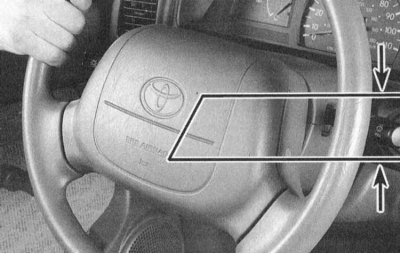
1. Park the vehicle on a level, horizontal surface, if possible with a hard surface, and turn the front wheels to the straight-ahead position. Gently tug the steering wheel in both directions - excessive play indicates possible wear of the wheel bearings, the clamps of the main and intermediate shaft joints of the steering column, the bearings of the steering knuckles (all-wheel drive models), or the steering rod ends. It is also possible that the adjustment is incorrect or the components of the rack and pinion are damaged (see Chapter Suspension and steering).
2. Symptoms such as excessive vehicle rocking when driving on uneven roads or when turning, steering wheel jamming, etc. may also indicate wear or damage to suspension or steering components.
3. To assess the condition of the shock absorbers, press down on one of the corners of the car. When you release the corner, the body should return to its original position, making no more than one or two oscillations. Listen for creaking and other extraneous noises emitted by the suspension during oscillatory movements of the body. For more details, see Chapter Suspension and steering. Excessive amount of body rocking when releasing the corner, as well as refusal to return it to its original position, indicate the need to replace the shock absorbers. Proceeding in a similar manner, check each of the four shock absorbers in turn.
Checks performed with the wheels off the ground
1. Jack up the car and place it on supports.
2. Check the tire treads for signs of uneven wear (see Section Checking the condition of the tires and their inflation pressure), estimate the tire inflation pressure.
[Original version of the article on the website: MitsubishiMan.ru]
3. Assess the condition of the steering column universal joints. Check the steering gear and drive shaft boots for signs of grease leaks. Check the tightness of the tie rod ends. Check the condition of the components and the tightness of their fasteners. Assess the degree of wear of the rubber components of the suspension and steering gear. Ask an assistant to turn the steering wheel and visually assess the amount of play in the steering gear. Try to identify the cause of the existing slack, make the necessary repairs, or replace the defective components.
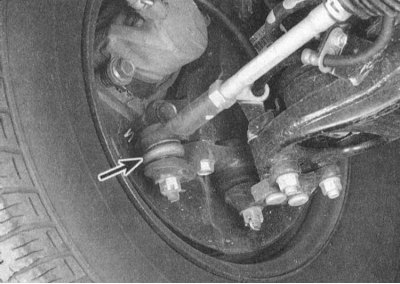
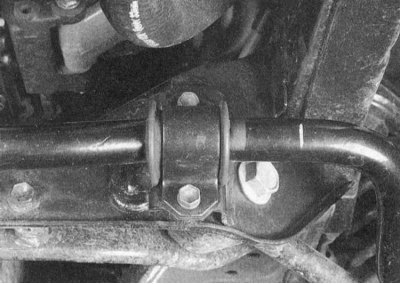
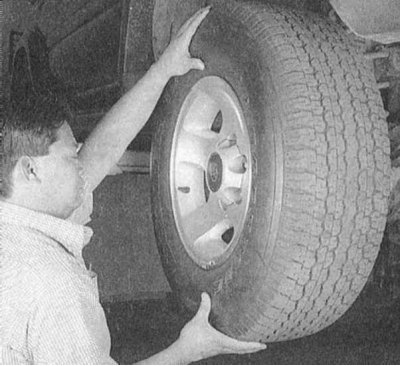
4. Manually rotating the front wheels, try to determine the condition of the wheel bearings by ear, make sure there is no play when rotating the wheels. Grasp the wheel at the 12 and 6 o'clock positions and tug it in the axial plane - the presence of any noticeable free play indicates a weakening of the preload of the wheel bearings. If necessary, disassemble the hubs to visually assess the condition of the bearings and pack them with fresh grease. Full information on the design of hub assemblies and wheel bearings for all-wheel drive models is given in Chapter Suspension and steering.
5. Using a pry bar, assess the condition of the bearings of the steering knuckle assemblies. If play is detected, the bearings should be examined in more detail, replaced, or filled with fresh grease.
6. Assess the degree of wear of the universal joints and sliding couplings of the cardan shafts (see Chapter Clutch and transmission line).
7. Inspect the differential and transfer case housing surfaces for signs of developing leaks.