



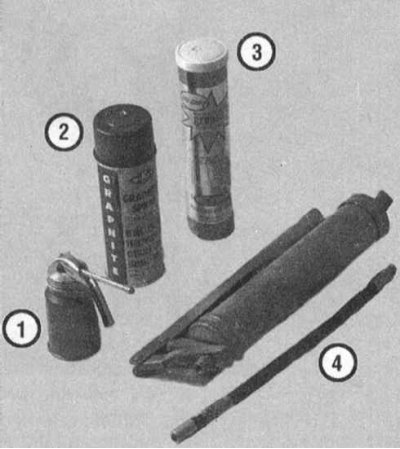
List of materials required for lubrication of chassis components
1 - Liquid engine oil - used to lubricate door hinges
2 - Graphite aerosol - used for lubricating lock cylinders
3 - Lubrication - there is a wide range of lubricants on the market of different types and viscosities, designed for pumping with a grease gun
4 — Grease gun - designed for filling components with grease, used in combination with various types of nozzles and transition hoses
1. Prepare the required supply of grease of the required grade (see Specifications) and a grease gun for packing hollow components.
Note: Some units may have plugs installed instead of grease nipples - also make sure you have a set of nipples on hand - threaded nipple attachments are available in various shapes to provide adequate access to almost any component.
2. Look under the car and find the grease nipples of the steering gear components, suspension and transmission line. Usually, nipples are included in the standard set of such units as tie rod ends and universal joints. If plugs are installed instead of nipples, you should screw in the prepared nipple nozzles instead.
3. Jack up the car and place it on supports placed under the frame, or drive it onto a lift.
Note: If you plan to rotate the wheels at this point, be sure to loosen the lug nuts before they are lifted off the ground.
4. To clean the gun nozzle from dirt, squeeze out a little grease. Wipe the nozzle with a clean rag.
5. Prepare a supply of rags and start packing the components with grease.
6. Wipe the grease nipple and the surrounding component surface with a clean rag, attach the gun nozzle to the nipple and begin packing. Continue pumping grease until it begins to ooze through the joints of the component's mounting surfaces.
Note: If grease starts to leak from the gun nozzle, clean it and pay special attention to the tightness of the clamp. If necessary, replace the nipple.
7. Use a rag to remove excess grease from the surface of the component and proceed to packing the next unit.
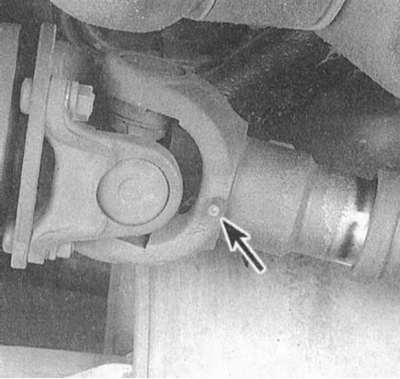
8. Continue packing the universal joint sliding clamp of the cardan shaft until the grease begins to ooze out of the assembly seal.
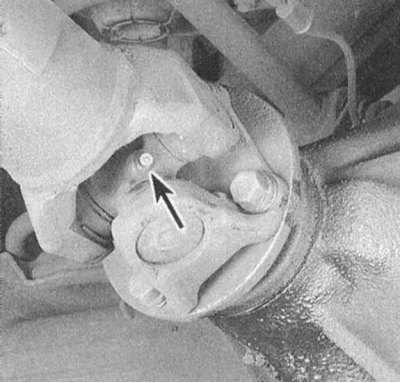
9. When packing conventional type universal joints, grease should begin to ooze through the joints of the assembly components.
10. Without getting out from under the car, wipe the parking brake cables and lubricate their guides and actuator levers with your fingers.
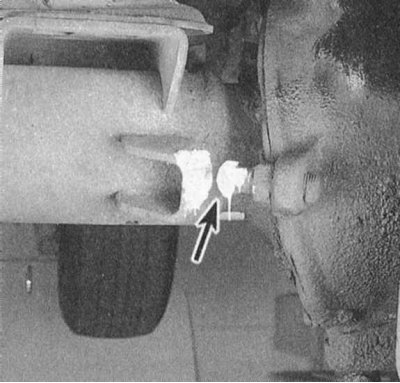
11. If the vehicle is equipped with this equipment, apply lithium-based grease to the contact surfaces of the thrust brackets and adjusting bolts of the steering knuckle assemblies.
12. Open the hood and apply a small amount of chassis grease to the latch mechanism. Have an assistant pull the hood release lever under the instrument panel all the way out and lubricate all exposed surfaces of the drive cable.
13. Lubricate the hinges of all doors and the hood with liquid engine oil.
14. For lubricating the lock cylinders, it is most convenient to use graphite grease supplied in aerosol cans - ask in car accessory stores.
15. Lubricate the door sealing strips with silicone grease to protect them from premature wear.