



Contents: Adjusting headrests ⤓ Removal headrests ⤓
Adjusting headrests
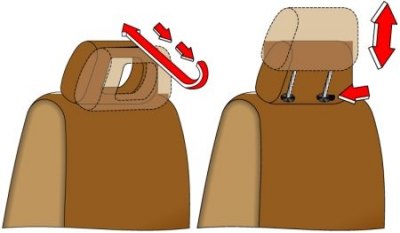
Headrest height adjustment lever:
- Left - type 1
- Right - type 2
Soft head restraints on top of the seat backs can reduce the risk of neck injury in the event of a rear impact.
Type 1 (manually adjustable seats)
The headrests can be adjusted forward two positions. If you try to tilt them further, they will return to their original position. The headrests cannot be raised or lowered.
Type 2 (automatically adjustable seats)
To reduce the risk of injury in the event of a collision, adjust the height of the head restraints so that the center of the head restraint is at eye level.
To raise the headrest, pull it up. To lower the head restraint, press it down by moving the head restraint adjustment handle in the direction indicated by the arrow. After adjusting the headrest height, press down on the headrest to ensure it is securely locked in place.
Removal headrests
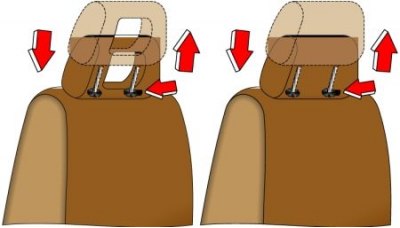
Adjustment handle:
- Left - type 1
- Right - type 2
To remove the head restraints, press the handle in the direction of the arrow and pull the head restraint upward.
To install the head restraints, first check that their front side faces forward, then install them on the seat back by pressing the adjustment handle and lower them all the way down until the locking latches engage. Check that the position of the adjustment knob is as shown in the figure and try lifting the head restraints up to check if they are securely fastened.
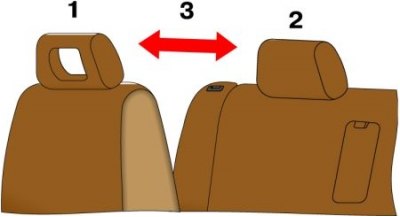
1. Front seat
2. Back seat
3. Don't get confused!
Warning: Driving without head restraints is dangerous. Always drive with head restraints in place. Failure to install head restraints increases the risk of injury in the event of an accident.
Please note: The headrests for the front and rear seats differ in shape. When installing head restraints, do not confuse the head restraints of the front and rear seats. The front seat headrests are higher and thicker.