
English Русский
Български
Беларускі
Український
Српски
Hrvatski
Română
Polski
Slovenský
Magyar
Articles Bookmark Contacts Sitemap   
Company Audi Company Ford Company Hyundai Company Kia Company Mazda Company Mercedes-Benz Company Nissan
MitsubishiMan.ru


Home Colt Lancer Galant L200 Outlander Pajero Others
Pajero 4 (2006-2021) Pajero 1 and 2 (1982-1999)

Use of seat belts (Mitsubishi Pajero 1)

  • Home
  • Pajero
  • 1 (1982-1999)
  • General information
  • Seats and seat belts
  • Use of seat belts
0
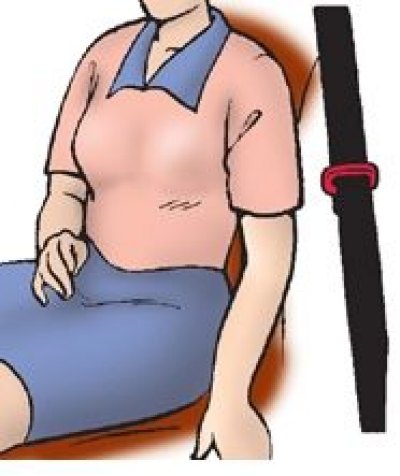
1. Sit on the seat and lean back.


Warning: To minimize the risk of injury in the event of an accident, the driver's and passenger's seat backs should be raised as high as possible. The protection provided by seat belts may be significantly reduced if the seat backs are reclined. If the seat back is reclined, the driver or passenger may slide out from under the seat belt in the event of an accident and be injured.
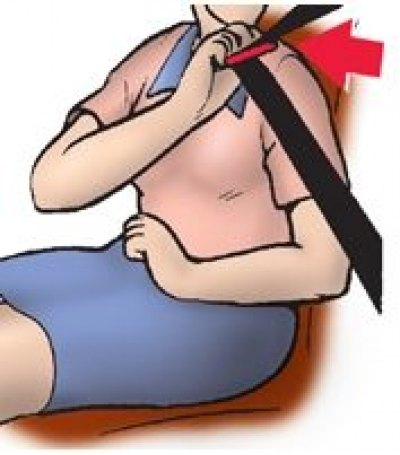


2. Grasp the seat belt buckle and lift it up the seat belt until it can be easily pulled across your body. After a few tries, this will become an automatic operation.
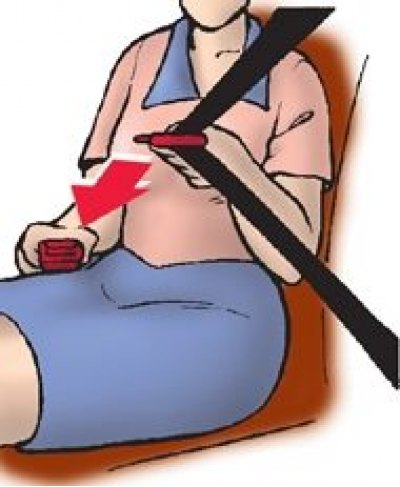


3. Pull the seat belt and pull the buckle closer to the lock. This system's seat belt will not stop stretching if you stop or hesitate, so relax and keep buckled up. Insert the buckle until you hear a click.
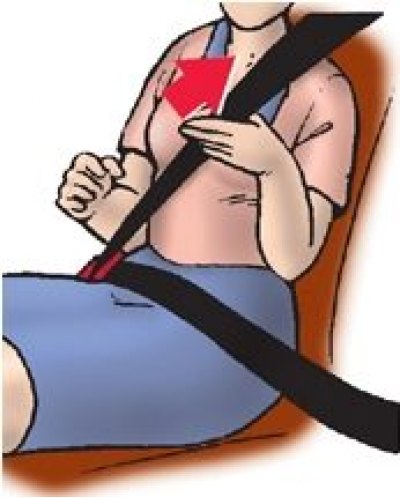


4. Run your hand along the top strip of the seat belt to prevent it from dangling.

The seat belt will not tighten any further, so you can tighten it as much as you feel comfortable.

Warning: Make sure the bottom strap of the seat belt fits snugly around your legs, not your waist. If the seat belt is positioned higher, it may increase the risk of injury in the event of an accident.
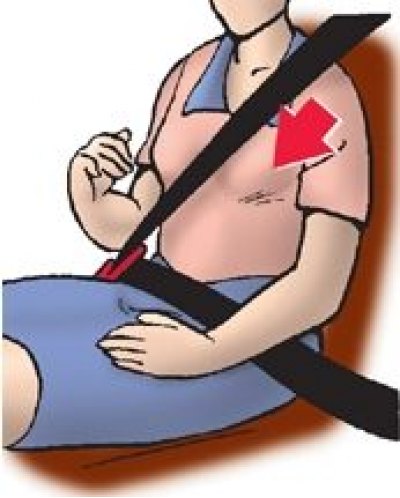


5. Check the seat belt tension.

The seat belt will be slightly loosened for comfort when you return to your normal position.
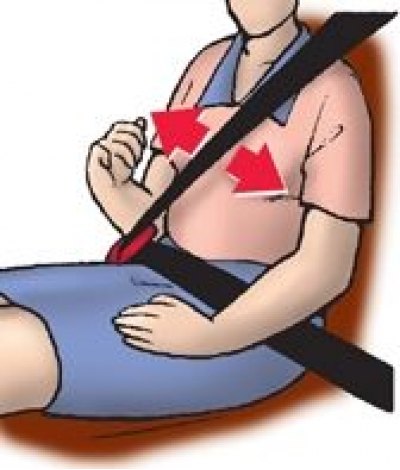


6. The shoulder portion of the seat belt will not restrict your movements under normal conditions. The seat belt will be tightened in the event of a sudden change in vehicle speed. To unfasten the belt, press the button on the seat belt buckle. To return the belt to the door pillar when exiting the car, pull the belt down slightly and release immediately.


Warning! Remember to close all doors before driving. Locking your doors and wearing seat belts will reduce the risk of injury in the event of an accident.


Adjusting the height of the seat belt fastening (front seats)


The height of the seat belt attachment can be adjusted.
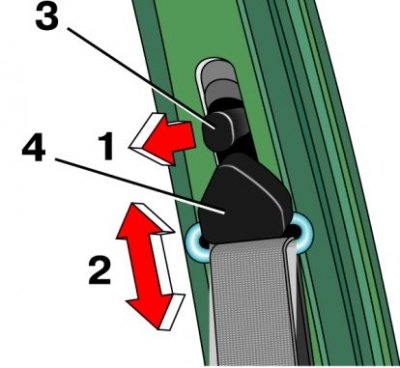


1. Pull the handle.

2. Lift the mount up or down to a position that is comfortable for you, then release the handle. You should hear a click and the seat belt mount should be securely locked.

3. Handle.

4. Adjustable seat belt fastening.

Caution: When adjusting the seat belt height, make sure that after you fasten your seat belt, the seat belt fits snugly across your shoulder and does not touch your neck.
This article is available at: russian, bulgarian, belarusian, ukrainian, serbian, croatian, romanian, polish, slovak, hungarian
This article was reviewed by: Arseny Pavlov
Share with friends:
◀ Previous
Pajero 1 and 2: Seats and seat belts
Next ▶

Seat belts — general information
Adjusting the seat headrests
Folding out the seats
Folding the seats
Third seat (if provided)
Rear seat safety belt
Child seat — installation
Transporting Children — General Information
Buckling a pregnant woman
Maintenance and inspection of seat belts
Similar materials for other Mitsubishi models

➤ Automatic seat belts — general description Mitsubishi Colt 2 and 3 (1983-1993)
➤ External inspection of seat belts Mitsubishi Lancer 3 and 5 (1984-1992)
➤ Checking the condition of seat belts Mitsubishi Galant 6 and 7 (1987-1998)
➤ Checking and adjusting the tension of auxiliary drive belts Mitsubishi L200 4 (2005-2014, diesel)
➤ Seat belts Mitsubishi Outlander 1 (2003-2008)
➤ Seat belts Mitsubishi Space Star (1998-2005)
Link in different formats to this article
Comments and feedback from visitors
No comments yet


Add up two numbers 27 + 22


Pajero 4 (2006-2021) 
  • General information
  • User manual
  • Troubleshooting
  • Maintenance
  • Technical specifications
  • Power unit
  • Engine repair
  • Cooling system
  • Lubrication system
  • Fuel system
  • Engine management system
  • Intake and exhaust system
  • Engine electrical equipment
  • Transmission
  • Clutch
  • Manual gearbox
  • Automatic gearbox
  • Drive shafts
  • Chassis and running gear
  • Front suspension
  • Rear suspension
  • Brake system
  • Steering
  • Body and interior
  • Exterior (external elements)
  • Interior (internal elements)
  • Doors, locks and windows
  • Body dimensions
  • Electrical equipment
  • Safety system (SRS)
  • Air conditioner
  • Equipment and devices
  • Electrical diagrams
Pajero 1 and 2 (1982-1999) 
  • General information
  • User manual
  • Seats and seat belts
  • Instruments and controls
  • Driving and operation
  • Maintenance
  • Power unit
  • Gasoline engines
  • Diesel engines
  • Ignition system
  • Engine electrical equipment
  • Cooling and lubrication system
  • Power and exhaust system
  • Fuel system (gasoline)
  • Fuel system (diesel)
  • Transmission
  • Clutch
  • Mechanical gearbox
  • Automatic gearbox
  • Drive shafts and axles
  • Chassis and running gear
  • Front suspension
  • Rear suspension
  • Steering
  • Brake system
  • Body and interior
  • Exterior (external elements)
  • Interior (internal elements)
  • Doors, locks and windows
  • Electrical equipment
  • Equipment and devices
  • Heater and air conditioner
  • Cruise control
  • Headlights and lighting
  • Electrical circuits
MitsubishiMan.ru © 2018–2026 • Mobile version • Articles about Mitsubishi • Contacts • Sitemap: EN BG BY UA RS HR RO PL SK HU • Site search • Bookmark
Colt 2 and 3 (1983-1993) · Colt 4 and 5 (1991-2003) · Colt 5 (1995-2003) · Lancer 3 and 5 (1984-1992) · Lancer 9 (2000-2007) · Galant 5 (1983-1989) · Galant 6 and 7 (1987-1998) · L200 4 (2005-2014) · Outlander 1 (2003-2008) · Pajero 1 and 2 (1982-1999) · Pajero 4 (2006-2021) · Carisma (1995-2004) · Space Star (1998-2005) ·
This resource sets cookies 🍪 to avoid bothering you with repeated data entry.