



Contents: Removal ⤓ Installation ⤓
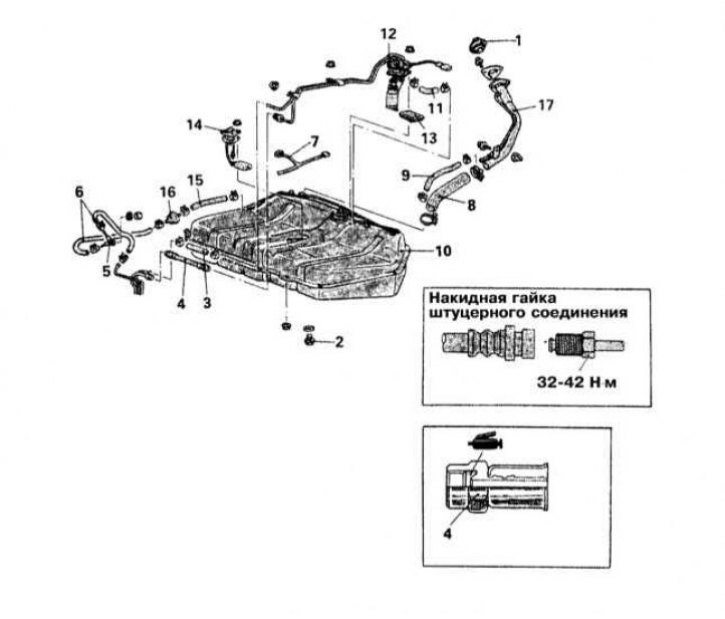
Fuel tank installation details for Mirage models 1990÷1992.
1 - Filler cap; 2 - Drain plug; 3 - Return hose; 4 - Fuel supply hose (pressure line); 5 - Check valve; 6 - Fuel vapor discharge hoses; 7 - Electrical wiring; 8 - Filler neck connecting hose; 9 - Ventilation hose; 10 - Fuel tank; 11 - Fuel vapor discharge hose; 12 - Fuel pump; 13 - Fuel intake mesh filter; 14 - Fuel consumption measurement unit; 15 - Fuel vapor discharge hose; 16 - Two-way valve; 17 - Filler neck
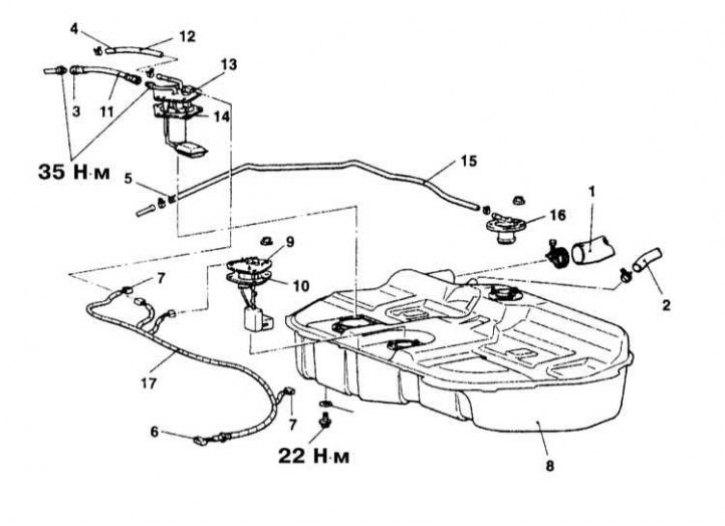
Fuel tank installation details for Mirage models 1993÷1996.
1 - Filler neck; 2 - Fuel vapor discharge hose; 3 - Pressure line nipple connector; 4 - Return hose nipple connector; 5 - Fuel vapor discharge hose; 6 - Contact connector for fuel pump and fuel flow sensor wiring; 7 - Wiring for rear wheel speed sensors (models with ABS); 8 - Assembling the fuel tank; 9 - Fuel consumption measurement unit; 10 - Sealing gasket; 11 - Fuel supply hose (pressure line); 12 - Return hose; 13 - Fuel pump; 14 - Sealing gasket; 15 - Fuel vapor discharge hose; 16 - Fuel line shut-off valve; 17 - Wiring of fuel pump and fuel flow sensor
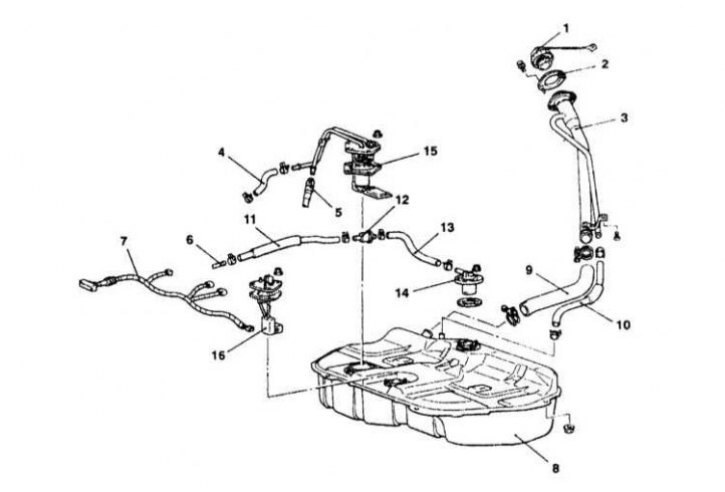
Fuel tank installation details for 1997 and 1998 Mirage models.
1 - Filler cap; 2 - Sealing gasket; 3 - Filler neck; 4 - Return hose; 5 - Pressure hose; 6 - Fitting; 7 - Electrical wiring connector; 8 - Fuel tank; 9 - Filler neck connecting hose; 10 - Level hose; 11 - Fuel vapor discharge hose; 12 - Fuel tank safety valve; 13 - Fuel vapor discharge hose; 14 - Fuel line shut-off valve; 15 - Fuel pump; 16 - Fuel consumption measurement unit
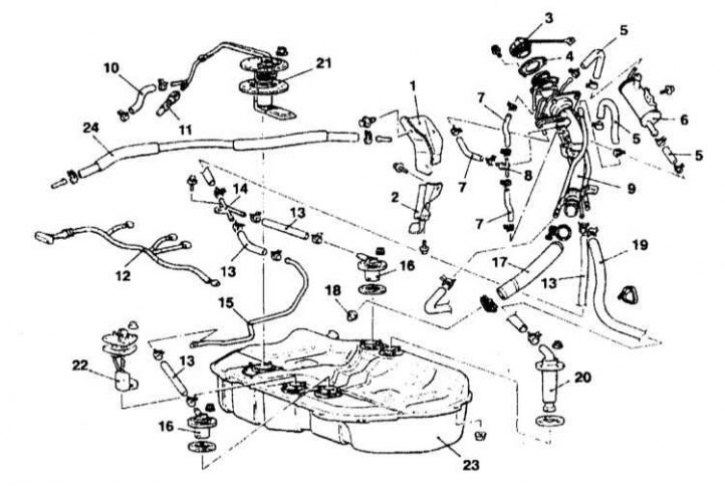
Fuel tank installation details for Mirage 1999 and 2000 models.
1 - Filler neck shield; 2 - Filler neck shield; 3 - Filler cap; 4 - Sealing gasket; 5 - Fuel vapor discharge hose; 6 - Separator; 7 - Fuel vapor discharge hose; 8 - Assembling the check valve; 9 - Filler neck; 10 - Return hose; 11 - Pressure line; 12 - Electrical wiring; 13 - Fuel vapor discharge hose; 14 - Connecting tube; 15 - Fuel vapor discharge pipe; 16 - Fuel line shut-off valve; 17 - Filler neck connecting hose; 18 - Fuel shut-off valve; 19 - Level hose; 20 - Level valve; 21 - Fuel pump; 22 - Fuel consumption measurement unit; 23 - Fuel tank; 24 - Blow-off hose
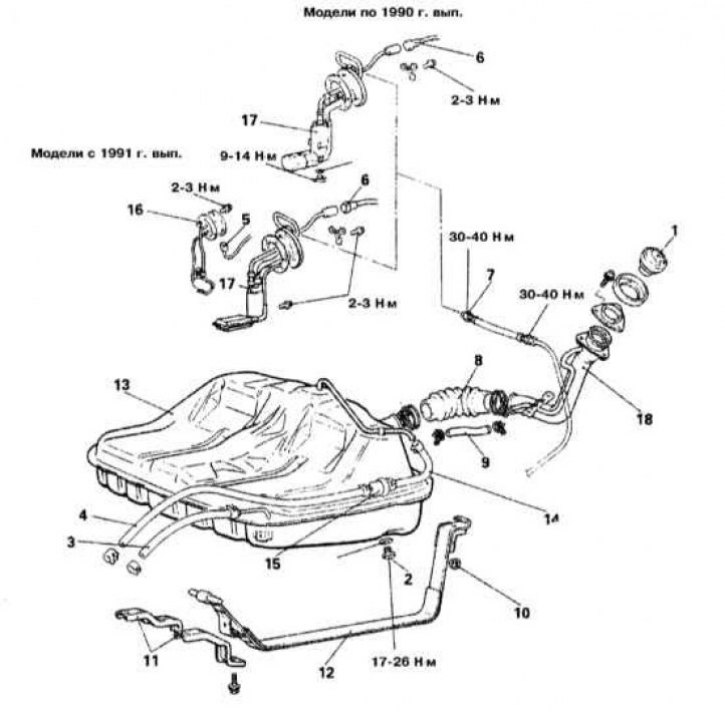
Fuel tank installation details for Galant FWD models 1990÷1993.
1 - Filler cap; 2 - Drain plug; 3 - Return hose; 4 - Fuel vapor discharge hose; 5 - Fuel consumption measurement unit wiring connector; 6 - Fuel pump wiring connector; 7 - Pressure line connection nipple to the fuel pump; 8 - Filler neck connecting hose; 9 - Fuel vapor discharge hose; 10 - Self-locking nut; 11 - Mounting tape support bracket; 12 - Mounting tape; 13 - Fuel tank; 14 - Fuel vapor discharge hose; 15 - Fuel tank check valve; 16 - Fuel consumption measurement unit; 17 - Fuel pump; 18 - Filler neck
The article is reprinted from a web resource [MITSUBISHIMAN.ru]
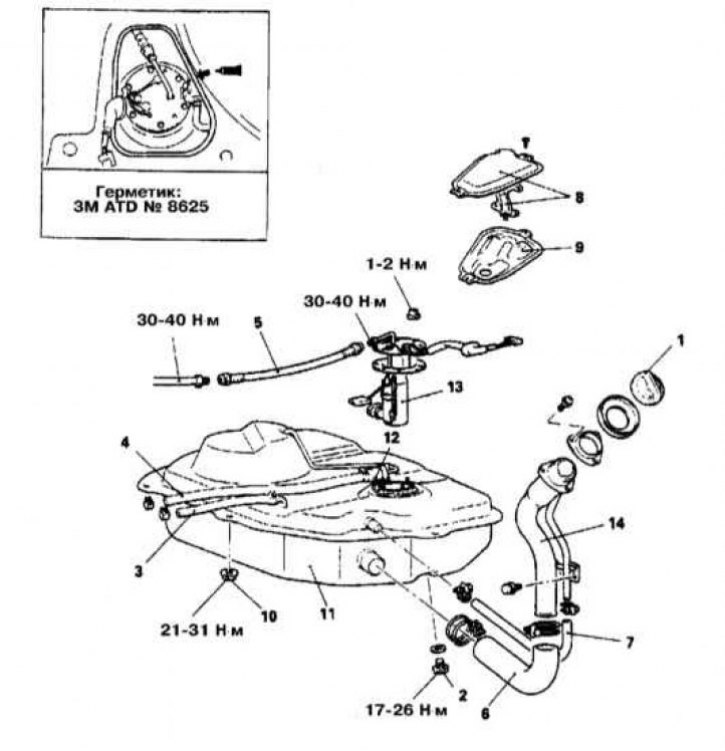
Fuel tank installation details for Galant AWD models 1990÷1993.
1 - Filler cap; 2 - Drain plug; 3 - Return hose; 4 - Fuel vapor discharge hose; 5 - Pressure line; 6 - Filler neck connecting hose; 7 - Fuel vapor discharge hose; 8 - Shield; 9 - Hollow lid; 10 - Self-locking nut; 11 - Fuel tank; 12 - Check valve; 14 - Filler neck
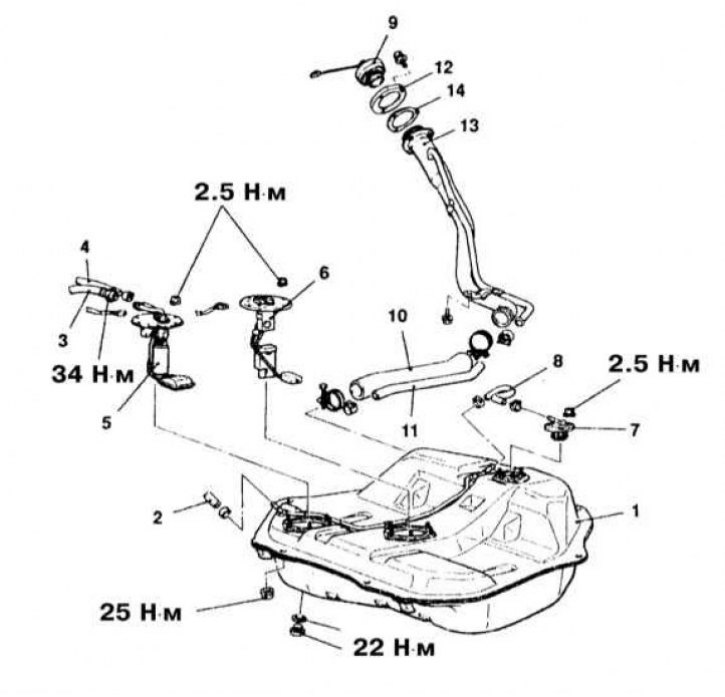
Fuel tank installation details for Galant models 1994÷1996 (except Californian)
1 - Fuel tank; 2 - Fuel vapor discharge hose; 3 - Pressure line; 4 - Return hose; 5 - Fuel pump; 6 - Fuel consumption measurement unit; 7 - Shut-off valve; 8 - Fuel vapor discharge hose; 9 - Filler cap; 10 - Fuel filler neck connecting hose; 11 - Fuel vapor discharge hose; 12 - Holder; 13 - Filler neck; 14 - Sealing gasket
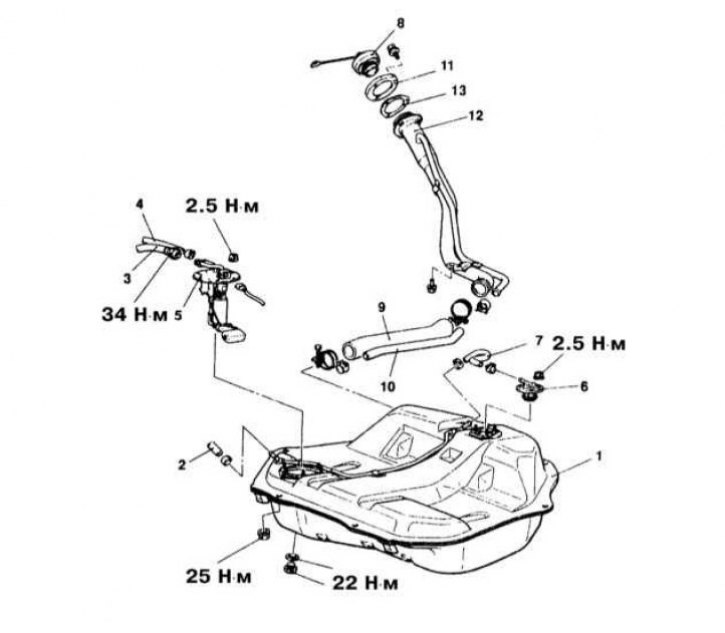
Fuel tank installation details for California Galant models 1994-1996.
1 - Fuel tank; 2 - Fuel vapor discharge hose; 3 - Pressure line; 4 - Return hose; 5 - Assembly of the fuel pump and fuel flow meter unit; 6 - Shut-off valve; 7 - Fuel vapor discharge hose; 8 - Filler cap; 9 - Filler neck connecting hose; 10 - Fuel vapor discharge hose; 11 - Holder; 12 - Filler neck; 13 - Sealing gasket
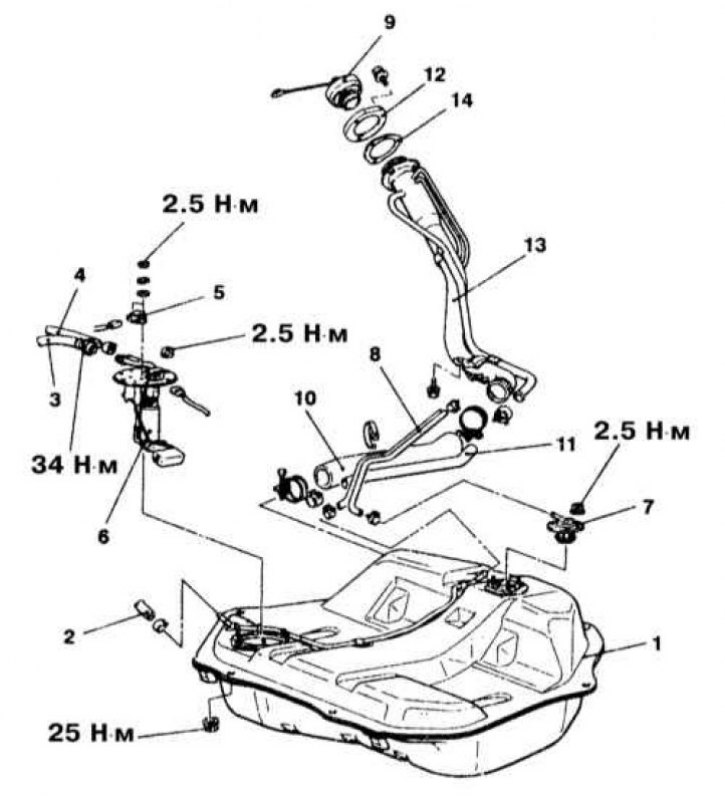
Fuel tank installation details for 1997 and 1998 Galant models.
1 - Fuel tank; 2 - Fuel vapor discharge hose; 3 - Pressure line; 4 - Return hose; 5 - Differential fuel tank pressure sensor; 6 - Assembly of the fuel pump and fuel flow meter unit; 7 - Shut-off valve; 8 - Fuel vapor discharge hose; 9 - Filler cap; 10 - Filler neck connecting hose; 11 - Fuel vapor discharge hose; 12 - Holder; 13 - Filler neck; 14 - Sealing gasket
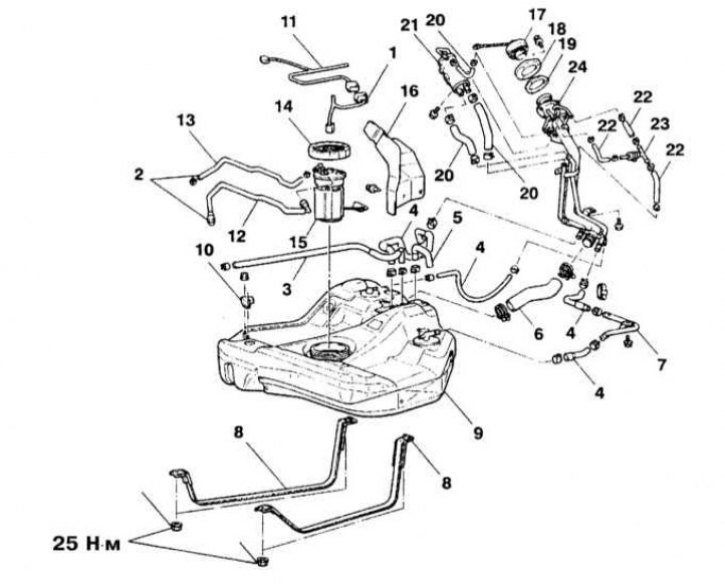
Fuel tank installation details for 1999 and 2000 Galant models.
1 - Electrical wiring; 2 - Stud connectors; 3 - Blow-off hose; 4 - Fuel vapor discharge hose; 5 - Ventilation hose; 6 - Filler neck connecting hose; 7 - Tube; 8 - Mounting tapes; 9 - Fuel tank; 10 - Differential pressure sensor; 11 - Electrical wiring; 12 - Pressure line; 13 - Return hose; 14 - Lid; 15 - Fuel pump assembly; 16 - Shield; 17 - Filler cap; 18 - Amplifier; 19 - Sealing gasket; 20 - Fuel vapor discharge hose; 21 - Separator; 22 - Fuel vapor discharge hose; 23 - Check valve; 24 - Filler neck
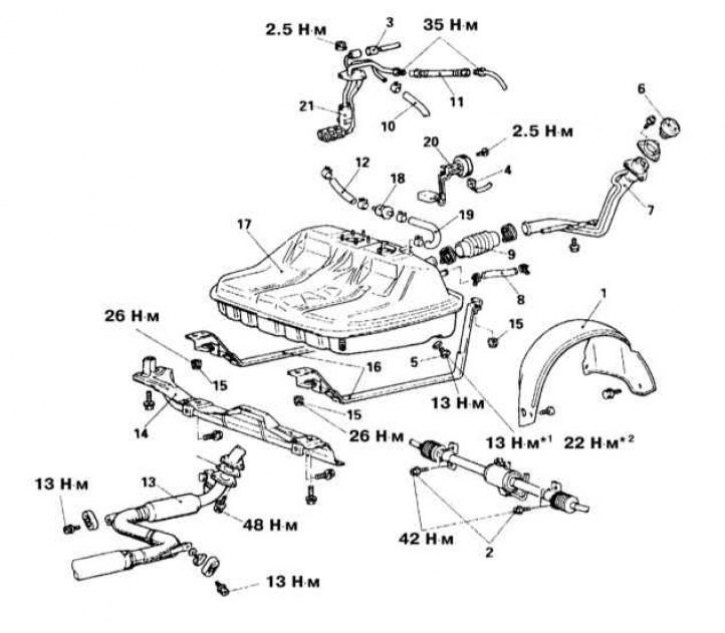
Fuel tank installation details for Diamante models 1992÷1996.
1 - Wheel arch protection liner (DOHC); 2 - Bolts for mounting the booster cylinder (models with 4WS); 3 - Fuel pump wiring; 4 - Fuel flow meter wiring; 5 - Drain plug; 6 - Filler cap; 7 - Filler neck; 8 - Fuel vapor discharge hose; 9 - Filler neck connecting hose; 10 - Return hose; 11 - Pressure line; 12 - Fuel vapor discharge hose; 13 - Central section of the exhaust system; 14 - Fuel tank protection; 15 - Self-locking nut; 16 - Mounting tape; 17 - Fuel tank; 18 - Safety valve; 19 - Fuel vapor discharge hose; 20 - Fuel consumption measurement unit; 21 - Fuel pump
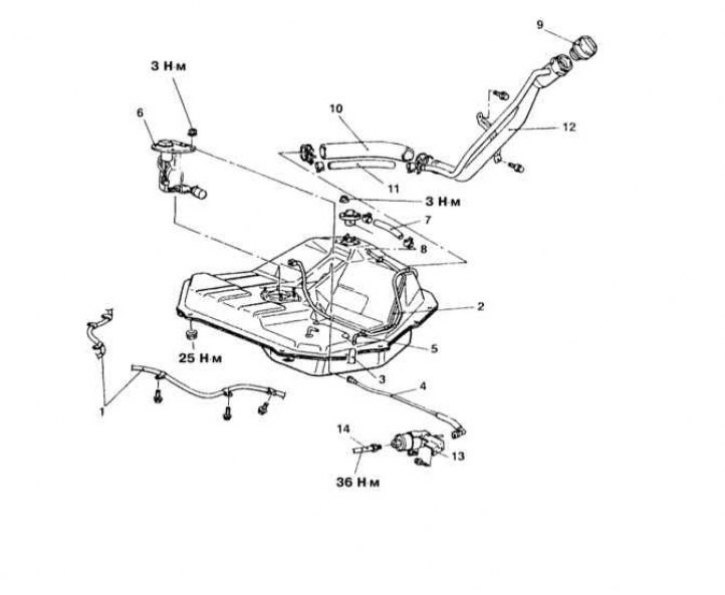
Fuel tank installation details for Diamante models 1997÷2000.
1 - Parking brake cable; 2 - Fuel tank; 3 - Fuel vapor discharge hose; 4 - Pressure line; 5 - Fuel vapor discharge hose; 6 - Assembly of the fuel pump and fuel flow measurement unit; 7 - Fuel vapor discharge hose; 8 - Valve assembly; 9 - Filler cap; 10 - Filler neck connecting hose; 11 - Fuel vapor discharge hose; 12 - Filler neck; 13 - Fuel filter; 14 - Fuel line
Warning! Remember that gasoline is highly flammable! When working with fuel system components, observe all accepted fire safety measures. Do not smoke! Do not approach the work area with an open flame or unprotected portable appliance! Do not service the system in rooms equipped with natural gas heating devices equipped with a pilot flame (such as water heaters and clothes dryers). Do not forget that gasoline is a carcinogen, i.e., a substance that promotes the development of cancer! Try to avoid fuel coming into contact with exposed areas of the body, use rubber protective gloves, and in case of accidental contact with fuel, wash your hands thoroughly with warm water and soap. Collect spilled fuel immediately and do not store rags soaked in fuel near open flames. Remember that the fuel system of models equipped with fuel injection is constantly under pressure. Before disconnecting fuel lines, relieve residual pressure in the system. Wear safety glasses when servicing fuel system components. Always keep a Class B fire extinguisher on hand!
Removal
1. The fuel tank installation details are shown in the illustrations.
2. Release the pressure in the fuel system (see Section Relieving pressure in the fuel system).
3. Disconnect the negative cable from the battery.
Warning! If the car stereo system is equipped with a security code, make sure you have the correct combination to activate the audio system before disconnecting the battery!
4. Jack up the car and place it on supports.
5. Drain the remaining fuel from the gas tank into a suitable receiving container.
6. On Diamante models:
- a) Remove the left rear wheel arch protection liner;
- b) Disconnect the center section of the exhaust system from the main muffler. Remove the rear section of the exhaust system from its hangers and lower it, move it to the side and tie it up;
- c) On models equipped with rear wheel steering, remove the mounting bolts and rear steering gear assembly.
7. Disconnect the pressure and return hoses from the fuel pump assembly. Also disconnect the fuel vapor discharge hoses.
8. Disconnect the electrical wiring from the fuel pump/fuel flow metering unit assembly.
9. Disconnect the filler neck and ventilation hoses from the tank.
10. Place a suitable jack under the center of the tank, support the assembly with it and loosen the nuts securing the mounting brackets (bands).
11. Lower the tank slightly and disconnect the remaining communication lines (electrical wiring, hoses, tubes, etc.) from it.
12. Remove the tank from under the vehicle.
Installation
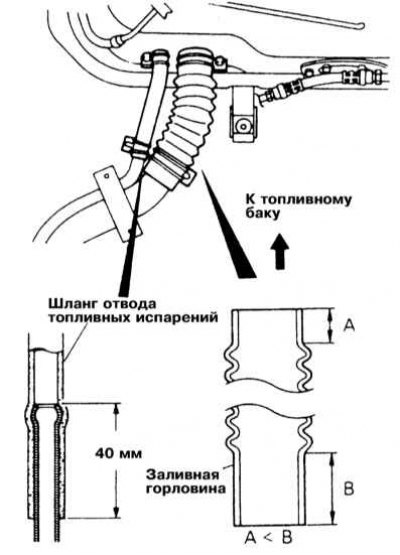
1. If the tank is to be replaced, transfer the various add-on components from the tank to the replacement assembly, including heat shields, connecting hoses, valves, and the fuel pump/flow sensor assembly.
2. Secure the new tank to the jack head and slide it into place under the vehicle, leaving enough clearance to connect the service lines to the top of the pump assembly.
3. Connect the appropriate communication lines to the top of the tank.
4. Raise the jack, finally bringing the tank to its standard position. Install the mounting straps and secure them with new self-locking nuts.
5. Restore the original connection of the pressure and return lines.
6. Connect the filler neck hose and vent line. Use the special screws to secure the filler neck assembly to the vehicle fender.
7. On Diamante models:
- a) If equipped, install the rear wheel power steering, screw in the mounting bolts and tighten them to the required torque (43 Nm);
- b) Install and secure the rear section of the exhaust system to the hangers;
- c) If removed, install the left rear wheel arch protection liner.
8. Lower the vehicle to the ground and pour the drained fuel back into the tank. Check the fuel pump for proper operation (see below), inspect the fuel system for signs of leaks.