



Contents: Engines 1.5L, 1.8L and 2.0L SOHC ⤓ 1.6L and 2.0L DOHC engines ⤓ 2.4L engines ⤓ Engines 3.0 l and 3.5 l ⤓
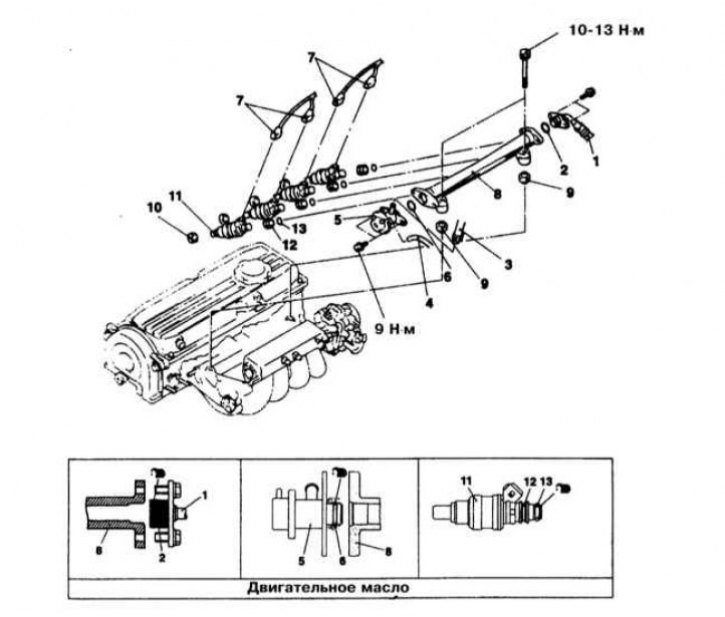
Fuel line installation details on 1.5L models
1 - Fuel supply hose (pressure line); 2 - Sealing ring; 3 - Fuel return hose; 4 - Vacuum hose; 5 - Fuel pressure regulator; 6 - Sealing ring; 7 - Injector wiring connectors; 8 - Fuel line; 9 - Insulating bushings; 10 - Insulating bushings; 11 - Injector; 12 - Sealing sleeve; 13 - Sealing ring
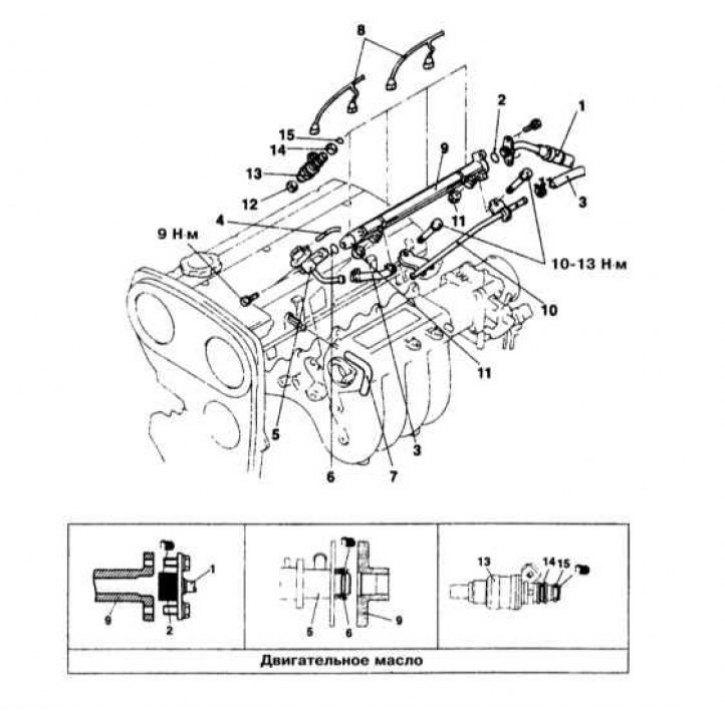
Fuel line installation details on 1.8L models
1 - Fuel supply hose (pressure line); 2 - Sealing ring; 3 - Fuel return hose; 4 - Vacuum hose; 5 - Fuel pressure regulator; 6 - Sealing ring; 7 - PCV hose; 8 - Injector wiring connectors; 9 - Fuel line; 10 - Return pipe; 11 - Insulating bushing; 12 - Insulating bushing; 13 - Injector; 14 - Sealing sleeve; 15 - Sealing ring
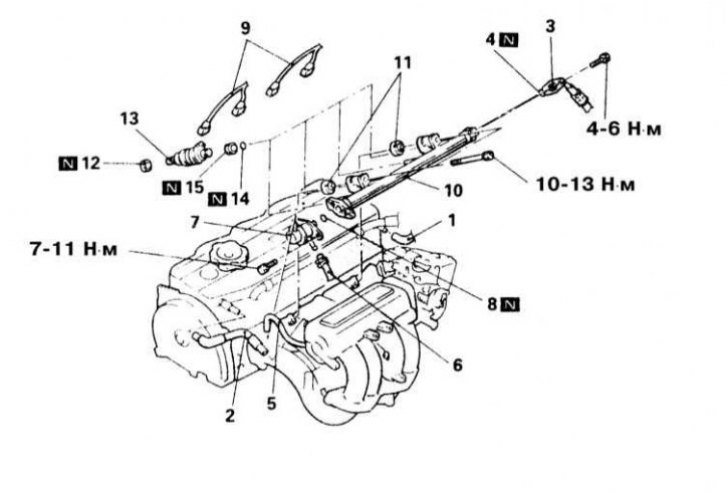
Fuel Line Installation Details on 2.0L SOHC Models
1 - Breather pipe; 2 - PCV hose; 3 - Fuel supply hose (pressure line); 4 - Sealing ring; 5 - Vacuum hose; 6 - Fuel return hose; 7 - Fuel pressure regulator; 8 - Sealing ring; 9 - Wiring of injection injectors; 10 - Fuel line; 11 - Insulating bushings; 12 - Insulating bushing; 13 - Injector; 14 - Sealing ring; 15 - Sealing sleeve; N - Replace
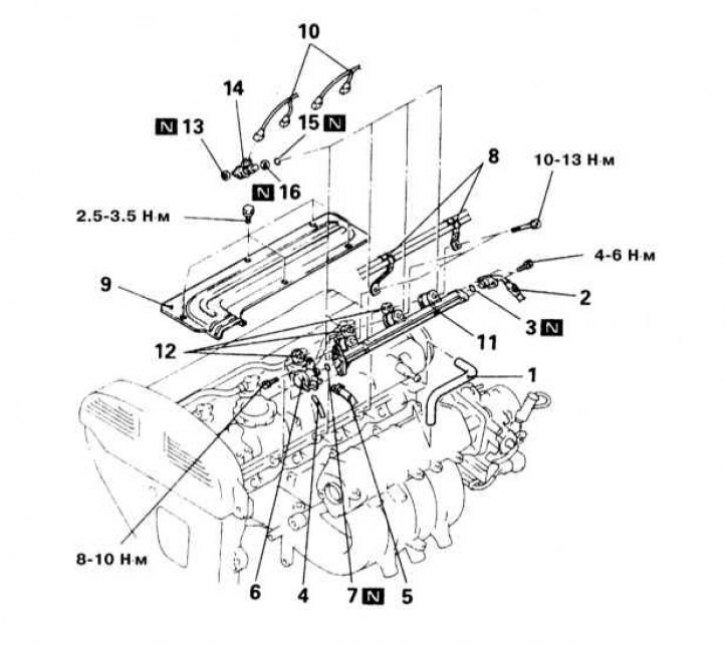
Fuel Line Installation Details for 1.6L and 2.0L DOHC Models
1 - PCV hose; 2 - Fuel supply hose (pressure line); 3 - Sealing ring; 4 - Vacuum hose; 5 - Fuel return hose; 6 - Fuel pressure regulator; 7 - Sealing ring; 8 - Intermediate throttle cable clamps; 9 - Central cover; 10 - Wiring of injection injectors; 11 - Fuel line; 12 - Insulating bushing; 13 - Insulating bushing; 14 - Injector; 15 - Sealing ring; 16 - Sealing (seating) bushing; N - Replace
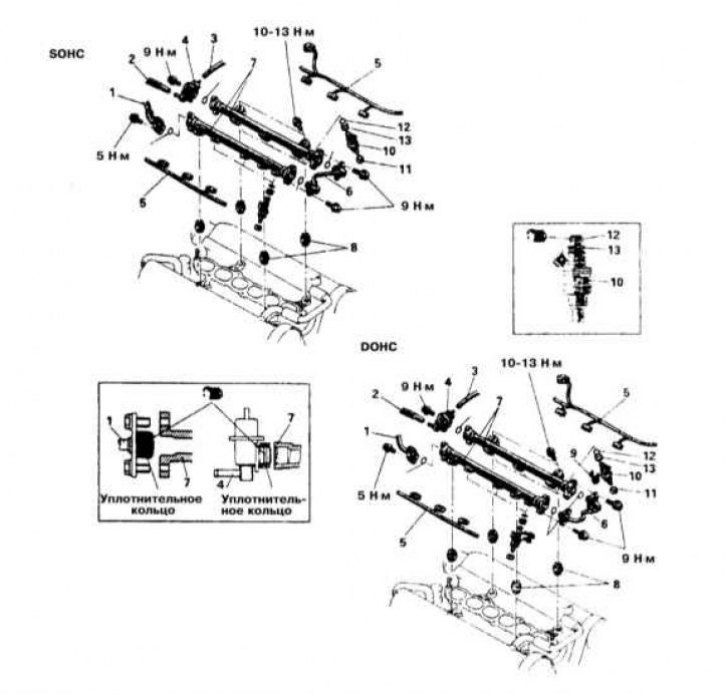
Fuel Line Installation Details on 3.0L Models
1 - Fuel supply hose (pressure line); 2 - Fuel return hose; 3 - Vacuum hose; 4 - Fuel pressure regulator; 5 - Fuel injector wiring; 6 - Connecting tube; 7 - Fuel line assemblies; 8 - Insulating bushing; 9 - Injector support bracket; 10 - Injector; 11 - Insulating bushing; 12 - Sealing ring; 13 - Sealing sleeve
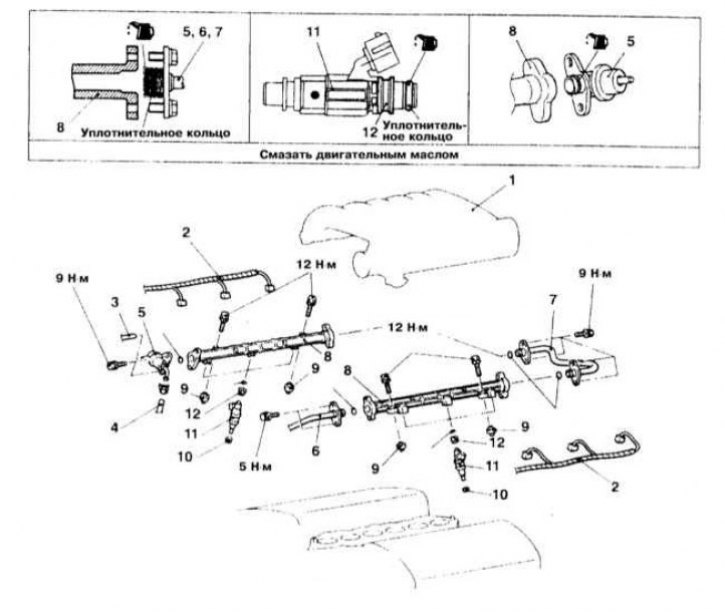
Fuel Line Installation Details on 3.5L Models
1 - Equalizing chamber; 2 - Injector wiring; 3 - Vacuum hose; 4 - Fuel return hose; 5 - Fuel pressure regulator; 6 - Fuel supply hose (pressure line); 7 - Connecting tube; 8 - Fuel line assemblies; 9 - Insulating bushing; 10 - Insulating bushing; 11 - Injectors; 12 - Sealing sleeve
Warning! Remember that gasoline is highly flammable! When working with fuel system components, observe all accepted fire safety measures. Do not smoke! Do not approach the work area with an open flame or unprotected portable appliance! Do not service the system in rooms equipped with natural gas heating devices equipped with a pilot flame (such as water heaters and clothes dryers). Do not forget that gasoline is a carcinogen, i.e., a substance that promotes the development of cancer! Try to avoid fuel coming into contact with exposed areas of the body, use rubber protective gloves, and in case of accidental contact with fuel, wash your hands thoroughly with warm water and soap. Collect spilled fuel immediately and do not store rags soaked in fuel near open flames. Remember that the fuel system of models equipped with fuel injection is constantly under pressure. Before disconnecting fuel lines, relieve residual pressure in the system. Wear safety glasses when servicing fuel system components. Always keep a Class B fire extinguisher on hand!
Engines 1.5L, 1.8L and 2.0L SOHC
Removal
1. Fuel line installation details for 1.5L, 1.8L and 2.0L SOHC models are shown in the illustrations.
2. Release the pressure in the fuel system (see Section Relieving pressure in the fuel system).
3. Disconnect the PCV hose from the cylinder head cover. Disconnect the breather pipe from the opposite side of the cover.
4. Unscrew the bolts securing the fuel supply line (pressure line) and disconnect the latter from the fuel line - prepare to collect any spilled fuel, immediately plug the open ends of the line and fittings to avoid internal contamination of the fuel system tract.
5. Remove the vacuum hose from the fuel pressure regulator.
6. Disconnect the return line from the regulator
7. After marking, disconnect the electrical wiring from the fuel injectors.
8. Remove the bolts securing the fuel rail assembly to the intake manifold. Carefully lift the rail and remove it from the engine, making sure that the injectors do not fall out of the assembly. Transfer the removed assembly to a workbench and wrap the injectors in plastic film to prevent dirt from getting inside.
9. Remove the injector mounting bushings from the intake manifold assembly; during assembly, the bushings must be replaced without fail.
10. Carefully remove the injectors from the fuel line assembly along with the seat bushings and sealing rings seated on them.
Installation
1. Install new insulating (sealing) bushings into each of the injector mounting ports.
2. Remove the old sealing bushings and sealing rings from the injectors and install new ones in their place.
Note: O-rings should be lightly lubricated with clean engine oil before installation.
3. After replacing the sealing ring, install the pressure regulator on the fuel rail assembly. Check the freedom of rotation of the regulator, if necessary, remove the regulator and check whether the sealing ring is twisted. If everything is in order, align the holes, screw in the mounting bolts and tighten them to the required torque (9 N·m).
Note: This procedure must be performed even if the fuel line has not been removed.
4. Using a rotary-translational motion, seat the injectors in the fuel line. Check the freedom of rotation of the installed injectors, if necessary, remove the corresponding injector and check whether the sealing ring is twisted.
5. Install the fuel line assembly in its regular place on the engine, making sure that each of the injectors is correctly inserted into its receiving socket (with the insulating sleeve seated in it).
6. Screw in the fuel line mounting bolts and tighten them to the required torque (12 Nm).
7. Connect the electrical wiring to the injectors.
8. Connect the fuel return hose to the pressure regulator, then connect the vacuum hose.
9. After replacing the sealing ring (the ring should be lubricated with liquid engine oil before installation), restore the original connection of the pressure line (fuel supply line). Screw in and tighten the mounting bolts.
10. Connect the PCV hose and breather pipe.
11. Connect the negative cable to the battery. Pressurize the system and check the system for signs of developing leaks.
1.6L and 2.0L DOHC engines
Removal
1. Fuel line installation details for 1.6L and 2.0L DOHC models are shown in the illustration.
2. Release the pressure in the fuel system (see Section Relieving pressure in the fuel system).
3. Disconnect the negative cable from the battery.
Warning! If the car stereo system is equipped with a security code, make sure you have the correct combination to activate the audio system before disconnecting the battery!
4. Wrap the nipple connector with a rag and disconnect the fuel supply hose (pressure line) from the fuel line.
5. Disconnect the return line and remove the sealing ring from its nipple connector.
6. Disconnect the vacuum hose from the fuel pressure regulator
7. Disconnect the PCV hose. On 2.0L models, remove the center cover of the unit.
8. After marking, disconnect the electrical wiring from the fuel injectors.
9. Remove the fuel line mounting bolts.
10. Carefully remove the fuel line assembly from the engine - make sure that the rubber mounting bushings do not fall out.
11. Release the injectors from the line - the lower sealing bushings must be replaced without fail.
12. Measure the electrical resistance of each injector. Compare the measurement results with the Specifications (2÷3 Ohm [at 20°C] for 2.0L turbocharged engines and 13÷15 Ohm [at 20°C] for other engines).
Installation
1. Install new insulating bushings and sealing rings on the injectors
2. Install the injectors in their standard places on the fuel line.
3. After replacing the mounting bushings, install the fuel line assembly onto the intake manifold. Before tightening the mounting bolts, make sure that all rubber bushings provided by the design are in place.
4. Tighten the mounting bolts to the required torque (11 Nm).
5. Connect the wiring to the injectors and install the center cap. Connect the PCV hose.
6. Connect the vacuum hose to the fuel pressure regulator.
7. Connect the fuel return hose.
8. After replacing the sealing ring (lubricate the new ring with liquid oil before installing), connect the fuel supply line (pressure line).
9. Connect the negative cable to the battery. Pressurize the system and check the system for signs of developing leaks.
2.4L engines
Removal
1. Release the pressure in the fuel system (see Section Relieving pressure in the fuel system).
2. After marking, disconnect the high-voltage wiring from the spark plugs and move it to the side.
3. Disconnect the PCV hose from the cylinder head cover.
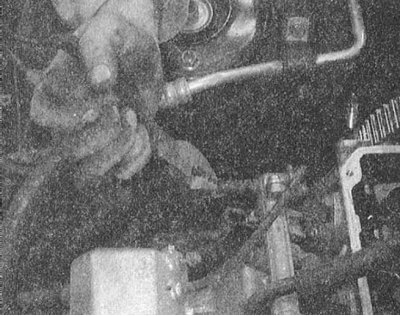
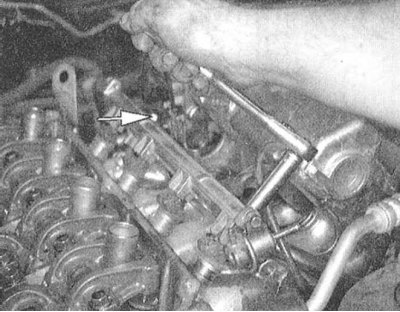
4. Unscrew the bolts securing the pressure line to the fuel line. Disconnect the line - be prepared to collect any spilled fuel. To avoid internal contamination of the fuel system tract, immediately plug the open ends of the line and the nipple connector.
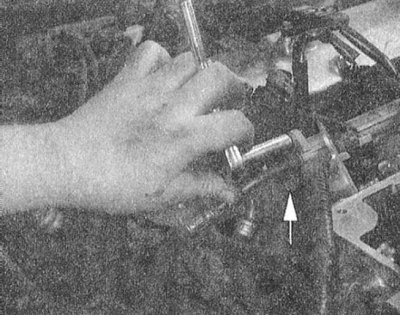 | 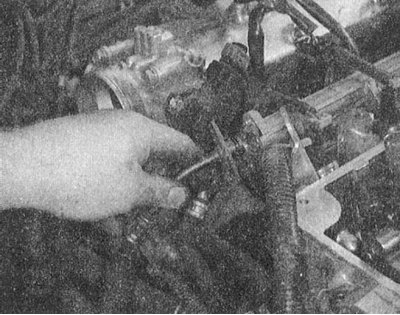 |
 |
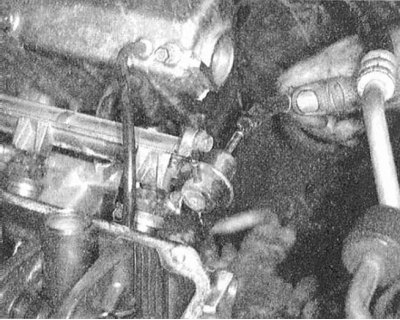
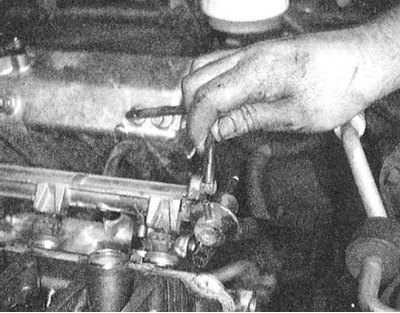
5. Disconnect the vacuum hose and fuel return line from the pressure regulator.
 |  |
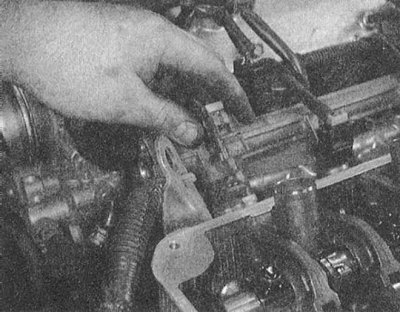 |
6. After marking, disconnect the electrical wiring from the fuel injectors.
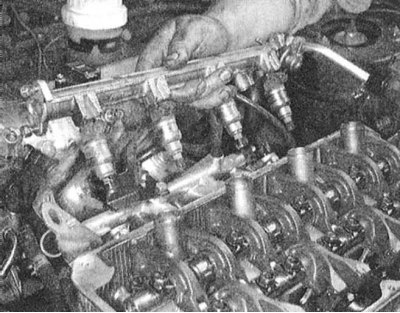
7. Remove the bolts securing the fuel rail assembly to the intake manifold. Carefully lift the rail and remove it from the engine, making sure that the injectors do not fall out of the assembly. Transfer the removed assembly to a workbench and wrap the injectors in plastic film to prevent dirt from getting inside.
 |  |
8. Remove the injector mounting bushings from the intake manifold assembly; during assembly, the bushings must be replaced without fail.
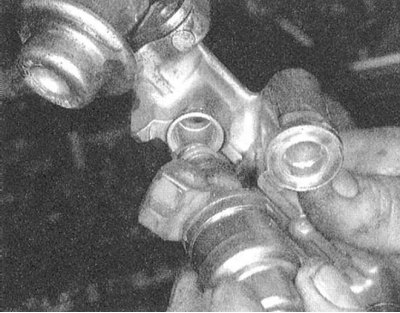
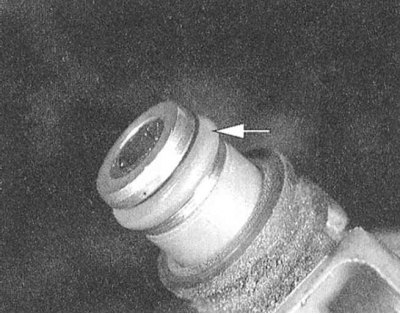
9. Carefully release the injectors from the fuel line assembly together with the seat bushings and sealing rings installed on them - the rings must be replaced during assembly.
 |  |
Installation
1. Install new insulating (sealing) bushings into each of the injector mounting ports.
2. Remove the old sealing bushings and sealing rings from the injectors and install new ones in their place.
Note: O-rings should be lightly lubricated with clean engine oil before installation.
3. After replacing the sealing ring, install the pressure regulator on the fuel rail assembly. Check the freedom of rotation of the regulator, if necessary, remove the regulator and check whether the sealing ring is twisted. If everything is in order, align the holes, screw in the mounting bolts and tighten them to the required torque (9 N·m).
Note: This procedure must be performed even if the fuel line has not been removed.
4. Using a rotary-translational motion, seat the injectors in the fuel line. Check the freedom of rotation of the installed injectors, if necessary, remove the corresponding injector and check whether the sealing ring is twisted.
5. Install the fuel line assembly in its regular place on the engine, making sure that each of the injectors is correctly inserted into its receiving socket (with the insulating sleeve seated in it).
6. Screw in the fuel line mounting bolts and tighten them to the required torque (12 Nm).
7. Connect the electrical wiring to the injectors.
8. Connect the fuel return hose to the pressure regulator, then connect the vacuum hose.
9. After replacing the sealing ring (the ring should be lubricated with liquid engine oil before installation), restore the original connection of the pressure line (fuel supply line). Screw in and tighten to the required torque (6 Nm) the mounting bolts.
10. Connect the PCV hose and breather pipe.
11. Connect the negative cable to the battery. Pressurize the system and check the system for signs of developing leaks.
Engines 3.0 l and 3.5 l
Removal
1. Fuel line installation details on 3.0L and 3.5L DOHC models are shown in the illustrations.
2. Release the pressure in the fuel system (see Section Relieving pressure in the fuel system).
3. Disconnect the negative cable from the battery.
Warning! If the car stereo system is equipped with a security code, make sure you have the correct combination to activate the audio system before disconnecting the battery!
4. Drain the cooling system (see Chapter Settings and ongoing maintenance).
5. Disconnect all components from the air intake plenum chamber and remove the chamber from the intake manifold assembly (see Chapter Power and exhaust systems).
6. Wrap the nipple connector with a rag and disconnect the fuel supply hose (pressure line) from the fuel line.
7. Disconnect the return line and remove the sealing ring from its nipple connector.
8. Disconnect the vacuum hose from the fuel pressure regulator
9. After marking, disconnect the electrical wiring from the fuel injectors.
10. Remove the tube connecting the fuel lines. Unscrew the bolts securing the fuel line assemblies.
11. Carefully remove the fuel line assemblies from the engine - make sure that the rubber mounting bushings do not fall out.
12. Release the injectors from the lines - the lower sealing bushings must be replaced without fail.
Installation
Note: On some models, the injectors are secured to the line with clips. Be sure to reinstall the clips when reassembling.
1. After lubricating with liquid oil, install new insulating bushings and sealing rings on the injectors.
2. Install the injectors in their regular places on the fuel line assemblies.
3. After replacing the mounting bushings, install the fuel line assemblies onto the intake manifold. Before tightening the mounting bolts, make sure that all rubber bushings provided by the design are in place.
4. Tighten the mounting bolts to the required torque (10÷13 Nm).
5. Connect the electrical wiring to the injectors.
6. Connect the fuel return hose.
7. After replacing the sealing ring (lubricate the new ring with liquid oil before installing), connect the fuel supply line (pressure line).
8. After replacing the sealing gasket, install the plenum chamber assembly onto the intake manifold (see Chapter Engine).
9. Fill the cooling system (see Chapter Settings and ongoing maintenance).
10. Connect the negative cable to the battery. Pressurize the system and check the system for signs of developing leaks.