



Note: To remove and install type "A" fuses, use a special "tweezers" type puller.
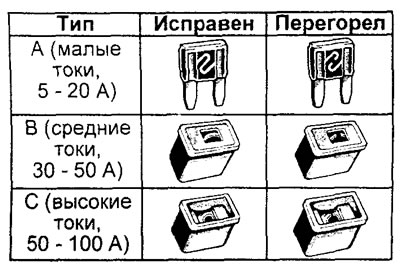
Fuses are designed to blow before all wiring is damaged if there is an overload in the electrical circuits from the battery.
Note: Before replacing fuses, determine the cause of the electrical overload and make any necessary repairs.
Warning: Do not use wire instead of fuses, even for temporary installation, as this may cause damage to the electrical system and lead to fire.
1. To change the fuse, turn off the ignition.
2. Open the relay and fuse box and determine which element has burned out. The chapter "Body Electrical Equipment" also shows possible locations of relay and fuse boxes in the car's interior and in the engine compartment.
Note: The fuse box cover shows the names of the electrical circuits and the characteristics of the fuses.
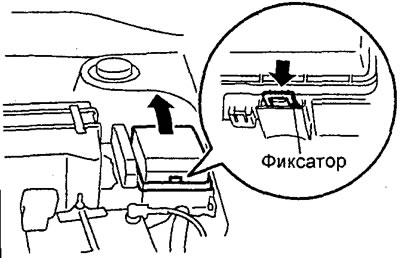
Location of fuse boxes in the engine compartment.
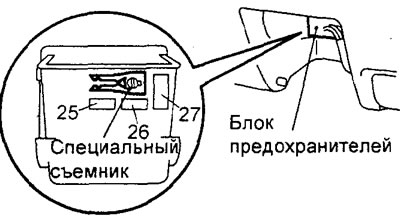
Location of the fuse box in the car interior.
The material was created based on the website [MITSUBISHIMAN.ru]
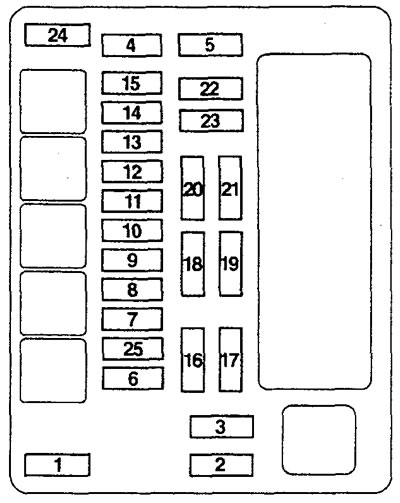
Location of fuses in the engine compartment (sedan).
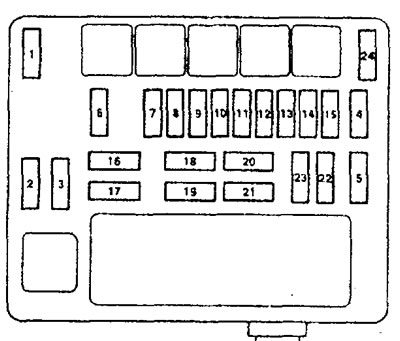
Location of fuses in the engine compartment (station wagon).
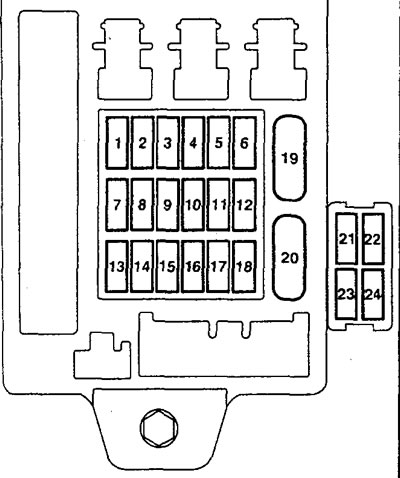
Location of fuses in the car interior.
3. Install only a fuse with the ampere rating indicated on the fuse box cover.
4. If there is no spare fuse, in critical situations you can remove the fuse from the position that is not necessary for the normal movement of the car, and use it if their rating matches the required one. Note: do not use a fuse with a higher current rating or any other objects (such as "bugs") instead of a burnt fuse. This may cause more serious damage, including a fire.
5. If you do not have a fuse with the rated value, then you should use a fuse with a lower value, as close to the rated value as possible.
Note: It is recommended to keep a set of spare fuses in the vehicle.
6. If the new fuse blows immediately, this indicates a fault in the electrical system.