



Operating principle
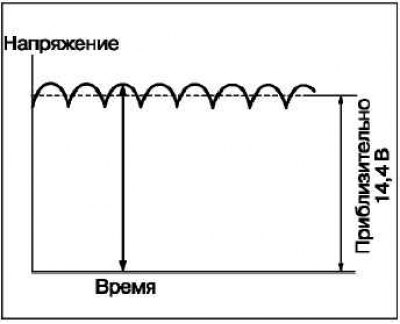
When the excitation coil, through which an electric current is passed, rotates, an alternating voltage is induced in the stator windings.
With the help of rectifier diodes, the alternating voltage of the generator is rectified. The graph of the rectified voltage is shown in the figure.
The average value of the rectified voltage varies slightly depending on the load.
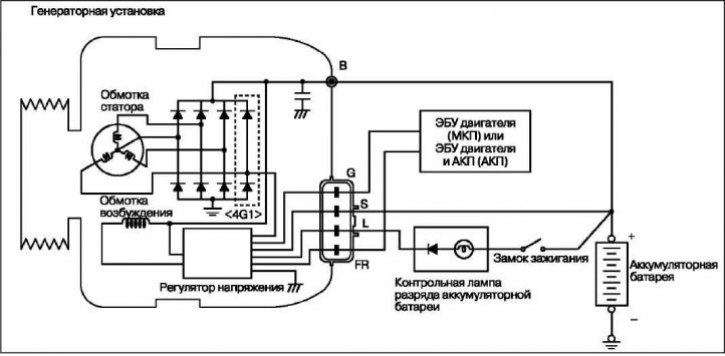
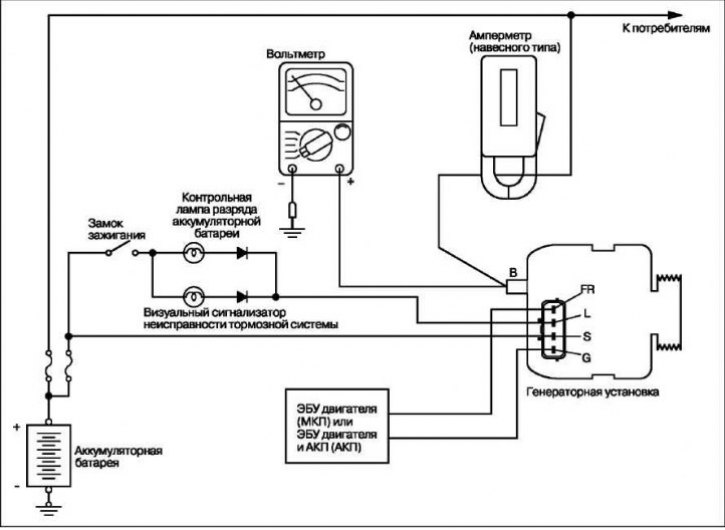
When the ignition is turned on, current from the battery passes through the excitation winding, providing initial excitation of the generator. After the engine is started, the generator is excited by the voltage induced in the stator windings. The generator output voltage increases with an increase in the excitation winding current and decreases with a decrease in the excitation winding current. When the battery voltage (voltage at the generator terminal "S") reaches a value of approximately 14.4 V, the excitation winding current stops. As soon as the battery voltage drops below the regulated value, the voltage regulator closes the excitation winding circuit again. Thus, by regulating the excitation winding current, a constant voltage of the on-board network is maintained. If the excitation winding current remains constant, then with an increase in the engine speed, the generator voltage increases.
Data for control and regulation
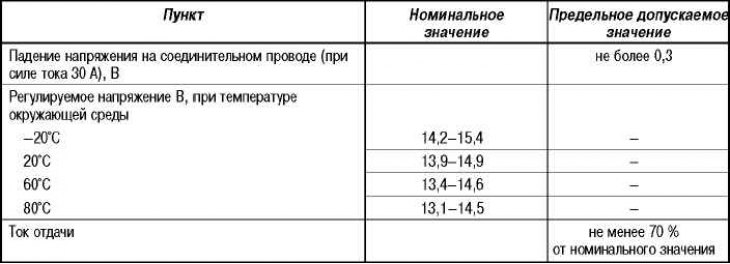
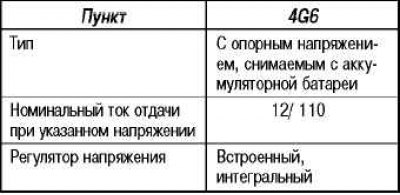
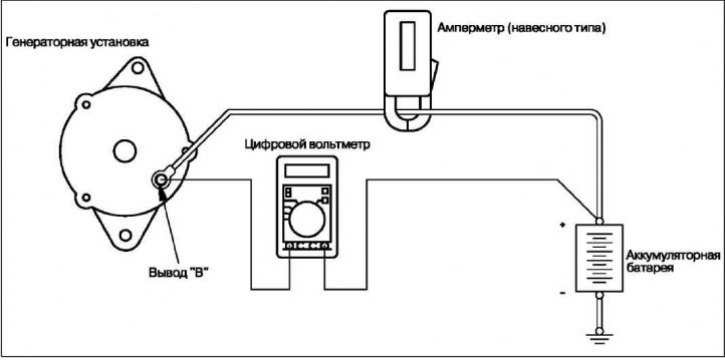
Generator set performance
[The text of the article was obtained from the website: MitsubishiMan.ru]