



1. Start the engine and warm it up for 1-2 minutes, then stop it. If the pedal is fully depressed the first time, but gradually stops higher the next time, the booster is OK. If the height does not change, the booster is faulty. Go to step 2.
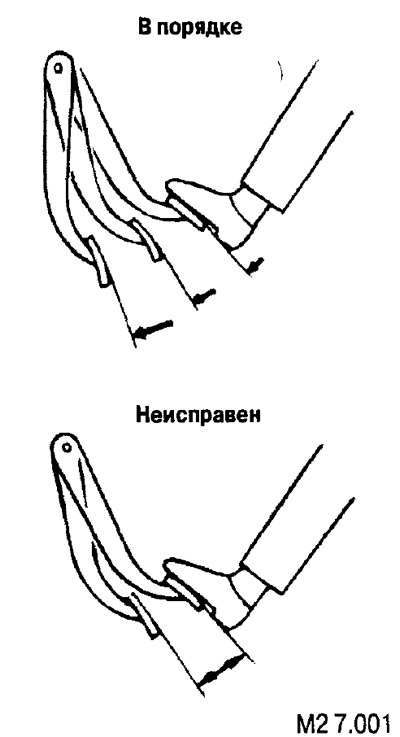
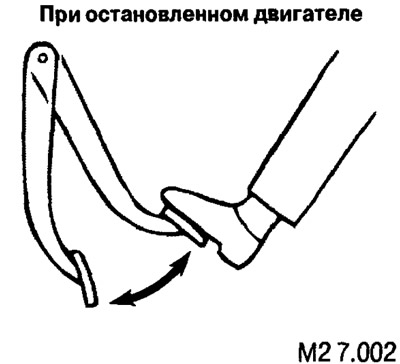
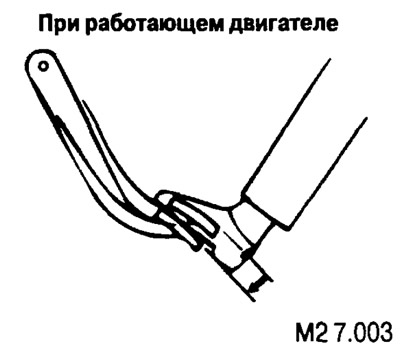
2. With the engine stopped, depress the brake pedal several times. Then start the engine and depress the brake pedal. If the brake pedal moves only a short distance, the booster is in good condition. If there is no change, the booster is faulty. Go to step 3.
 |  |
3. With the engine running, press the brake pedal and stop the engine. Hold the pedal for 30 seconds. If the pedal height does not change, the booster is in good condition. If the pedal rises, the booster is faulty.
The original material is posted on the website www.MitsubishiMan.ru
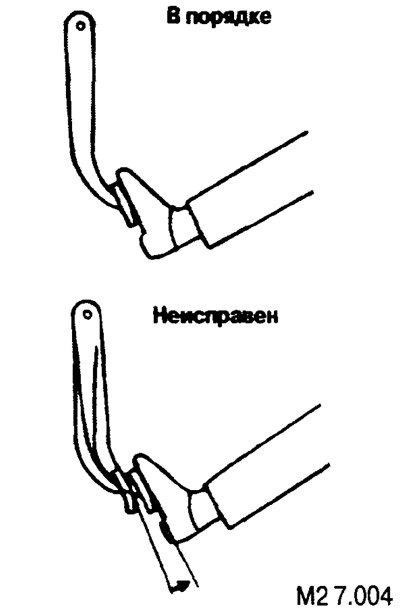
If any of the three tests show a fault, the check valve, vacuum hose or booster may be faulty. Check the check valve, vacuum hose for leaks, brake booster high-pressure vacuum pump and repair or replace if necessary. If the above parts are OK, replace the brake booster and repeat the tests.