



Cars produced before 8.88
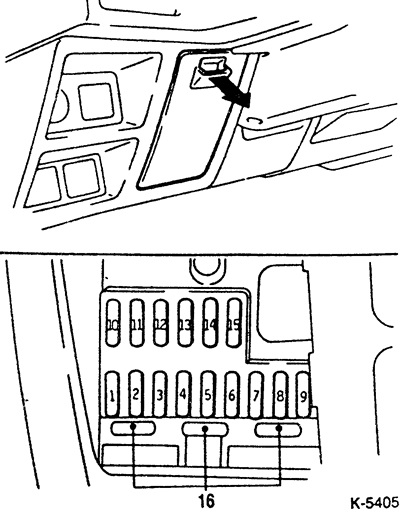
The fuses are located in the fuse box, which is located on the left under the instrument panel. (The fuses for the seat heating and electric sunroof circuits are located next to the fuse box behind the instrument panel.) The fuse rating is coded by its color:
- 10A - red
- 15A - light blue
- 20A - yellow
Cars produced since 9.88
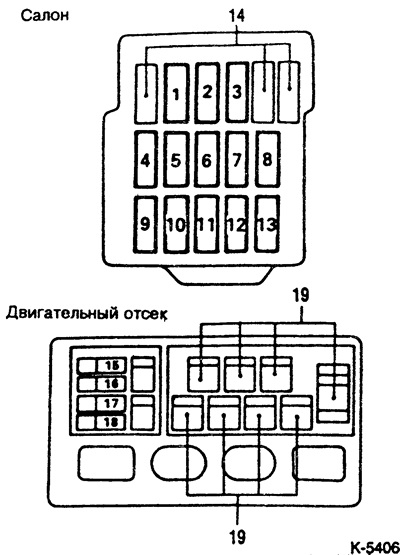
Since 9.88 improved fuses have been used. They have blade contacts, so the previous fuses cannot be used.
The relays and fuses are located in 2 fuse boxes, one in the passenger compartment under the cover on the left under the instrument panel, the other in the engine compartment on the right.
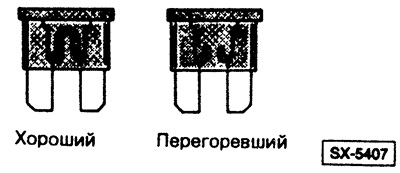
The fuse's rated current is indicated on the back of its body. In addition, the fuse body has a color code, which can also be used to determine the rating. Through the transparent fuse body, you can determine whether the fuse has blown.
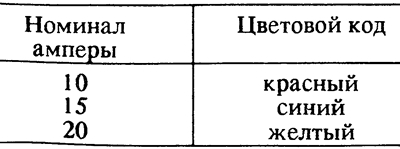
The composition of the fuses may vary depending on the car model. The list of fuses is provided on the fuse box cover and in the car operating instructions.
Remove the cover.
Before replacing a fuse, be sure to switch off the corresponding consumer.
A blown fuse can be identified by a melted metal strip.
Cars manufactured before 8.88: Fuses are installed in 2 metal clamps. When replacing, ensure that the fuse is securely fastened in the clamps; bend the clamp springs if necessary. In addition, there should be no corrosion on the clamp contacts.
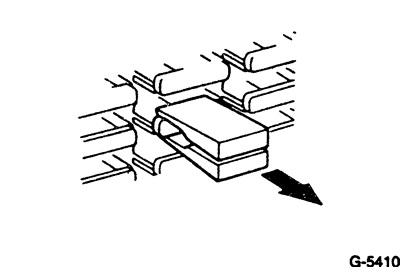
Cars produced since 9.88: Remove the blown fuse. There are plastic tweezers on the fuse box cover located in the passenger compartment to remove the fuse.
Insert a new fuse of the same rating.
If a newly installed fuse blows after a short time, the corresponding electrical circuit should be checked.
Never replace a fuse with wire or similar auxiliary means, as this may cause serious damage to the electrical equipment.
It is recommended to always have spare fuses in the car. There is space for storing them in the bottom of the box next to the plastic tweezers.
Place the cover on the fuse box.