



The heat rating characterizes the degree of heat resistance of the spark plug. The lower the heat rating of the spark plug, the higher its heat resistance. That is, the spark plug is better able to remove heat, which prevents harmful pre-ignition (engine detonation). However, a spark plug with high heat resistance has the disadvantage that its self-cleaning temperature is also higher. Therefore, it is more prone to sooting, especially when the engine often does not have time to reach its operating temperature (city trips, short-distance trips in winter). As a rule, "cold" spark plugs (heat rating starting from 06) are installed on "hot" engines that require high power output.
The heat rating is contained in the spark plug code. The code is deciphered as follows:
Bosch spark plugs
Example
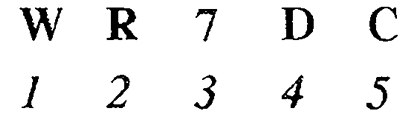
1 W = thread M 14 x 1.25 with flat seal, SW 21; F = thread M 14 x 1.25 with flat seal, SW 16; M = thread M 18 x 1.5 with flat seal, SW 25, H = thread M 14 x 1.25 with cone seal, SW 16; D = thread M 18 x 1.5 with cone seal, SW 21, SW = key size.
2 R = with interference suppression resistor. Does not affect the functioning of the ignition system.
3 Heat rating The heat rating scale is set from 06 ("cold") to 13 ("hot"). Heat rating 7 corresponds to the old heat rating designation of 175, 6 corresponds to 200, 5 - 225, etc
4 A = Thread length 12.7mm, normal spark position, B = Thread length 12.7mm, advanced spark position, C = Thread length 19mm, normal spark position; D = thread length 19 mm, extended spark position
5 Central Electrode Material: No designation = chromium-nickel alloy; C = central electrode made of copper-nickel composition; S = silver center electrode, P = platinum center electrode, O = standard spark plug with reinforced center electrode.
Thanks to the copper rod in the central electrode, and even more so thanks to the silver central electrode, heat dissipation and thus the heat resistance of the spark plugs is increased.
Beru spark plugs
Example:
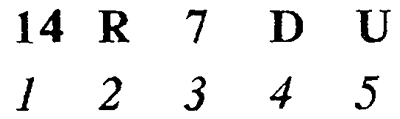
- 1 Thread diameter in mm, here M 14 x 1.25
- 2 Design feature, for example, K-taper fit, R - resistance for suppressing radio interference.
- 3 Heat rating (same as Bosch spark plugs).
- 4 Thread length (same as Bosch spark plugs).
- 5 Electrode material (eg U - copper rod).
Installing spark plugs
Replace spark plugs only on a cold or warm engine.
Caution: Removing spark plugs on a hot engine may damage the spark plug hole threads in light metal alloy cylinder heads.
Screw in the spark plugs by hand until they touch the cylinder head.
Attention: Do not tilt the candles.
Tighten the spark plugs to 25 Nm.
Put on the spark plug tips. Move them in different directions to check the reliability of the spark plug tips and spark plug wires.