



Note. To avoid violating the warranty obligations that apply to components of exhaust gas reduction systems, check and maintain the catalytic converter in the workshop of a car service station.
General information
A catalytic converter is a component of exhaust gas toxicity reduction systems, is included in the exhaust system and serves to reduce the emission of toxic components into the atmosphere. There are two types of catalytic converters. A conventional oxidation converter reduces the content of hydrocarbons and carbon monoxide in the exhaust gases. A three-function catalytic converter additionally reduces the emission of nitrogen oxides (NOX). All models considered in this Manual use three-function catalytic converters.
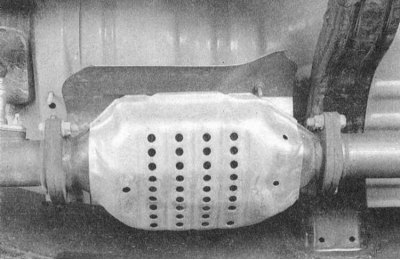
The catalytic converter is part of the exhaust system and looks like an additional muffler.
Examination
1. Diagnostic equipment for checking the catalytic converter is expensive and extremely difficult to operate. If you suspect a converter failure, take the car to a service station for inspection.
2. Every time the vehicle is raised above the ground for any reason, inspect the converter for signs of mechanical damage, leaks and corrosion. Check the condition of the welds and the tightness of the flange bolts that secure the device to the exhaust system sections. A defective catalytic converter must be replaced.
3. Ensure that the heat shield is securely fastened and that there is always a sufficient gap between the converter and the chassis/body elements (see Chapter Settings and ongoing maintenance).
Replacement
The procedures for replacing exhaust system components are described in Chapter Power and exhaust systems.