



Note: Since the cooling system is a closed type, the normal loss of coolant is small. A noticeable decrease in coolant level may indicate the presence of leaks.
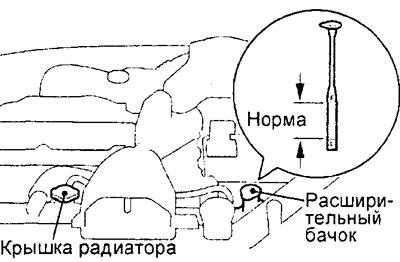
Also, if the expansion tank is completely empty, remove the radiator cap and add coolant to the level of the base of its filler neck.
2. Check the quality of the coolant.
a) Remove the radiator cap.
Caution: To avoid burns, do not remove the radiator cap or expansion tank cap when the engine is hot, as the liquid and steam are under pressure.
b) Check for rust deposits around the radiator cap valves and their seats on the radiator filler neck.
c) Check that the coolant is clear and free of oil. If the coolant is contaminated, clean the cooling system passages and replace the fluid.
d) Replace the radiator cap.
3. If necessary, check the concentration of antifreeze.
a) Measure the specific gravity of the coolant using a hydrometer.
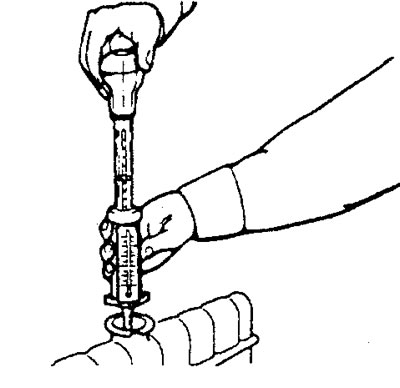
Table. Relationship between coolant density and antifreeze concentration.
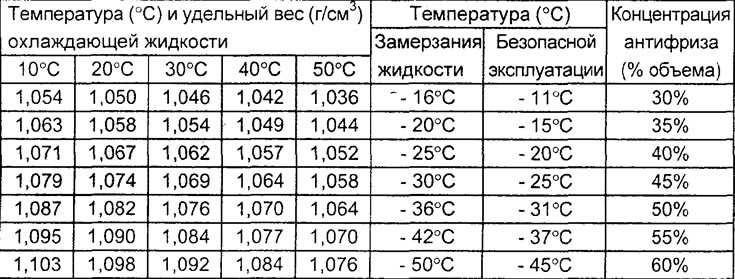
b) Measure the temperature of the coolant and determine the concentration of antifreeze taking into account the relationship between specific gravity and temperature based on the data in the table provided. Check that the results correspond to the norm (see section "Replacing the coolant"). If necessary, add antifreeze or distilled water.