



Caution: The coolant contains ethylene glycol and an anti-corrosion additive. Since the radiator, cylinder head and coolant pump housing are cast from aluminum alloy, periodic replacement of the coolant is necessary to prevent corrosion of these parts. In addition, it is not allowed to replace the coolant with clean water even in summer.
1. Place the vehicle on a level, horizontal surface and apply the parking brake.
2. Wait until the engine cools down.
3. Drain the fluids from the cooling system.
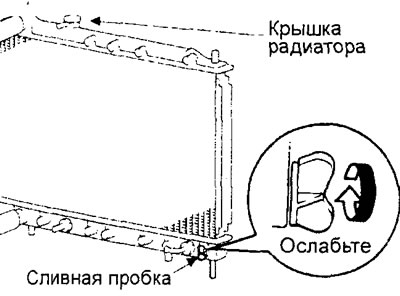
a) Remove the radiator cap.
Caution: To avoid burns, do not remove the radiator cap or expansion tank cap when the engine is hot, as the liquid and steam are under pressure.
b) Drain the coolant from the radiator into a suitable container by unscrewing the drain plug.
c) Unscrew the drain plug of the cylinder block and drain the coolant from the engine.
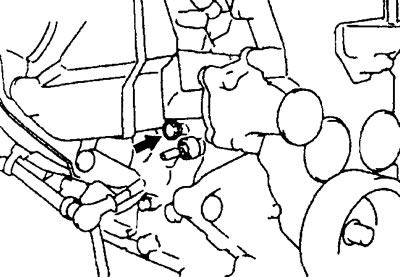
Engine 4G15.
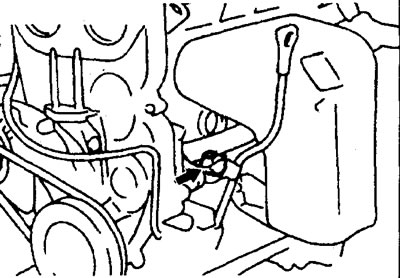
Engine 4G93.
d) Remove the expansion tank and drain the coolant from it, then install the expansion tank back in place.
The material was copied from the website MitsubishiMan.ru
d) If necessary, after draining the coolant, fill the radiator with clean distilled water to flush the cooling system.
e) Apply sealant to the threads of the cylinder block drain plug and tighten it to the specified torque.
Sealant - HelmSeal H-1M, ЗМ Nut Locking 4171 or equivalent
Tightening torque - 40 + 5 Nm
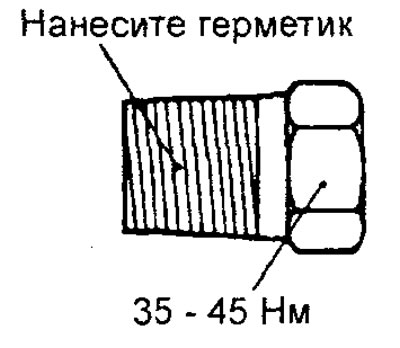
g) Tighten the radiator drain plug securely.
4. Filling with coolant.
a) (Engine 4G93) Loosen the bolt to bleed air from the cooling system. Replace the bolt gasket with a new one.
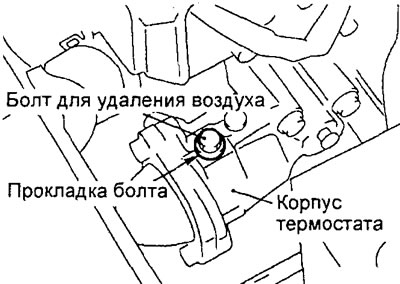
b) (4G93 Engine) Slowly pour coolant into the radiator until it starts to flow out of the cooling system bleed bolt hole, and then tighten the bolt to the specified torque.
c) Slowly pour coolant into the radiator until it is completely full (to the base of the filler neck), and also fill the expansion tank without exceeding the "FULL" mark.
Coolant: High-quality antifreeze for aluminum alloys based on ethylene glycol.
The range of acceptable concentrations of antifreeze in the coolant is 30 - 60%
Total filling volume
Engine 4G 15 - 5.0 l
Engine 4G93 - 6.0 l
Note: The total filling volume includes the volume in the expansion tank (approximately 0.6 l).
Attention:
- If the concentration of antifreeze is below 30%, the anti-corrosion properties of the coolant are significantly reduced.
- In addition, if the concentration is more than 60%, the crystallization temperature of the antifreeze increases (heat exchange efficiency decreases), adversely affecting the engine. Therefore, make sure that the antifreeze concentration level is within the specified range.
- Use a brand name ethylene glycol based coolant with an anti-corrosion additive and mix it with demineralized or distilled water according to the manufacturer's instructions.
- Do not mix antifreezes of different brands.
- Do not use alcohol-based antifreeze.
d) Tighten the radiator cap securely and install the expansion tank cap.
5. Start the engine and warm it up until the thermostat opens. Note: To check the condition of the circulating coolant, touch the radiator hose with your hand. It should be warm when the thermostat is open.
6. After the thermostat opens, press the accelerator pedal several times to increase the crankshaft speed, then turn off the engine. Check for leaks from the drain plugs.
7. After stopping the engine, let it cool down, then add coolant to the expansion tank up to the "FULL" mark. If the coolant level was low during the check, repeat the operations starting from point "4".