Contents: Monitoring uniformity of tire wear ⤓ Wheel alignment ⤓ Checking the wheel turning angles ⤓ Wheel camber angles, longitudinal…⤓ Wheel alignment ⤓ Nomogram for determining adjustment…⤓
Monitoring uniformity of tire wear
Check the wheel tires for even wear. Uneven wear may be caused by faulty steering rods, improper adjustment of wheel alignment angles, particularly front wheel offset.
Wheel alignment
When the wheel alignment is adjusted correctly, the difference in distances (A and B), measured along the longitudinal planes of symmetry of the tires (on the tread surface), should be within 0-5 mm, which corresponds to a toe angle of 0°00'-0°12' per wheel.
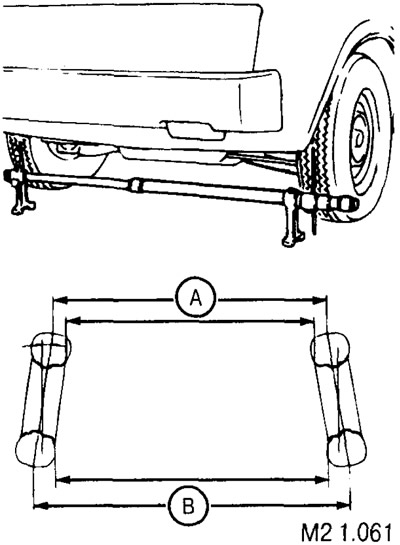
The wheel alignment angle is adjusted by changing the length of the steering rods at the threaded connection of the steering rod ends with the steering rods themselves.
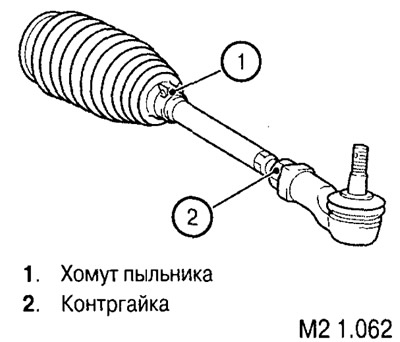
Tightening torque of the lock nut on the steering rod: 93 Nm.
Checking the wheel turning angles
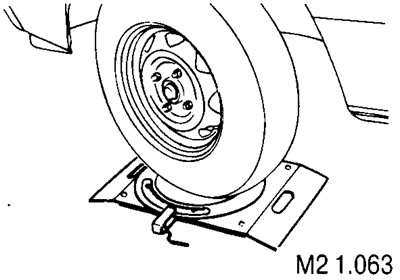
| Inner wheel (eg right when turning the wheels to the right) | 36°50' ±2°00' |
| Outer wheel (left when turning the wheels to the right) | 32°40" |
Wheel camber angles, longitudinal tilt angles of wheel turning axes, transverse tilt angles of wheel turning axes
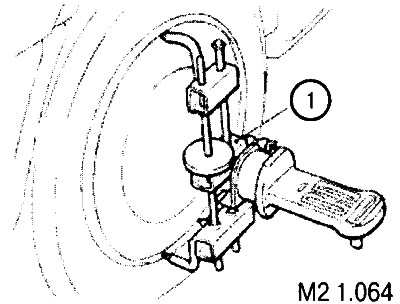
Standard wheel alignment values
| Wheel camber angle | 0°00" ±0°30" 1*) |
| Angle of longitudinal inclination of wheel steering axes | 3°48' ±1°00' 1*) |
| Angle of transverse inclination of the wheel steering axes | 12°45' |
[Original material on the website: mitsubishiman]
1*) The difference in angles for the left and right wheels must be no more than 30'.
Wheel alignment
The front wheel camber angle is adjusted by turning the eccentric adjusting screw that secures the lower suspension arm to the body.
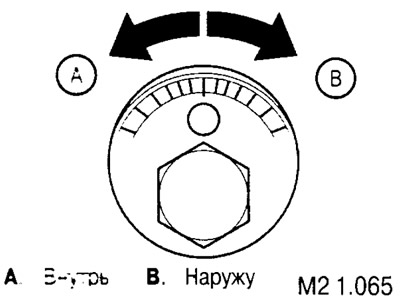
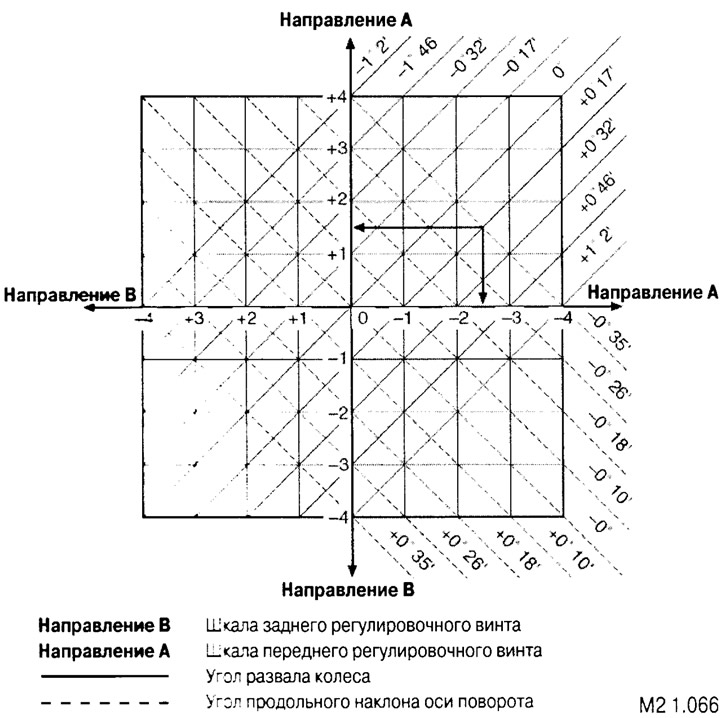
Nomogram for determining adjustment actions
How to use the nomogram?
Example: If the camber angle deviation from the standard value is 0°35' and the caster angle deviation is 0°17', then the front eccentric bolt should be turned 1.5 divisions and the rear bolt 2.5 divisions in the opposite direction.