



Contents: Front wheel alignment ⤓ Negative toe-in of the steering…⤓ Camber, longitudinal and transverse…⤓
Wheel alignment angles have a significant impact on vehicle stability, tire wear and fuel consumption.
Before measuring the front wheel alignment angles, park the vehicle on a level, horizontal surface. Before adjusting, check that the front suspension, steering and wheels are in good technical condition.
Front wheel alignment
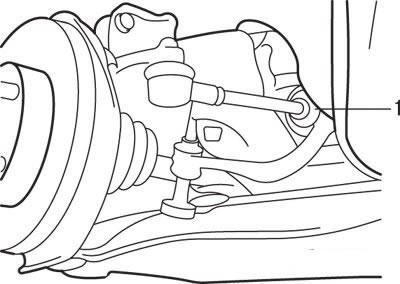
Fig. 15.23. Location of the clamp (1) for fastening the steering rod boot
If the toe-in does not correspond to the nominal value, then adjust the toe-in as follows: loosen the clamps securing the steering rod boots and rotate the right and left steering rods by the same angles in opposite directions (Fig. 15.23).
The toe-in will decrease as you rotate the left tie rod towards the front of the vehicle and the right tie rod towards the rear.
(The original material is posted on the website: MITSUBISHIMAN)
One turn of the left and right steering rods results in a change in toe of approximately 0°35' (per wheel).
Negative toe-in of the steering wheels when turning
In addition to checking the front wheel alignment, it is recommended to check the reverse wheel alignment when turning, especially if the vehicle has been in an accident or is likely to have been in an accident. Perform this check when turning left and right.
Camber, longitudinal and transverse tilt of the steering axis
The front wheel camber and longitudinal tilt of the steering axis are adjusted at the factory and cannot be adjusted during operation.
If the front wheel alignment does not correspond to the nominal value, check the front suspension components and replace any deformed or damaged parts.
For vehicles with aluminum wheels, install a wheel alignment sensor on the drive shaft using a special mount. Tighten the special mount to the same torque as the drive shaft mounting nut (200–260 N·m).
Caution! Do not load the front wheel hub bearing with the weight of the vehicle when the drive shaft mounting nuts are loose.