



Share with friends:
4G9 gasoline engines of car Mitsubishi Carisma


Basic data for adjustments and monitoring on 4G92 engines (model 6B)
Basic data for adjustments and monitoring on 4G92 engines (model 6B)
Basic data for adjustments and monitoring on 4G92 engines (model 6B)


Checking and adjusting the tension of the generator drive belt
Examination Fig. 3.1. Measuring the deflection of the generator drive belt: 1 – generator drive pulley; 2 – crankshaft pulley; deflection 8.0–10.5 mm Use a ruler or a...
Examination Fig. 3.1. Measuring the deflection of the generator drive belt: 1 – generator drive pulley; 2 – crankshaft pulley; deflection 8.0–10.5 mm Use a ruler or a...


Checking and adjusting the tension of the power steering pump and air conditioning compressor drive belt
Fig. 3.3. Measuring the deflection of the power steering pump and air conditioning compressor drive belt: 1 – Power steering pump pulley; 2 – crankshaft pulley; 3 – air...
Fig. 3.3. Measuring the deflection of the power steering pump and air conditioning compressor drive belt: 1 – Power steering pump pulley; 2 – crankshaft pulley; 3 – air...

Checking and adjusting valve clearances (SOHC)
1. Start the engine and warm it up to a coolant temperature of 80–95°C. 2. To make checking easier, remove all spark plugs. 3. Remove the cylinder head cover. 4. Turn...
1. Start the engine and warm it up to a coolant temperature of 80–95°C. 2. To make checking easier, remove all spark plugs. 3. Remove the cylinder head cover. 4. Turn...

Checking and adjusting the ignition timing (SOHC)
1. Prepare the vehicle for testing (warm up the engine to normal operating coolant temperature). 2. Disconnect the 2-pin connector from the ignition distributor, connect...
1. Prepare the vehicle for testing (warm up the engine to normal operating coolant temperature). 2. Disconnect the 2-pin connector from the ignition distributor, connect...

Checking and adjusting the ignition timing (DOHC)
1. Prepare the vehicle for testing (warm up the engine to normal operating coolant temperature). Fig. 3.6. Location of the tachometer connector (1) 2. Insert a paper...
1. Prepare the vehicle for testing (warm up the engine to normal operating coolant temperature). Fig. 3.6. Location of the tachometer connector (1) 2. Insert a paper...

Checking the engine crankshaft speed at idle speed
1. Prepare the vehicle for testing (warm up the engine to normal operating coolant temperature). 2. Check the basic ignition timing angle, which for SOHC engines should...
1. Prepare the vehicle for testing (warm up the engine to normal operating coolant temperature). 2. Check the basic ignition timing angle, which for SOHC engines should...
Checking the air-fuel mixture at idle speed
1. Prepare the vehicle for testing (warm up the engine to normal operating coolant temperature). 2. Check that the base ignition timing angle matches the nominal value,...
1. Prepare the vehicle for testing (warm up the engine to normal operating coolant temperature). 2. Check that the base ignition timing angle matches the nominal value,...
Compression check
You can check the engine condition by measuring the compression in the engine cylinders. If you do this regularly, you can determine the onset of engine wear in advance,...
You can check the engine condition by measuring the compression in the engine cylinders. If you do this regularly, you can determine the onset of engine wear in advance,...
Checking the vacuum in the intake manifold
1. Start the engine and warm it up to a coolant temperature of 80–95°C. 2. Connect the tachometer. 3. Connect a tee to the vacuum hose between the fuel pressure...
1. Start the engine and warm it up to a coolant temperature of 80–95°C. 2. Connect the tachometer. 3. Connect a tee to the vacuum hose between the fuel pressure...

Hydraulic valve clearance compensators (DOHC)
Attention! Sometimes after starting the engine or even during its operation, you can hear a characteristic persistent sound (clacking), which can be mistaken for the...
Attention! Sometimes after starting the engine or even during its operation, you can hear a characteristic persistent sound (clacking), which can be mistaken for the...

Adjusting the Timing Belt Tension of a SOHC Engine
1. Remove the upper timing belt cover. Fig. 3.11. Alignment of the mark on the camshaft pulley with the pointer when setting the piston of the 1st cylinder to TDC in the...
1. Remove the upper timing belt cover. Fig. 3.11. Alignment of the mark on the camshaft pulley with the pointer when setting the piston of the 1st cylinder to TDC in the...
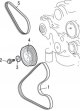
Crankshaft pulley — removal and installation
Removal 1. Remove the lower right protective cover. Fig. 3.12. Crankshaft pulley and drive belts: 1 – Power steering pump and air conditioning compressor drive belt; 2 –...
Removal 1. Remove the lower right protective cover. Fig. 3.12. Crankshaft pulley and drive belts: 1 – Power steering pump and air conditioning compressor drive belt; 2 –...
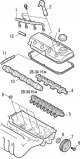
SOHC Engine Camshaft and Camshaft Seal
Removal 1. Disconnect the cable from the negative terminal of the battery. 2. Remove the ignition distributor. 3. Remove the timing belt. Fig. 3.13. SOHC engine camshaft...
Removal 1. Disconnect the cable from the negative terminal of the battery. 2. Remove the ignition distributor. 3. Remove the timing belt. Fig. 3.13. SOHC engine camshaft...
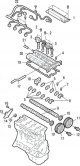
Camshafts and camshaft seals for DOHC engines
Removal 1. Disconnect the cable from the negative terminal of the battery. 2. Remove the timing belt. Fig. 3.15. Camshafts and camshaft seals of the DOHC engine: 1 –...
Removal 1. Disconnect the cable from the negative terminal of the battery. 2. Remove the timing belt. Fig. 3.15. Camshafts and camshaft seals of the DOHC engine: 1 –...
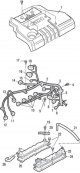
Camshafts and camshaft seals for GDI models
Removal 1. Disconnect the cable from the negative terminal of the battery. 2. Remove the protective cover. 3. Drain the coolant from the engine cooling system. 4. Remove...
Removal 1. Disconnect the cable from the negative terminal of the battery. 2. Remove the protective cover. 3. Drain the coolant from the engine cooling system. 4. Remove...
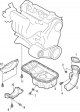
SOHC Engine Oil Pan
Removal 1. Disconnect the cable from the negative terminal of the battery. 2. Drain the engine oil from the engine. 3. Remove the engine oil level indicator. 4. Remove...
Removal 1. Disconnect the cable from the negative terminal of the battery. 2. Drain the engine oil from the engine. 3. Remove the engine oil level indicator. 4. Remove...
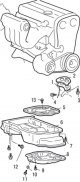
DOHC Engine Oil Pan
Removal 1. Disconnect the cable from the negative terminal of the battery. 2. Drain the engine oil from the engine. 3. Remove the engine oil level indicator. 4. Remove...
Removal 1. Disconnect the cable from the negative terminal of the battery. 2. Drain the engine oil from the engine. 3. Remove the engine oil level indicator. 4. Remove...

Crankshaft seals — removal and installation
Front crankshaft oil seal Removal 1. Remove the timing belt. 2. Remove the crankshaft V-belt pulley. Fig. 3.34. Crankshaft oil seals: 1 – torque converter drive plate...
Front crankshaft oil seal Removal 1. Remove the timing belt. 2. Remove the crankshaft V-belt pulley. Fig. 3.34. Crankshaft oil seals: 1 – torque converter drive plate...
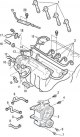
SOHC Engine Cylinder Head Gasket
Removal 1. Disconnect the cable from the negative terminal of the battery. 2. Remove the fuel pressure in the fuel system. 3. Drain the coolant from the engine cooling...
Removal 1. Disconnect the cable from the negative terminal of the battery. 2. Remove the fuel pressure in the fuel system. 3. Drain the coolant from the engine cooling...

DOHC Engine Cylinder Head Gasket
Removal 1. Disconnect the cable from the negative terminal of the battery. 2. Remove the fuel pressure in the fuel system. 3. Drain the coolant from the engine cooling...
Removal 1. Disconnect the cable from the negative terminal of the battery. 2. Remove the fuel pressure in the fuel system. 3. Drain the coolant from the engine cooling...
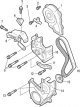
Timing belt drive the SOHC engine
Removal 1. Disconnect the cable from the negative terminal of the battery. 2. Remove the lower left protective cover. 3. Remove the engine mount bracket. 4. Remove the...
Removal 1. Disconnect the cable from the negative terminal of the battery. 2. Remove the lower left protective cover. 3. Remove the engine mount bracket. 4. Remove the...

Timing belt drive the DOHC engine
Removal 1. Disconnect the cable from the negative terminal of the battery. 2. Remove the protective cover. 3. Remove the engine mount bracket. 4. Remove the crankshaft...
Removal 1. Disconnect the cable from the negative terminal of the battery. 2. Remove the protective cover. 3. Remove the engine mount bracket. 4. Remove the crankshaft...

Removal and installation of the SOHC engine assembly
Removal 1. Disconnect the cable from the negative terminal of the battery. 2. Remove the fuel pressure in the fuel system. 3. Remove the hood. 4. Drain the coolant from...
Removal 1. Disconnect the cable from the negative terminal of the battery. 2. Remove the fuel pressure in the fuel system. 3. Remove the hood. 4. Drain the coolant from...

Removal and installation the DOHC engine assembly
Removal 1. Disconnect the cable from the negative terminal of the battery. 2. Remove the fuel pressure in the fuel system. 3. Remove the hood. 4. Drain the coolant from...
Removal 1. Disconnect the cable from the negative terminal of the battery. 2. Remove the fuel pressure in the fuel system. 3. Remove the hood. 4. Drain the coolant from...
Starting the engine after major repairs
1. With the engine installed in the engine bay of the vehicle, check the engine oil and coolant levels. Check that all previously removed wires and hoses are installed...
1. With the engine installed in the engine bay of the vehicle, check the engine oil and coolant levels. Check that all previously removed wires and hoses are installed...
This section is available on: russian, bulgarian, belarusian, ukrainian, serbian, croatian, romanian, polish, slovak, hungarian
Similar materials for other Mitsubishi models
➤ Gasoline engines: Repair of 4G9 engines Mitsubishi Colt 5 (1995-2003, petrol)
Link in different formats to this section
TEXTHTMLBB Code
- General information
- User manual
- Maintenance
- Power unit
- Petrol engines 4G9
- Diesel engines FBQT
- Diesel engines F9Q
- Cooling system
- Injection system (MPI)
- Injection system (GDI)
- Engine electrical equipment
- Transmission
- Clutch
- Mechanical gearbox
- Automatic gearbox
- Chassis and running gear
- Steering
- Brake system
- Front suspension and shafts
- Rear suspension
- Body and interior
- Exterior (external elements)
- Interior (internal elements)
- Doors, locks and windows
- Air conditioner
- Electrical equipment
- Equipment and devices
- Headlights and lighting
- Electrical circuits
- General information
- User manual
- Maintenance
- Power unit
- Petrol engines 4G9
- Petrol engines 4G1
- Diesel engines F9Q1
- Cooling system
- Fuel injection system GDI
- Fuel injection system MPI
- Diesel supply system F9Q1
- Ignition system
- Diesel preheating
- Transmission
- Clutch
- Mechanical gearbox
- Automatic gearbox
- Chassis and running gear
- Suspension and drive shafts
- Brake system
- Steering
- Body and interior
- Exterior (external elements)
- Interior (internal elements)
- Doors, locks and windows
- Heating and air conditioning
- Electrical equipment
- Power devices
- Equipment and devices