



Contents: Removal ⤓ Installation ⤓
Removal
1. Disconnect the cable from the negative terminal of the battery.
2. Drain the engine oil from the engine.
3. Remove the engine oil level indicator.
4. Remove the center beam.
5. Remove the lower protective cover.
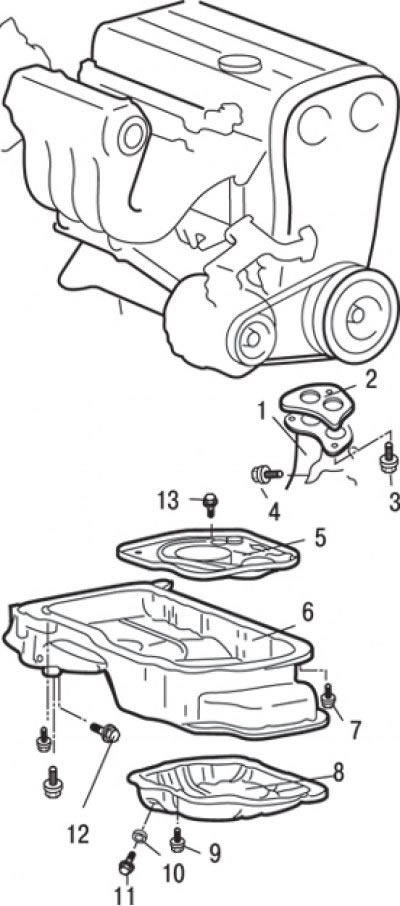
Fig. 3.31. DOHC engine oil pan: 1-intake pipe of the exhaust gas system; 2 – gasket; 3 – bolt, 49 Nm; 4 – bolt, 50 Nm; 5 – oil depressant; 6 – upper part of the oil pan; 7 – bolt, 10–12 Nm; 8 – lower part of the oil pan; 9 – bolt, 7 Nm; 10 – drain plug sealing ring; 11 – drain plug, 39 Nm; 12 – bolt, 48 Nm; 13 – bolt, 7 Nm
6. Unscrew the nuts and remove the exhaust pipe 1 (Fig. 3.31) and gasket.
7. Using a wooden block, separate the lower part of the oil pan after unscrewing the mounting bolts by lightly tapping on the wooden block.
8. Unscrew plug 11 and remove sealing ring 10.
9. Insert the blade of a flat-head screwdriver into the slot in the top of the engine oil pan. Turn the screwdriver to separate the oil pan from the cylinder block.
[The material was borrowed from the website: www.mitsubishiman.ru]
10. Loosen the bolts and remove the oil separator 5.
Installation
Installation is carried out in the reverse order of removal, taking into account the following.
1. Clean the oil pan with kerosene or a suitable solvent and remove dirt from the outside and deposits from the inside. Clean the mating surfaces of the oil pan and engine block from the remains of the old gasket. Check that the surfaces are clean and dry.
2. Install the drain plug sealing ring with the flanged side facing the pan.
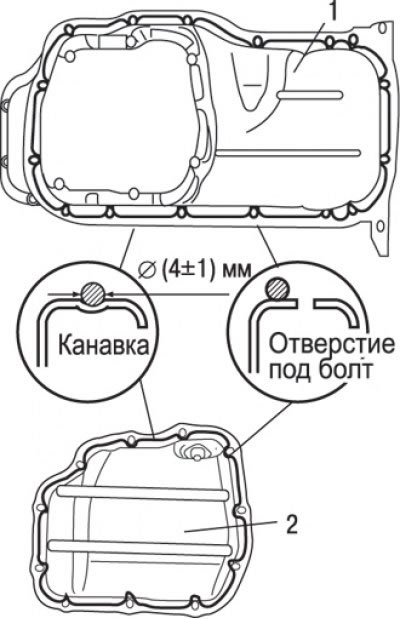
Fig. 3.32. Places where a layer of Mitsubishi Genuine Part MD930389 sealant or similar is applied to the engine oil pan flange: 1 – lower part of the pallet; 2 – upper part of the pallet
3. Apply a 4 mm diameter bead of sealant to the flange of the upper and lower parts of the oil pan (Fig. 3.32).
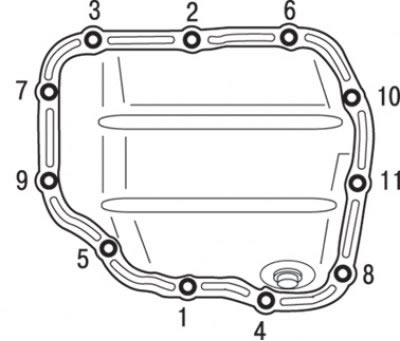
Fig. 3.33. Sequence of tightening the bolts for fastening the lower part of the engine oil pan
4. After applying the sealant, tighten the lower oil pan mounting bolts in the sequence shown in Fig. 3.33.