



Removal
1. Disconnect the cable from the negative terminal of the battery.
2. Remove the fuel pressure in the fuel system.
3. Drain the coolant from the engine cooling system.
4. Remove the air intake hose.
5. Remove the timing belt.
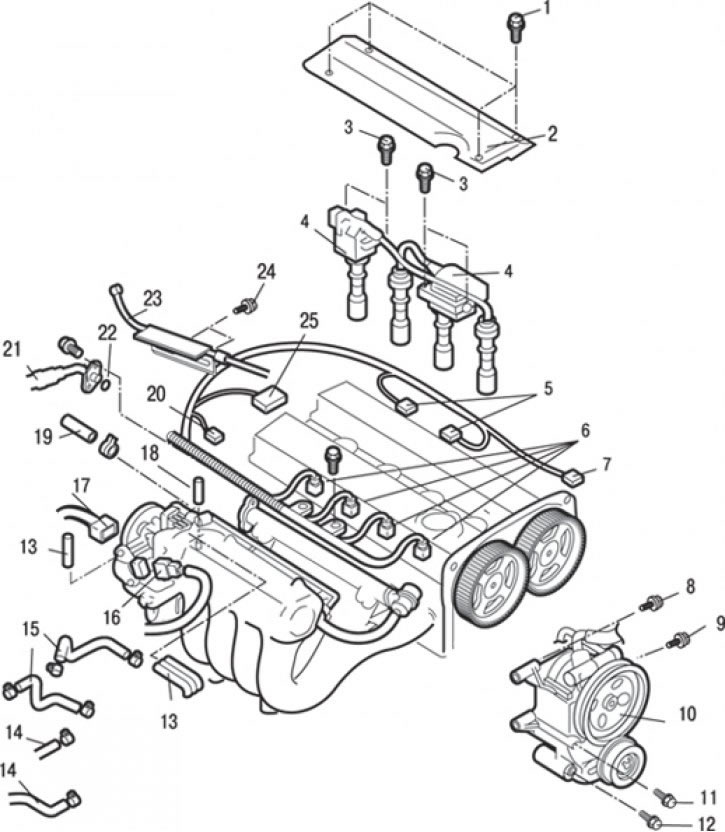
Fig. 3.45. Connecting connectors and hoses to the DOHC engine cylinder head: 1 – bolt, 3.0 Nm; 2 – central cover; 3 – bolt, 10 Nm; 4 – ignition coil assembly; 5 – ignition coil connectors; 6 – injector connectors; 7 – camshaft position sensor connector; 8 – bolt, 22 Nm; 9 – bolt, 44 Nm; 10 – power steering pump with bracket assembly; 11 – bolt, 49 Nm; 12 – bolt, 44 Nm; 13 – connection of vacuum hoses; 14 – connection of heater hoses; 15 – Cooling system hose connections; 16 – Throttle Position Sensor (TPS) connector; 17 – idle speed controller connector; 18 – brake booster vacuum hose connection; 19 – Fuel return hose connection; 20 – oil pressure switch sensor connector; 21 – High pressure fuel hose connection; 22 – O-ring sealing gasket; 23 – accelerator pedal cable connection; 24 – bolt, 10 Nm; 25 – ignition system malfunction sensor connector
6. Loosen the bolts and disconnect the cable 23 (Fig. 3.45) of the accelerator pedal.
7. Loosen the bolts and remove the central cover 2.
8. Disconnect the ignition coil connectors 5.
9. Loosen the bolts and remove the 4 ignition coils as an assembly.
10. Disconnect the electrical connectors of the throttle position sensor (TPS) 16, idle speed control valve 17, oil pressure switch 20, ignition system malfunction sensor 25, injectors 6 and camshaft position sensor 7.
11. Loosen the clamp and disconnect the fuel return hose 19.
12. Loosen the bolts, disconnect the high-pressure fuel hose and remove the O-ring seal 22.
13. Disconnect hose 18 of the brake booster.
14. Disconnect vacuum hose 13.
15. Loosen the clamps and disconnect the cooling system hoses 15.
16. Loosen the clamps and disconnect the heater hoses 14.
17. Loosen the bolts and remove the bracket and unit 10 of the power steering pump together with the hoses connected to it.
18. Tie the removed power steering pump assembly with the bracket and hoses with wire and place it so that it does not interfere with the removal and installation of the cylinder head assembly.
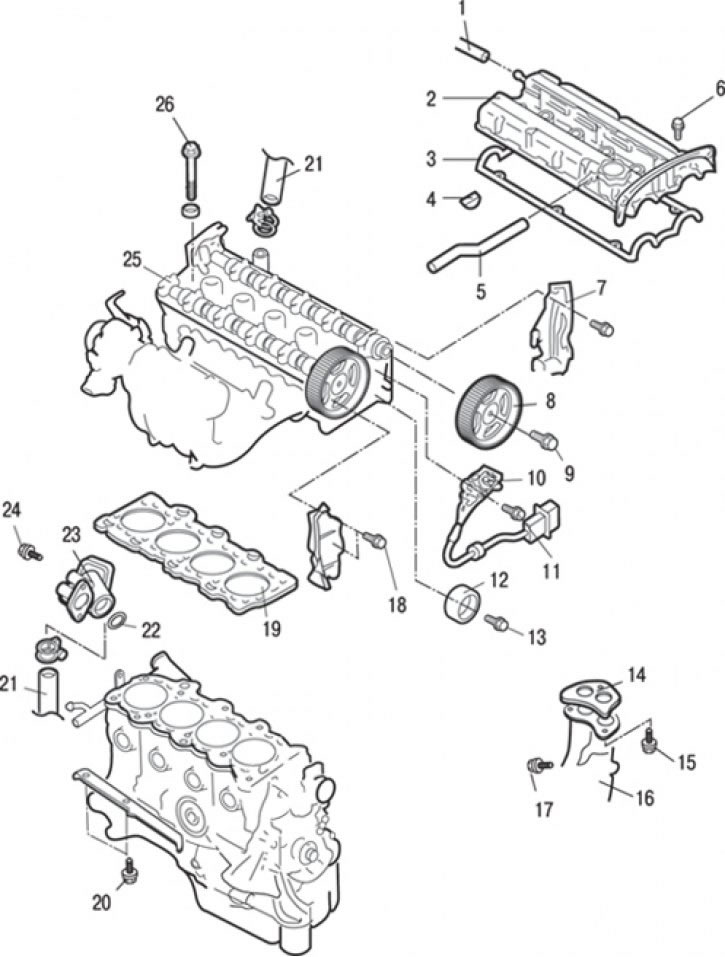
Fig. 3.46. Cylinder head gasket for DOHC engines: 1 – forced crankcase ventilation hose; 2 – cylinder head cover; 3 – cylinder head cover gasket; 4 – semicircular plug; 5 – PCV hose; 6 – bolt, 3.4 Nm; 7 – rear timing belt cover; 8 – camshaft pulley (exhaust valve drive); 9 – bolt, 88 Nm; 10 – camshaft position sensor; 11 – bolt, 8.8 Nm; 12 – idle (guide) roller; 13 – bolt, 35 Nm; 14 – gasket; 15 – bolt, 49 Nm; 16-intake pipe of the exhaust gas system; 17 – bolt, 50 Nm; 18 – bolt, 10–12 Nm; 19 – cylinder head gasket; 20 – bolt, 26–33 Nm; 21 – radiator hose connection; 22 – O-ring sealing gasket; 23 – Cooling system supply pipe and thermostat housing assembly; 24 – bolt, 22–25 Nm; 25 – cylinder head assembly; 26 – cylinder head mounting bolt, 78 Nm + 0 Nm + 20 Nm + 90° + 90°
19. Loosen the clamp and disconnect radiator hose 21 (Fig. 3.46).
20. Loosen the bolts and remove the supply pipe 23 of the cooling system, the thermostat housing assembly and the ring sealing gasket 22.
21. Disconnect positive crankcase ventilation hose 1 and PCV exhaust hose 5.
22. Loosen the bolts and remove the cylinder head cover 2 and gasket 3.
23. Remove the semicircular plug 4.
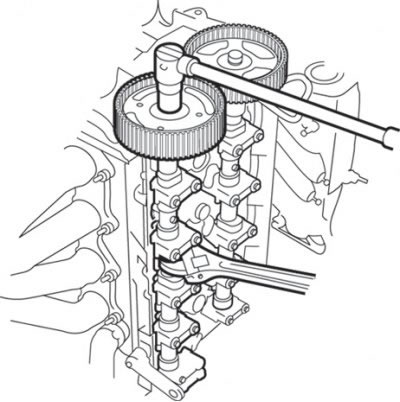
Fig. 3.16. Unscrewing the camshaft pulley mounting bolt
24. Holding the hexagonal area of the camshaft with a wrench, unscrew the camshaft pulley mounting bolt (see Fig. 3.16).
Caution! To avoid damage to the pulley, do not use a wrench to hold the camshaft pulley from turning.
20. Remove pulley 8 of the exhaust camshaft.
21. Loosen the bolt and remove the idler (guide) roller 12.
22. Loosen the bolt and remove the camshaft position sensor 10.
23. Loosen the bolts and remove the rear cover 7 of the timing belt.
24. Unscrew the nuts and remove the exhaust pipe 16 and gasket 14 of the exhaust system.
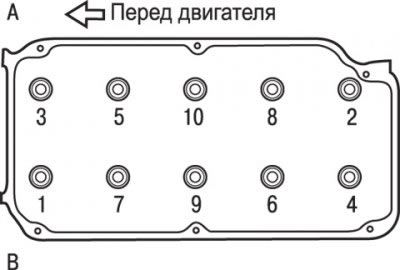
Fig. 3.40. Sequence for unscrewing the cylinder head mounting bolts: A - intake valve side; B – exhaust valve side
25. Loosen the cylinder head mounting bolts 26 in 2 or 3 stages in the sequence shown in Fig. 3.40, and then remove the cylinder head assembly.
26. Remove cylinder head gasket 19.
Preparing for installation
See "SOHC Engine Head Gasket".
Installation
Installation is carried out in the reverse order of removal, taking into account the following.
1. Degrease the mating surfaces of the gasket.
2. Check that all holes on the gasket and cylinder head are aligned.
3. Before installing the bolts, measure the length of the bolt shank (to the head), which should be no more than 96.4 mm. If this value is exceeded, the bolt must be replaced.
4. The bolt washer should be installed so that the chamfered surface of the washer is on top.
The text of the article was taken from the website [mitsubishiman.ru]
5. Before installation, lubricate the top surface of the washer and the bolt threads with a small amount of engine oil.
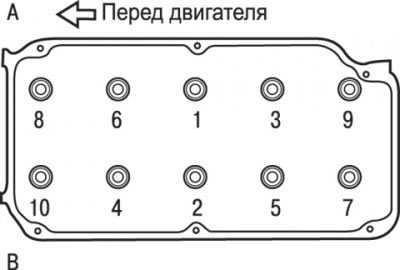
Fig. 3.41. Sequence of screwing in the cylinder head mounting bolts: A - intake valve side; B – exhaust valve side
6. Tighten the cylinder head bolts in several stages in the sequence shown in Fig. 3.41.
Bolt tightening steps:
- 1st - tighten to 78 Nm;
- 2nd – completely loosen all bolts in the reverse order shown in Fig. 3.41;
- 3rd – tighten to 20 Nm;
- 4th – tighten the bolts to an angle of 90°. Apply paint marks on the bolt heads and cylinder head;
- 5th – tighten the bolts another 90°. The marks on the bolts and the cylinder head should be in line.
Caution! Always tighten the bolt at an angle exactly equal to 90°. Otherwise, the cylinder head mounting bolt may become loose (the reliability of the gas joint will not be ensured).
If the bolt is turned to an angle greater than 90°, it is necessary to completely loosen it and repeat all bolt tightening operations.
7. When installing the exhaust camshaft pulley, secure the pulley from turning with a special tool, as when removing it, and tighten the pulley mounting bolt to a torque of 38 N·m.
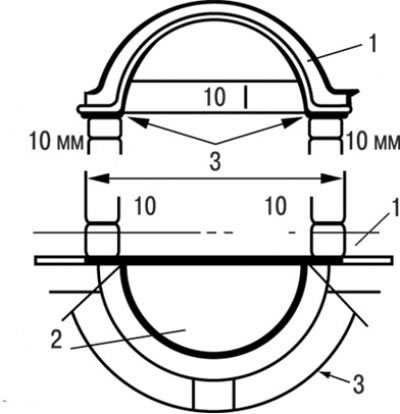
Fig. 3.47. Places to apply sealant ЗМ ATD Part # 8660 before installing the cylinder head cover gasket: 1 – cylinder head cover gasket; 2 – semicircular plug; 3 – places where the sealant is applied
8. Before installing the cylinder head cover gasket, apply sealant ЗМ ATD Part # 8660 or similar to the areas shown in Fig. 3.47.
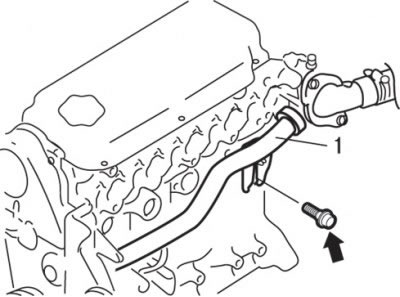
Fig. 3.42. Location of the fastening bolt for the supply pipe (1) of the cooling system
9. When installing the cooling system supply pipe, loosen the supply pipe mounting bolt as shown in Fig. 3.42.
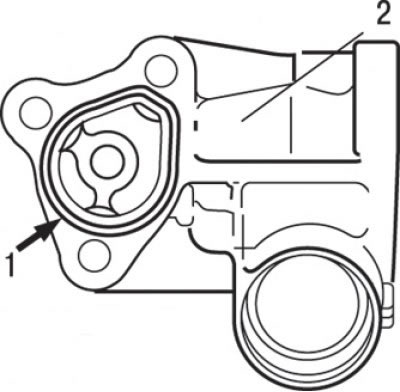
Fig. 3.43. Place of application (1) of sealant in the form of a bead with a diameter of 3±0.5 mm Mitsubishi Genuine Part MD970389 or similar to it on the mating surface of the inlet pipe (2)
10. When installing the inlet pipe and thermostat assembly, apply a layer of sealant to the mating surface of the inlet pipe (see Fig. 3.43).
11. Moisten the O-ring seal of the cooling system supply pipe with water and insert the thermostat housing into the cooling system supply pipe.
12. Tighten the thermostat housing assembly mounting bolts.
13. Tighten the cooling system supply pipe mounting bolt.
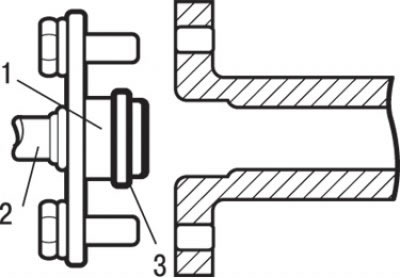
Fig. 3.44. Installing the high pressure fuel hose: 1 – place of lubrication with engine oil; 2 – high pressure fuel hose; 3 – O-ring gasket
14. When installing the high pressure fuel hose, lubricate the O-ring with a small amount of clean engine oil (see Fig. 3.44).
Caution! Do not allow oil to enter the fuel rail.
15. While slightly turning the flange of the fuel hose to the right and left, carefully insert it into the fuel rail to avoid damaging the O-ring seal. After installation, check that the hose rotates smoothly in the fuel rail.
16. If the hose flange sticks when turning, the cause may be damage to the O-ring. Disconnect the flange (assembled with the hose) from the fuel rail and inspect the gasket for damage, then insert it back and check for smooth turning.
17. Tighten the mounting bolts.
18. Install the timing belt.
19. Install the air intake hose.
20. Fill the cooling system with coolant.
21. Adjust the accelerator pedal cable.