



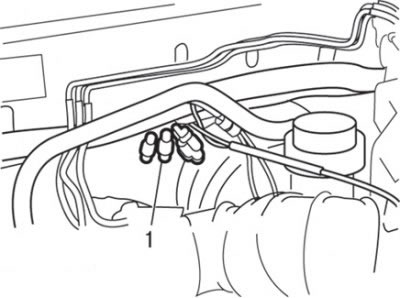
Fig. 3.6. Location of the tachometer connector (1)
2. Insert a paper clip from the wire side into the single-pin connector of the tachometer as shown in Fig. 3.6.
3. Connect the tachometer test lead to the primary circuit voltage to the paper clip installed in the connector.
Warning! Do not use MUT-II. If you connect it to the diagnostic connector, it will show the current ignition timing, not the base timing.
4. Install the strobe light in accordance with its operating instructions.
5. Start the engine and let it idle.
6. Check the idle speed, which should be (800±100) min⁻¹.
7. Turn off the ignition.
8. Remove the waterproof plug from the brown colored connector of the base ignition timing adjustment.
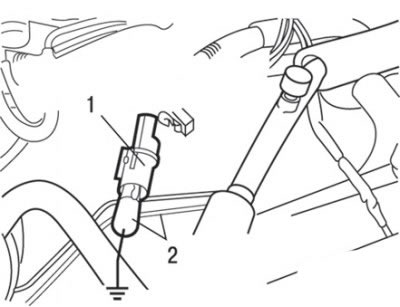
Fig. 3.5. Using a wire with an alligator clip connector to connect the connector terminal to ground when adjusting the base advance angle: 1 – brown connector for adjusting the basic ignition timing angle; 2 – wire with crocodile clip
9. Using a wire with an alligator clip connector, connect the terminal of the base advance angle adjustment connector to ground (see Fig. 3.5).
Caution! Connecting this connector to ground switches the engine to the base ignition timing mode.
10. Start the engine and let it idle.
11. Check the value of the basic ignition timing angle, which should be within 5° ±3° before TDC.
12. If the basic ignition timing angle does not match the nominal value, check the condition of the multipoint fuel injection (MPI) system.
13. Stop the engine, disconnect the alligator clip from the ignition timing adjustment connector terminal and insert a waterproof plug into the connector.
14. Start the engine and check the ignition timing, which should be 8° before TDC.
Attention! Even in normal engine operation mode, the ignition timing angle varies within ±7°.
Caution: As altitude increases, the advance angle automatically increases by approximately 5° above the nominal value of 8° BTDC.
(The article is reprinted from this source: MITSUBISHIMAN.ru)