
For more efficient cooling of the cylinders, the diameters of the channels have been increased and a corrugated inner surface of the water jacket has been applied.
Piston
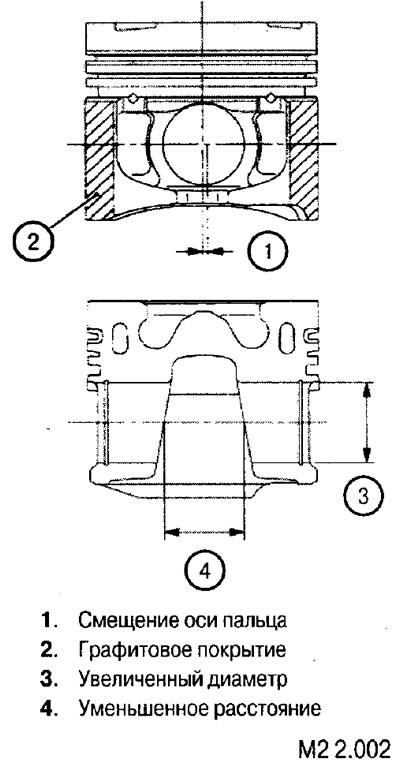
Compared to previous engines, the piston has a recess in the bottom (combustion chamber) and graphite coated skirt. To increase the strength characteristics and service life, the diameter of the piston pin has been increased and the distance between the inner walls of the piston has been reduced. To reduce detonation, the pin axis was shifted relative to the piston axis.
Cylinder head
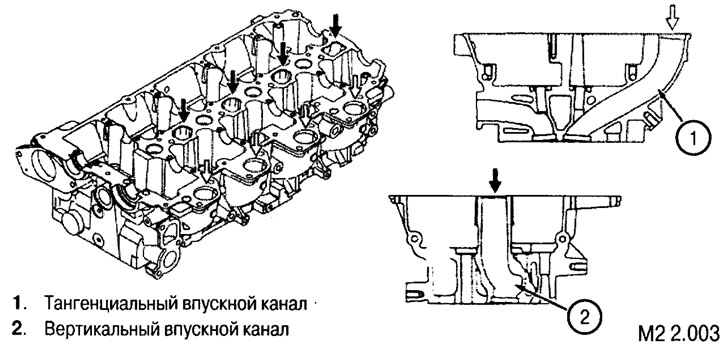
For a better swirling of the air flow, it has two options for inlet air channels - vertical and tangential type.
The inlet and outlet valves are made of heat resistant steel.
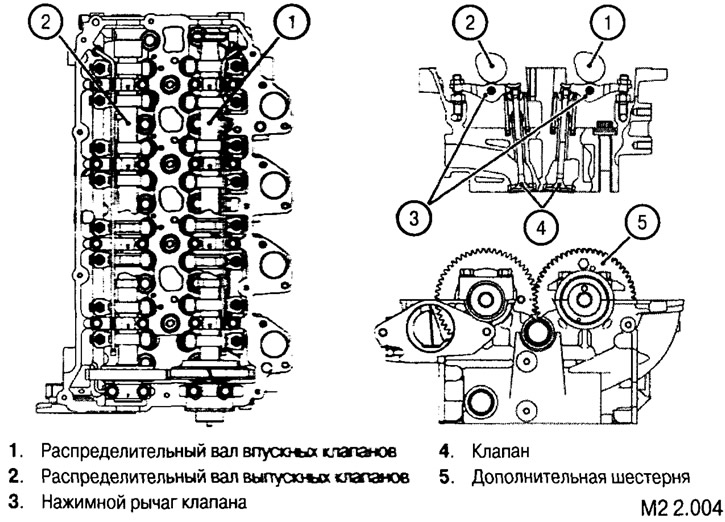
Camshaft drive (and injection pump) carried out by a toothed belt from the crankshaft toothed pulley through the toothed pulley mounted on the intake valve shaft, the shafts are connected to each other by toothed gears.
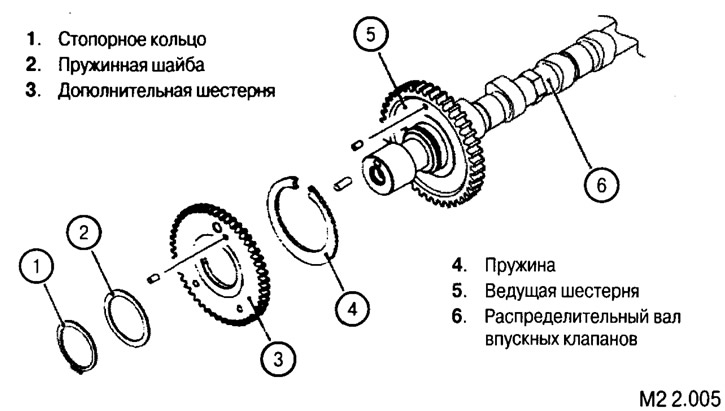
To eliminate the gap in the meshing between the gears of the shafts (to reduce noise) an additional spring-loaded gear was used, decomposition on the intake camshaft.
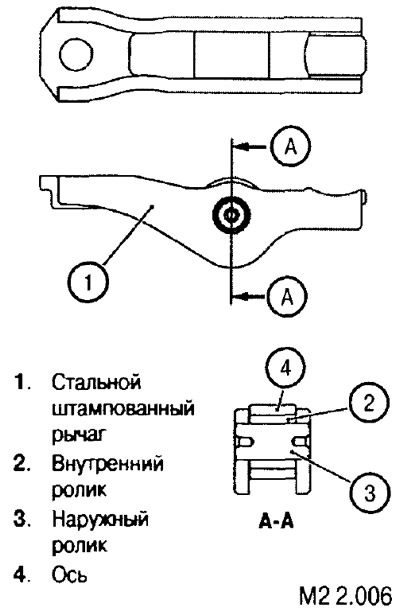
Valve levers (hereinafter referred to as rockers) - stamped steel. Double rollers are used to reduce friction. The rocker has a spherical adjusting screw that fits into a spherical support screw installed in the cylinder head. The opposite side of the rocker rests on a cap mounted on the valve stem.
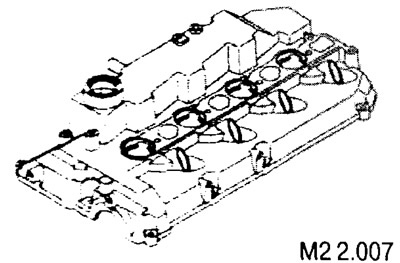
The valve cover is adapted to the Common Rail system. A design feature is the presence of O-rings in the upper part of the cover to seal the housings of the fuel injectors and fuel pipes.
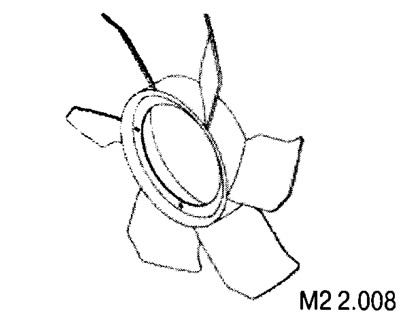
For more efficient cooling of the radiator, a 6-blade fan impeller is used.
Drive belts
The air conditioning compressor is driven by a V-belt.
The generator and power steering pump are driven by a V-ribbed belt. '
The synchronization drive is carried out by two toothed belts. One belt is involved in the balance shaft drive, the second - in the cylinder head camshaft drive.