



Note: Measure ATF temperature using MUT II/III.
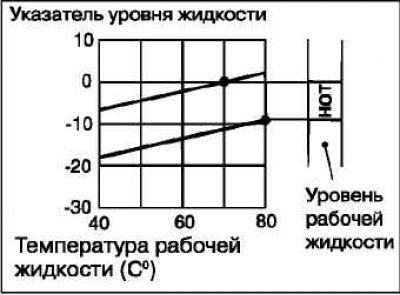
If it takes a long time to warm up the gearbox, determine the working fluid level using the table, which converts the fluid level at a given temperature to a fluid temperature of 70–80°C.
Place the vehicle on a level, horizontal surface.
[The original article is on: MitsubishiMan]
Move the selector lever through all positions in order to load the torque converter as much as possible and fill the hydraulic lines with oil.
After wiping away the dirt around the dipstick, check the transmission fluid level. The fluid level should be between the "Max" marks on the dipstick.
Note: If the ATF has a burnt smell or has become excessively dirty, this means that the ATF is contaminated with tiny particles of wear products from the transmission parts. In this case, it is necessary to repair the transmission and flush the hydraulic lines and oil cooler.
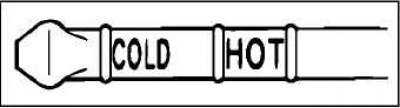
Check if the fluid level is between the "HOT" marks on the dipstick. If the ATF level is too low, add the required amount.
Automatic transmission fluid: DIA QUEEN ATF SPIII.
Note: If the ATF level is too low, the oil pump may draw air into the system during operation, causing air bubbles to appear in the oil. This will result in a decrease in fluid pressure, a change in gear shift phases, and slippage of the friction discs. If the ATF level is too high, it will foam due to contact with the moving parts of the gearbox, which may cause problems similar to those with an excessively low ATF level. Otherwise, the fluid may overheat and oxidize, which will adversely affect the operation of valves, clutches, and brakes. Also, an elevated ATF level may cause it to leak through the breather, which may complicate diagnostics of the malfunction.
Insert the dipstick.