



Contents: 1.5L engines ⤓ Engines 1.8 l ⤓ Engines 2.0L SOHC ⤓ 1.6L and 2.0L DOHC engines ⤓ 2.4L engines ⤓ Engines 3.0L DOHC ⤓ Engines 3.0L SOHC ⤓ 3.5L engines ⤓ Evaluation of the degree of wear of…⤓ Determining the cam lift height…⤓ Measuring with a micrometer ⤓
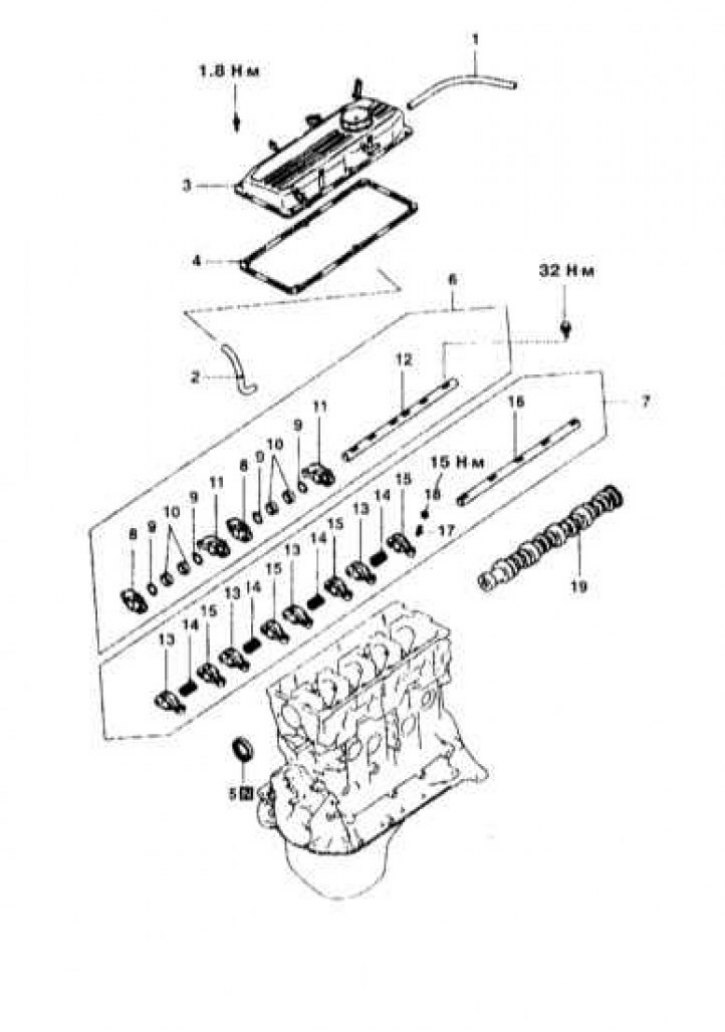
Valve train component installation details for 1.5L models
1 - Breather pipe; 2 - PCV hose; 3 - Cylinder head cover; 4 - Sealing gasket; 5 - Seal; 6 - Valve drive rocker arms with axle; 7 - Valve drive rocker arms with axle; 8 - Rocker arms D; 9 - Wave washers; 10 - Spacers; 11 - Rocker Arms C; 12 - Exhaust valve drive rocker arm shaft; 13 - Rocker Arms B; 14 - Rocker arm springs; 15 - Rocker Arms A; 16 - Intake valve drive rocker arm shaft; 17 - Adjusting screw; 18 - Nut; 19 - Camshaft
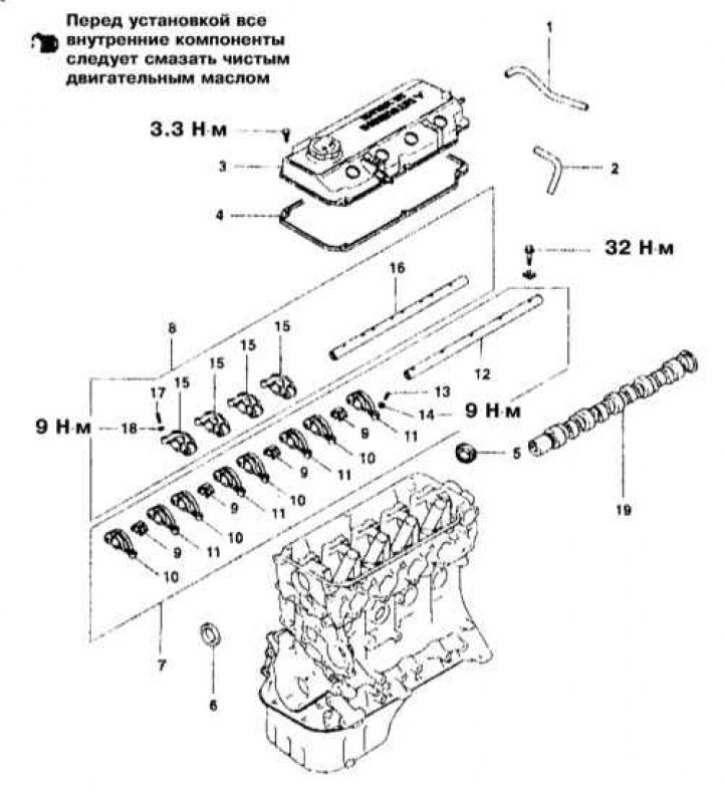
Valve train component installation details for 1.8L models
1 - Breather pipe; 2 - PCV hose; 3 - Cylinder head cover; 4 - Sealing gasket; 5 - Seal; 6 - Seal; 7 - Valve drive rocker arms with axle; 8 - Valve drive rocker arms with axle; 9 - Rocker arm axle springs; 10 - Rocker Arms A; 11 - Rocker Arms B; 12 - Intake valve drive rocker arm shaft; 13 - Adjusting screw; 14 - Nut; 15 - Rocker Arms C; 16 - Exhaust valve drive rocker arm shaft; 17 - Adjusting screw; 18 - Nut; 19 - Camshaft
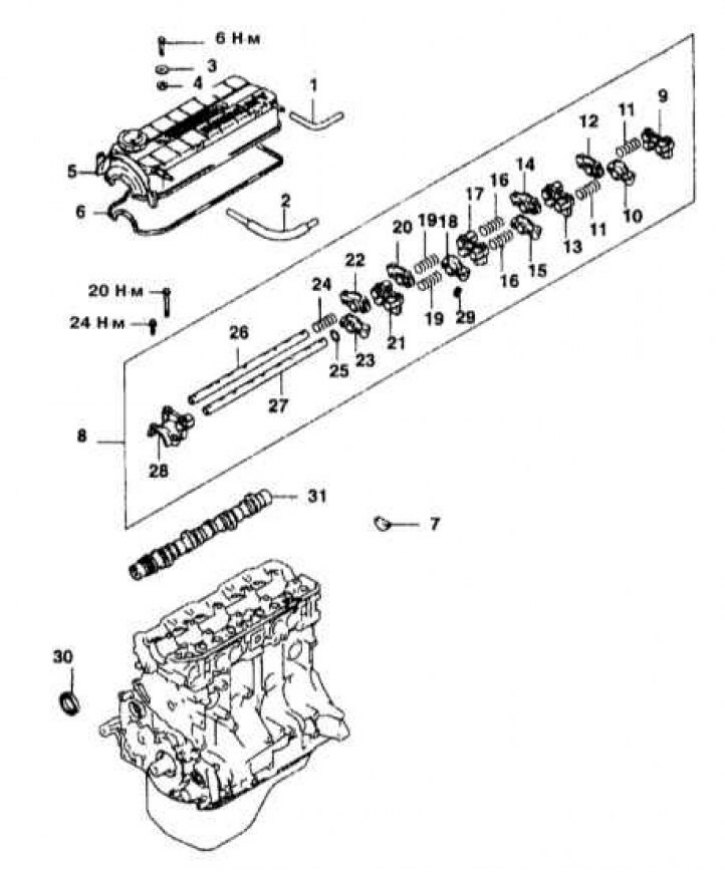
Valve Train Component Installation Details for 2.0L (SOHC) Models
1 - Breather pipe; 2 - PCV hose; 3 - Sealing washer; 4 - Seal; 5 - Cylinder head cover; 6 - Sealing gasket; 7 - Semi-circular seal; 8 - Valve drive rocker arms with axles; 9 - Rear bearing cover; 10 - Rocker D; 11 - Springs; 12 - Rocker D; 13 - Bearing cover No.4; 14 - Rocker C; 15 - Rocker C; 16 - Springs; 17 - Bearing cover No.3; 18 - Rocker D; 19 - Springs; 20 - Rocker D; 21 - Bearing cover No.2; 22 - Rocker C; 23 - Rocker C; 24 - Spring; 25 - Wave Washer; 26 - Right rocker shaft; 27 - Left rocker shaft; 28 - Front bearing cap; 29 - Valve clearance corrector; 30 - Seal; 31 - Camshaft
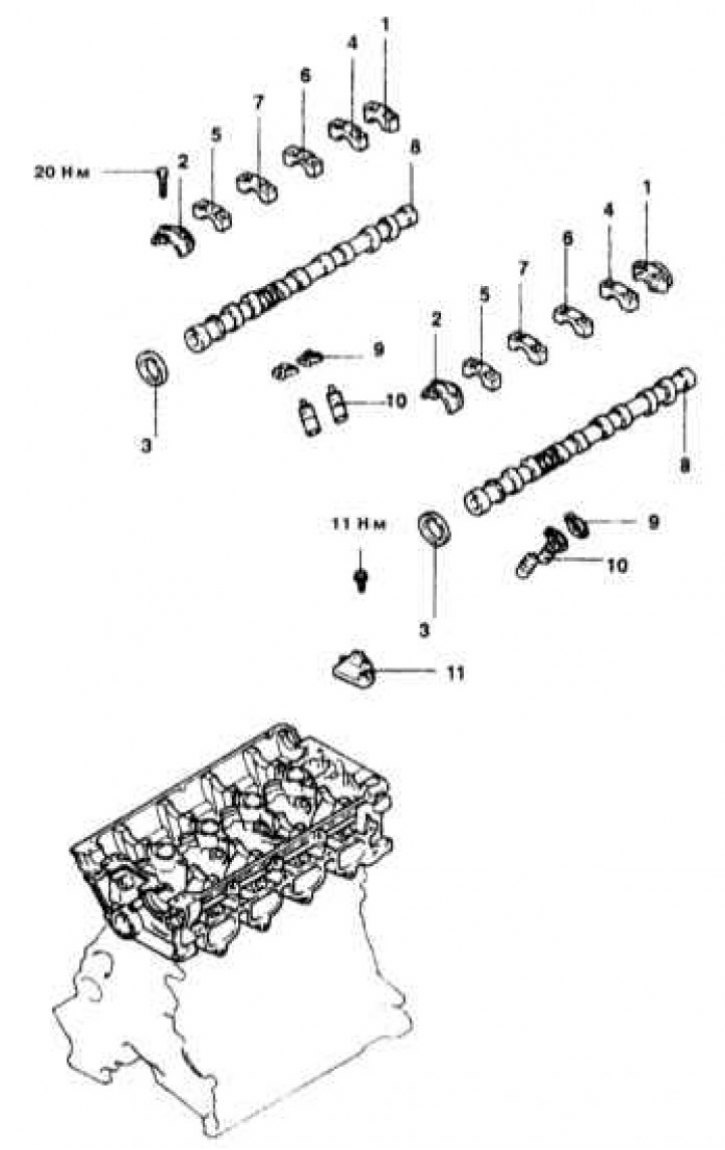
Valve train component installation details for 1.6L and 2.0L DOHC equipped models
1 - Rear bearing cover; 2 - Front bearing cover; 3 - Camshaft oil seal; 4 - Bearing cover No.5; 5 - Bearing cover No.2; 6 - Bearing cover No.4; 7 - Bearing cover No.3; 8 - Camshaft; 9 - Valve drive rocker arms; 10 - Valve clearance hydraulic corrector; 11 - Oil dispensing device housing
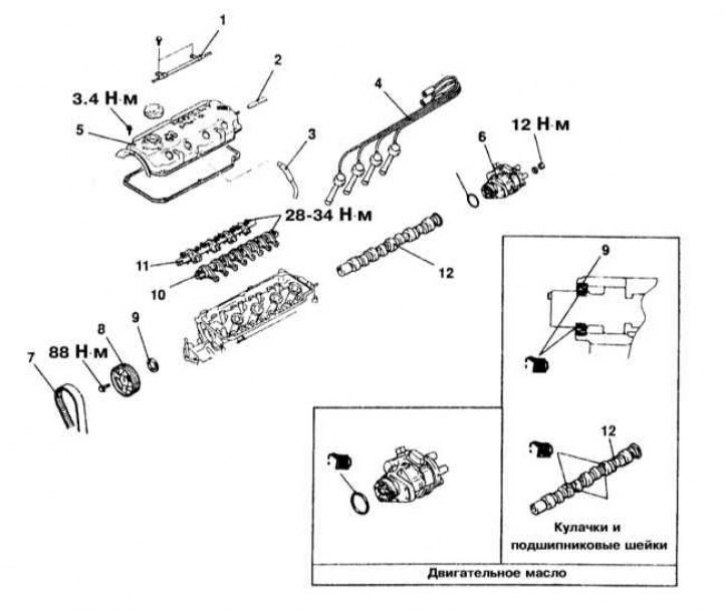
Valve train component installation details for 2.4L engine equipped models
1 - Throttle cable; 2 - Breather pipe; 3 - PCV hose; 4 - Spark plug wires; 5 - Cylinder head cover; 6 - Ignition distributor; 7 - Timing belt; 8-Gear camshaft wheel; 9 - Camshaft oil seal; 10 - Assembly of the intake valve drive rocker arms with their axis; 11 - Assembly of the exhaust valve drive rocker arms with their axis; 12 - Camshaft
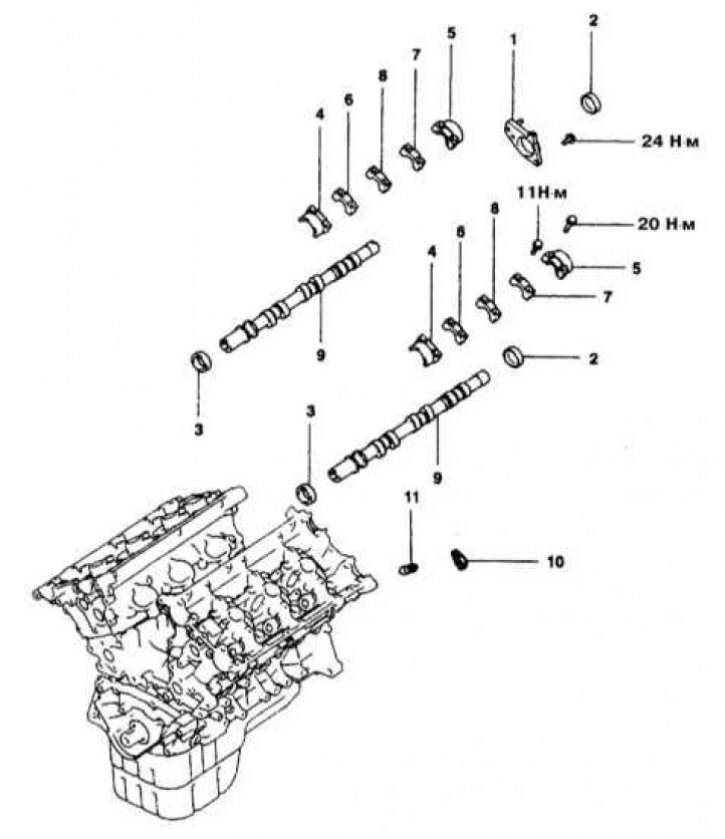
Valve train component installation details for 3.0L DOHC equipped models
1 - Adapter for connecting the crankshaft position sensor (CKP) (models up to 1992); 2 - Circular seal (models from 1993); 3 - Camshaft oil seal; 4 - Front bearing cover; 5 - Rear bearing cover; 6 - Bearing cover No.2; 7 - Bearing cover No.4; 8 - Bearing cover No.3; 9 - Camshaft; 10 - Valve drive rocker arm; 11 - Hydraulic valve clearance corrector
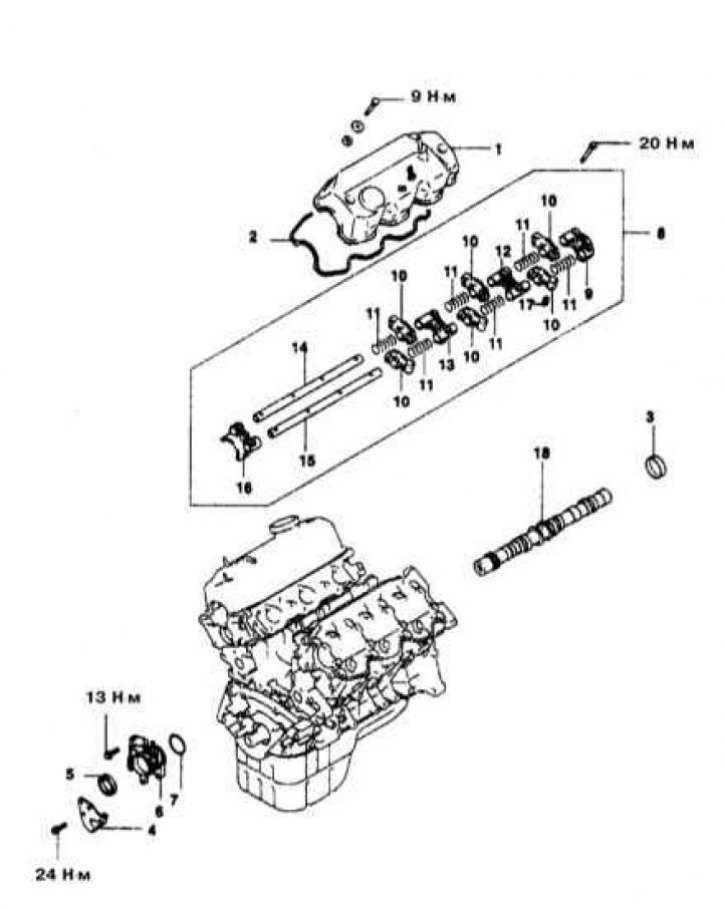
Valve train component installation details for 3.0L SOHC equipped models
1 - Cylinder head cover; 2 - Sealing gasket; 3 - Ring sealing insert; 4 - Support bracket "A" of the intake manifold pressure chamber; 5 - Camshaft oil seal; 6 - Ignition distributor adapter; 7 - Sealing ring; 8 - Valve drive assembly; 9 - Bearing cover No.4; 10 - Valve drive rocker arms; 11 - Springs; 12 - Bearing cover No.3; 13 - Bearing cover No.2; 14 - Rocker axis "B"; 15 - Rocker axis "A"; 16 - Bearing cover No.1; 17 - Valve clearance adjuster; 18 - Camshaft
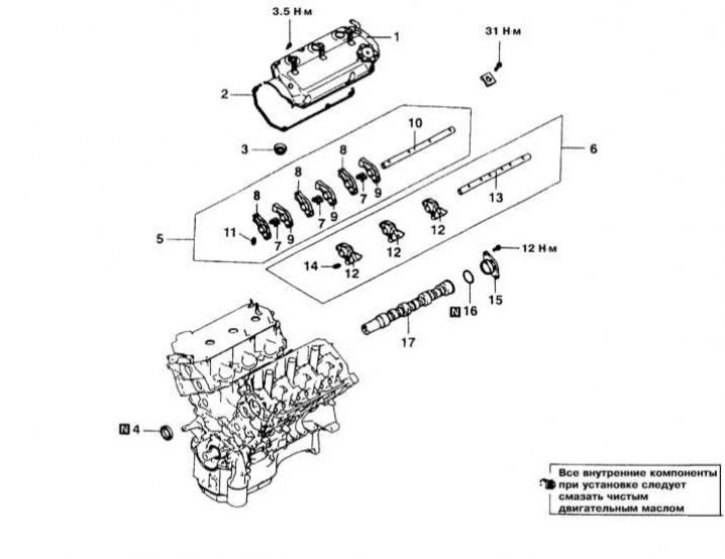
Valve train component installation details for models equipped with 3.5L engines
1 - Cylinder head cover; 2 - Sealing gasket; 3 - Sealing cuff; 4 - Camshaft oil seal; 5 - Assembly of the valve drive mechanism; 6 - Assembly of the valve drive mechanism; 7 - Rocker arm axle springs; 8 - Rocker Arms A; 9 - Rocker arms B; 10 - Rocker axis; 11 - Valve clearance adjuster; 12 - Rocker Arms C; 13 - Rocker axis; 14 - Valve clearance adjuster; 15 - Thrust cap; 16 - Sealing ring; 17 - Camshaft; N - Replace
1.5L engines
Removal
1. The installation details of the valve drive mechanism components on 1.5L engines are shown in the illustration.
2. Disconnect the negative cable from the battery.
If your car stereo system is equipped with a security code, make sure you have the correct combination to activate the audio system before disconnecting the battery!
3. Bring the engine to the TDC position at the end of the compression stroke of the piston of the first cylinder.
4. Disconnect the throttle cable, breather pipe and PCV hose.
5. Mark the position of the distributor housing relative to the engine block and remove the distributor.
6. Remove the cylinder head cover and its sealing gasket.
7. In several steps, evenly loosen the mounting bolts and remove the rocker arm axles from the cylinder head.
8. Remove the timing belt covers.
9. Remove the timing belt assembly.
Try to prevent the camshafts from turning when the timing belt is removed!
10. While holding the camshaft gear from turning, unscrew its mounting bolt.
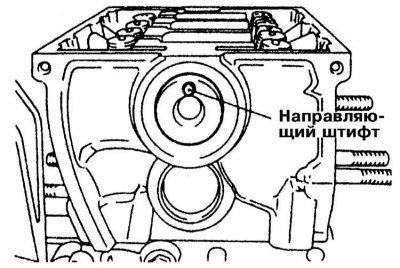
11. Remove the camshaft gear - note that the shaft must be turned with the hole for the guide pin facing upwards.
12. Remove the camshaft oil seal from the front wall of the cylinder head.
13. Remove the camshaft.
14. Carefully inspect all removed components for signs of excessive wear or damage.
Installation
1. Lubricate the camshaft with thick machine oil and lower it into its seat in the cylinder head, making sure that the shaft is turned with the hole for the guide pin at 12 o'clock.
2. Measure the axial clearance of the camshaft on the thrust casing. If the measurement result is outside the permissible range (0.05÷0.20 mm), replace the camshaft thrust bearing.
3. Install a new seal - before installation, the seal lips should be lubricated with clean engine oil.
4. Place the toothed wheel on the camshaft journal. Screw in the fastening bolt and, holding the shaft from turning, tighten it to the required torque (70 Nm).
5. Install the timing belt.
6. Install the timing belt covers.
7. Install the rocker arm assemblies with their axles. Tighten the mounting bolts evenly in several stages to the required torque (32 N·m).
8. Check the valve clearance adjustment, select a sealing gasket and install the cylinder head cover. Screw in the mounting bolts and tighten them to the required torque (1.8 N·m).
9. After ensuring that the mounting marks applied during dismantling are aligned, install the ignition distributor on the engine.
10. Restore the original connections to the throttle cable, breather pipe, and PCV hose.
11. Connect the negative cable to the battery and check that the ignition timing is set correctly. Make the appropriate adjustments if necessary.
Engines 1.8 l
Removal
1. The installation details of the valve train components on 1.8L engines are shown in the accompanying illustration.
2. Disconnect the negative cable from the battery.
If your car stereo system is equipped with a security code, make sure you have the correct combination to activate the audio system before disconnecting the battery!
3. Bring the engine to the TDC position at the end of the compression stroke of the piston of the first cylinder.
4. Label and disconnect the spark plug wires.
5. Mark the position of the distributor housing relative to the engine block. Remove the distributor.
6. Disconnect the electrical wiring from the air flow sensor and remove the air cleaner cover.
7. Disconnect the throttle cable, breather pipe and PCV hose.
8. Remove the cylinder head cover and its sealing gasket.
9. Loosen the mounting bolts evenly in several steps and remove the rocker arm axles from the cylinder head.
10. Remove the timing belt covers.
11. Remove the timing belt assembly.
Try to prevent the camshafts from turning when the timing belt is removed!
12. While holding the camshaft gear from turning, unscrew its mounting bolt.
13. Remove the camshaft gear - note that the shaft must be turned with the hole for the guide pin facing upwards.
14. Remove the camshaft oil seal from the front wall of the cylinder head.
15. Remove the camshaft.
16. Carefully inspect all removed components for signs of excessive wear or damage.
Installation
1. Lubricate the camshaft with clean engine oil and lower it into its seat in the cylinder head, making sure that the shaft is turned with the hole for the guide pin at 12 o'clock.
2. Measure the axial clearance of the camshaft on the thrust casing. If the measurement result is outside the permissible range (0.05÷0.20 mm), replace the camshaft thrust bearing.
3. Install a new seal - before installation, the seal lips should be lubricated with clean engine oil.
4. Place the toothed wheel on the camshaft journal. Screw in the fastening bolt and, holding the shaft from turning, tighten it to the required torque (90 Nm).
5. Install the timing belt.
6. Install the timing belt covers.
7. Install the rocker arm assemblies with their axles. Tighten the mounting bolts evenly in several stages to the required torque (32 N·m).
8. Check the valve clearance adjustment, select a sealing gasket and install the cylinder head cover. Screw in the mounting bolts and tighten them to the required torque (3.3 N·m).
9. After ensuring that the mounting marks applied during dismantling are aligned, install the ignition distributor on the engine.
10. Connect the spark plug wires in accordance with the markings made during dismantling.
11. Restore the original connections to the throttle cable, breather pipe, and PCV hose.
12. Connect the wiring to the air flow sensor and replace the air cleaner cover.
13. Connect the negative cable to the battery.
14. Start the engine and warm it up to normal operating temperature.
15. Check that the idle speed and ignition timing are set correctly. Make the appropriate adjustments if necessary.
Engines 2.0L SOHC
Removal
1. The installation details of the valve train components on 2.0L SOHC engines are shown in the illustration.
2. Disconnect the negative cable from the battery.
If your car stereo system is equipped with a security code, make sure you have the correct combination to activate the audio system before disconnecting the battery!
3. Disconnect the breather pipe and PCV hoses.
4. Remove the support bracket and move the throttle cable to the side.
5. Install the valve clearance adjuster clamps (tools MD998443) onto the rocker arms.
6. Remove the cylinder head cover and semi-circular seals.
7. Mark the position of the distributor housing relative to the cylinder head. Remove the distributor.
8. Remove the timing belt and timing drive covers (see Section Removal and installation the timing belt cover and timing belt).
9. Remove the camshaft timing gear.
10. Unscrew the mounting bolts and remove the rocker arm shafts with rocker arms and bearing caps from the engine.
11. Remove the camshaft from the cylinder head. Assess the condition of the bearing journals of the shaft.
12. Measure the camshaft cam lift. Compare the measurement results with the Specifications.
13. Assess the condition of the bearing surfaces in the cylinder head.
14. Replace all excessively worn or damaged components.
Installation
1. Lubricate the camshaft with clean engine oil and lower it into its seat in the cylinder head.
2. Install the bearing caps each in its place. Make sure that the arrow marks on the roofs are correctly oriented.
3. Install the rocker arm assembly with axles into the head. Moving from the center outward, tighten the bearing cap mounting bolts evenly in three stages to the required torque (20 N·m).
4. Using a suitable mandrel, seat the camshaft seal into the head - lubricate the seal lips with clean engine oil before installing.
5. Install the camshaft gear. Screw in the mounting bolt and tighten it to the required torque (90 Nm).
6. Install the timing belt.
7. After checking that the mounting marks applied during dismantling are correctly aligned, install the ignition distributor in place.
8. Remove the valve adjuster retaining tools.
9. Install the cylinder head cover and other components removed for access.
10. Connect the negative cable to the battery. Start the engine and check for signs of developing leaks.
11. Check the ignition timing angle setting. If necessary, make the appropriate adjustments.
1.6L and 2.0L DOHC engines
Removal
1. The installation details of the valve train components on 1.6L and 2.0L DOHC models are shown in the illustration.
2. Disconnect the negative cable from the battery.
If your car stereo system is equipped with a security code, make sure you have the correct combination to activate the audio system before disconnecting the battery!
3. Remove the support bracket and move the throttle cable to the side.
4. Remove the breather pipe and disconnect the PCV hose.
5. Label and disconnect the spark plug wires.
6. Mark the position of the distributor housing relative to the cylinder head. Remove the distributor.
7. Remove the cylinder head cover.
8. Using tools such as MD9984433, secure the valve lifters.
9. Remove the timing belt covers and timing belt (see Section Removal and installation the timing belt cover and timing belt).
10. Using a wrench to hold the camshaft from turning, unscrew the mounting bolt and remove the timing gear.
11. Remove the valve drive assembly from the cylinder head.
12. Remove the camshafts from the head. Assess the condition of the bearing journals of the shafts.
13. Assess the condition of the bearing surfaces in the cylinder head and camshaft bearing caps.
Installation
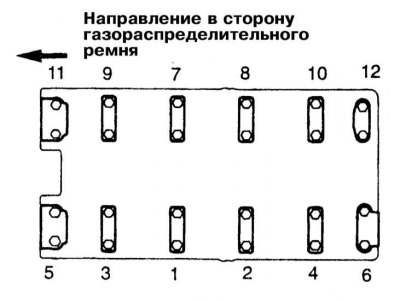
1. Lubricate the camshafts with clean engine oil and lower them into their seats in the cylinder head. The tightening sequence for the camshaft bearing cap fasteners is shown in the illustration.
2. Install the valve drive components (rocker arms). Tighten the mounting bolts to the required torque (29÷35 Nm).
3. After lubricating with clean engine oil, install the camshaft seals - use a socket head of the appropriate size or a piece of pipe of the appropriate diameter to adjust the seals.
4. Install the camshaft gear. Screw in the mounting bolt and tighten it to the required torque (90 Nm).
5. Install the timing belt and front timing covers.
6. After checking that the landing marks applied during dismantling are correctly aligned, put the ignition distributor back in place.
7. Remove the devices that secure the valve clearance adjusters.
8. After replacing the sealing gasket, reinstall the cylinder head cover.
9. Connect the high-voltage wires to the spark plugs (each to its own, - follow the markings).
10. Connect the breather pipe and PCV hose.
11. Connect the negative cable to the battery.
12. Start the engine, warm it up to normal operating temperature and check the idle speed and ignition timing settings. Make the appropriate adjustments if necessary.
2.4L engines
Removal
1. Installation details of the valve train components on 2.4L models are shown in the accompanying illustration.
2. Disconnect the negative cable from the battery.
If your car stereo system is equipped with a security code, make sure you have the correct combination to activate the audio system before disconnecting the battery!
3. Disconnect the throttle cable, breather pipe and PCV hoses.
4. Disconnect the spark plug wires and remove the cylinder head cover.
5. Turn the crankshaft clockwise until the TDC timing marks are aligned (the camshaft gear should be turned with the mark at the level of the mating surface of the cylinder head and the guide pin at 12 o'clock (up).
6. Remove the timing belt covers.
7. Remove the timing belt (see Section Removal and installation the timing belt cover and timing belt).
8. Using a wrench placed on the flats located between the journals of bearings No.2 and 3, block the camshaft from turning and unscrew the bolt securing its gear. Remove the gear.
9. In two or three steps, loosen the mounting bolts, mark and remove the camshaft bearing caps.
If the covers are difficult to remove, gently tap the rear end of the camshaft with a soft-faced hammer.
10. Remove the camshafts from the cylinder head.
11. Remove the valve drive rocker arms and hydraulic valve clearance adjusters - store all valve drive components in an organized manner, as they must be installed strictly in their original places during assembly.
Installation
1. Install hydraulic valve clearance adjusters and valve drive rocker arms into the head.
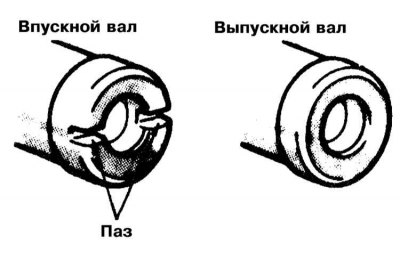
2. Lubricate the camshafts with thick engine oil and lower them into their seats in the cylinder head.
The intake shaft can be easily distinguished from the exhaust shaft by the presence of a groove in the end surface of the rear journal - the groove is used to drive the steering angle sensor.
3. Assess the condition of the bearing journals and camshafts. Check the oil flow in the cylinder head. Visually assess the condition of the rocker rollers, check their freedom of rotation. Replace defective or worn components.
Rocker arms and hydraulic valve adjusters should be replaced as a complete set.
4. Make sure that the camshafts are facing upwards with the guide pins inserted into the end surfaces of the front journals.
5. Install the bearing caps. Tighten the cap mounting bolts evenly in two or three steps to the required torque (20 N·m).
Bearing caps No.2 and No.5 have the same shape. The first bearing cap only has letter marking (L for the intake shaft or R for the exhaust shaft). The other caps have double marking, showing not only the shaft it belongs to, but also the cap number. Make sure the rocker arms are seated correctly on the hydraulic corrector assemblies and the ends of the valve stems.
6. After lubricating with clean engine oil, install the camshaft seals - use a socket head of the appropriate size or a piece of pipe of the appropriate diameter to adjust the seals.
7. Install the camshaft gears. Screw in the mounting bolts and tighten them to the required torque (80÷100 N·m).
While tightening the bolt, hold the shaft from turning using a wrench on the chamfers provided between the journals of the 2nd and 3rd bearings.
8. Install the timing belt and front timing covers.
9. After replacing the sealing gasket, install the cylinder head cover.
10. Reinstall any other components that were removed to provide access.
11. Connect the negative cable to the battery.
Engines 3.0L DOHC
Removal
1. Valve train component installation details on 3.0L DOHC models are shown in the illustration.
2. Release the pressure in the fuel system (see Chapter Power and exhaust systems).
3. Disconnect the negative cable from the battery.
If your car stereo system is equipped with a security code, make sure you have the correct combination to activate the audio system before disconnecting the battery!
4. Remove the air duct pressure chamber.
5. Remove the front covers and timing belt.
6. Remove the center cap, breather tube, PCV hoses and spark plug wires.
7. Remove the cylinder head cover (remember to remove the semicircular seal).
8. After marking the installation position, remove the CKP sensor from the rear camshaft journal.
9. If the vehicle is equipped with the appropriate equipment, remove the camshaft position (CMP) sensor from the front wall of the engine.
10. Holding the camshafts from turning with a wrench by the specially provided flats, unscrew the mounting bolts and remove the gears. Try to remember the installation position of the knock sensor pin.
11. Loosen the camshaft bearing cap mounting bolts in two or three steps.
12. After marking, remove the bearing caps - if necessary, gently tap the rear end of the shaft to release the caps.
13. Mark and remove both camshafts from the cylinder head.
14. Remove the valve train components - try to remember the exact installation position of each part.
15. Assess the condition of the bearing journals and camshaft cams, as well as the working surfaces in the head beds and bearing caps.
Installation
Before installation, valve train components should be lubricated with clean engine oil.
1. Remove air from the hydraulic correctors and install the assemblies of the latter, each in its own seat in the cylinder head.
2. Install the valve drive assembly into the head.
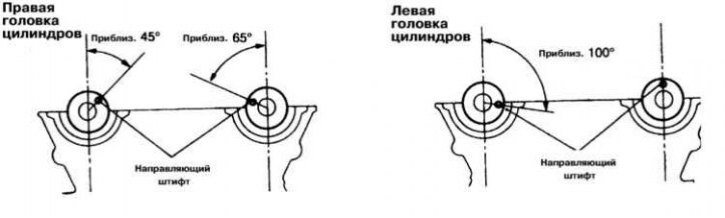
3. Lubricate the camshafts with clean engine oil and install them into the cylinder head.
On Diamante models, the camshafts are easily distinguished from each other by special letter markings applied to the flats of the hexagonal section. The intake shaft is usually marked with the letters B or J, the exhaust shaft - D or K, respectively. To avoid damage to the valves when in contact with the piston crowns, ensure that the anti-knock pins are installed correctly.
4. In accordance with the identification marking, install the camshaft bearing caps in their standard places.
The letter I in the cover marking denotes the inlet camshaft, E - the outlet camshaft, the number corresponds to the bearing number. In two or three steps, evenly tighten the cover mounting bolts with the required force (11 N·m - for the bearing cover bolts No.2, 3 and 4 and 20 N·m - for the front and rear cover bolts). Make sure that the front marks on the 2nd, 3rd and 4th bearing covers are correctly aligned with the corresponding marks on the cylinder head.
5. Lubricate with clean engine oil and install the front camshaft oil seals.
6. Using a wrench to hold the shafts from turning by the specially provided flats, install the timing gear wheels on their journals, screw in the mounting bolts and tighten them to the required force (90 Nm).
7. If removed, reinstall the camshaft position sensor. Screw in the mounting bolts and tighten them to the required torque (9 N·m).
8. While ensuring the correct alignment of the seat marks, secure the CKP sensor to the rear of the camshaft. Tighten the sensor mounting nut to 12 N·m.
9. Align the timing marks on the timing drive gears and install the timing belt on the engine.
10. Install the cylinder head cover and the semicircular sealing insert.
11. Install the intake manifold plenum assembly.
12. Connect the spark plug wires to the spark plugs. Install the center cap and restore the original breather tube and PCV hose connections.
13. Connect the negative cable to the battery. Start the engine and check for signs of developing leaks.
Engines 3.0L SOHC
Removal
1. Valve train component installation details on 3.0L SOHC models are shown in the illustration.
2. Disconnect the negative cable from the battery.
If your car stereo system is equipped with a security code, make sure you have the correct combination to activate the audio system before disconnecting the battery!
3. Bring the engine to the TDC position at the end of the compression stroke of the piston of the first cylinder.
4. When removing the right (front) camshaft, mark the position of the rotor and distributor housing and remove the latter assembly from the engine block.
5. Remove the intake manifold plenum support bracket.
6. Remove the distributor adapter and its sealing ring.
7. Using special tools MB9g67 and MD998719, loosen the camshaft timing gear mounting bolt.
8. Unscrew the mounting bolt and remove the camshaft gear - try to remember the position of the anti-knock finger (guide pin).
9. Using special tools MD998443, secure the hydraulic valve clearance correctors to the valve drive rocker arms.
10. Loosen the camshaft bearing cap mounting bolts.
11. Remove the valve drive components - try to remember the installation positions of the rocker arms and their axes. Remove the bearing caps of the camshaft to be dismantled.
12. Remove the camshaft from the cylinder head and assess the condition of its cams and bearing journals.
Installation
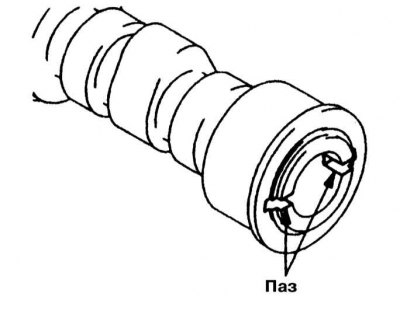
1. Lubricate the camshaft(s) with thick engine oil and lower it into its seat in the cylinder head.
The camshaft of the right cylinder head is easily distinguished by the presence of a groove in the end surface of its rear journal.
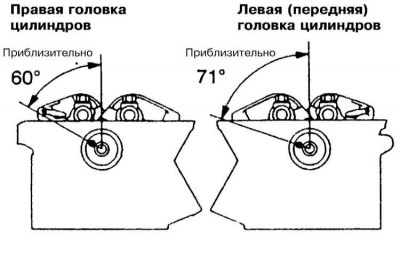
2. When installing the shaft, make sure that it is correctly turned in the head - use the position of the anti-knock pin as a guide.
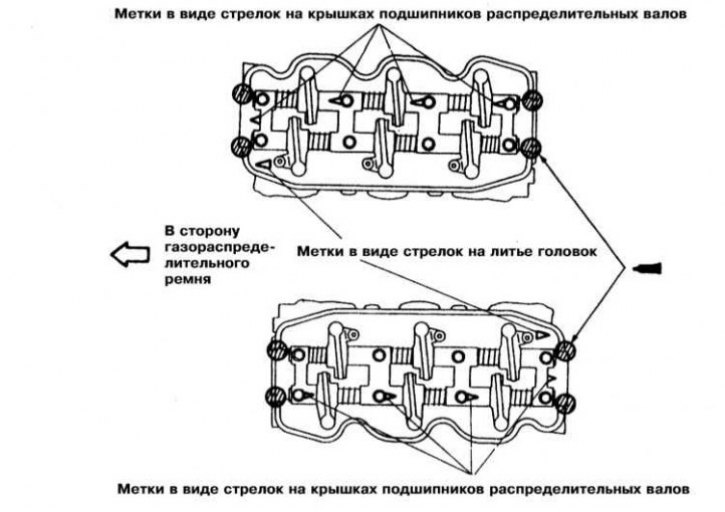
3. Lubricate the bearing cap mounting surfaces with sealant and install the valve drive mechanism assembly into the head. Make sure that the arrow marks are correct and install the bearing caps. Screw in the cap mounting bolts and, acting in a strictly defined order (No. 1, No.2, No.1 and No.4), tighten them to the required torque (10 N·m).
4. Proceeding in the same order, tighten the bearing cap mounting bolts to 20 Nm.
5. Remove the devices that secure the hydraulic valve clearance adjusters from the rocker arms.
6. Install the camshaft gear.
7. While holding the shaft from turning, use special tools to tighten the wheel mounting bolt to the required force (90 Nm).
8. Install the timing belt and cylinder head covers.
9. After replacing the sealing ring, install the distributor adapter.
10. Install the intake manifold plenum support bracket.
11. After ensuring that the mounting marks are aligned correctly, install the ignition distributor assembly onto the engine.
12. Connect the negative cable to the battery. Start the engine and check for signs of developing leaks.
3.5L engines
Removal
1. Installation details of the valve train components on 3.5L models are shown in the illustration.
2. Disconnect the negative cable from the battery.
If your car stereo system is equipped with a security code, make sure you have the correct combination to activate the audio system before disconnecting the battery!
3. Remove the timing belt (see Section Removal and installation the timing belt cover and timing belt).
4. Remove the cylinder head cover(s).
5. Using special clamps, fix the hydraulic correctors on the rocker arms of the valve drive. Loosen, but do not completely unscrew, the bolts securing the camshaft bearing caps.
6. Remove the rocker arm assembly with its axles.
7. Remove the camshaft(s).
Installation
1. Lubricate the camshaft(s) with thick engine oil and lower it into its seat in the cylinder head.
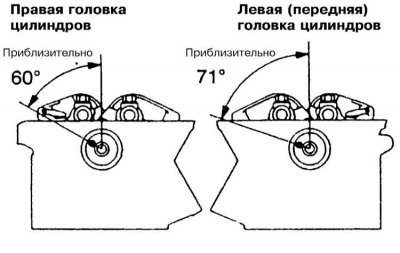
2. When installing the shaft, make sure that it is correctly turned in the head - use the position of the anti-knock pin as a guide.
3. Install the valve drive mechanism assembly (rocker arms with their axles) and the camshaft bearing caps. Screw in the mounting bolts and tighten them to the required torque (31 N·m).
4. Install the cylinder head cover(s), - do not forget to replace the sealing gasket.
5. Install the timing belt and other components removed for access.
6. Connect the negative cable to the battery. Start the engine and check for signs of developing leaks.
Evaluation of the degree of wear of the camshaft cams
The lift height of the camshaft cam determines the amount of valve opening, which is why cam wear has a direct impact on engine performance.
Measuring the cam lift height can be done in two ways (depending on the availability of appropriate tools at hand).
Determining the cam lift height using a dial gauge
1. Determining the cam lift height using a plunger-type dial gauge can be done in situ (without removing the shaft from the engine). The measurement is made for each cam separately.
2. To gain access to the camshaft, remove the cylinder head cover.
3. Mount the gauge so that its working plunger is directly above the surface of the cam to be tested.
4. Turn the engine so that the camshaft cam is facing down and reset the meter to zero.
The engine can be turned remotely using the starter, or manually using the crankshaft pulley bolt. Remember that the crankshaft can only be turned in the normal direction!
5. Slowly continue to turn the shaft until the tappet is in the maximum lowered position (fully open valve).
6. Read the maximum reading of the device and compare it with the permissible values specified in the Specifications.
7. If the wear of any of the cams is outside the permissible range, the shaft must be replaced together with the valve tappets.
8. After completing the check, remove the gauge and replace the cylinder head cover.
Measuring with a micrometer
1. The degree of wear of the camshaft cams can be assessed using a micrometer only after preliminary dismantling of the shaft.
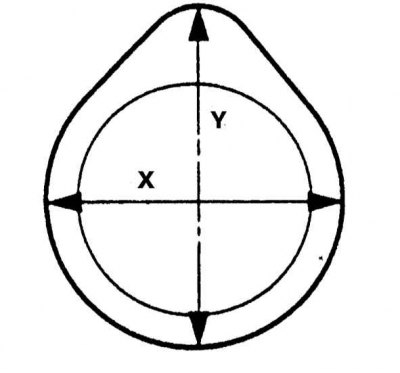
2. The measurement is carried out in two stages. First, the full working height of the cam (Y) is determined, then its width (X) (the base diameter of the eccentric). To determine the cam lift height, subtract the result of the second measurement from the result of the first measurement.
3. Compare the calculation results with the requirements of the Specifications. If any of the cams is worn below the permissible limit, the shaft must be replaced as an assembly with the valve tappets.