



Contents: Start ⤓ Normal conditions ⤓ Over-enrichment of the fuel-air…⤓ At very low ambient temperatures ⤓
Do not keep the starter engaged for more than 10 seconds, as this may cause a severe discharge of the battery. If the engine does not start, return the ignition key to the "LOCK" position, wait a few seconds, and then try again. Re-engaging the starter before the engine has completely stopped may damage the starter.
If the engine does not start due to a partially or completely discharged battery, follow the engine starting instructions in the Jump Starting section.
The engine is considered warmed up sufficiently when the coolant temperature gauge needle starts moving (engine speed decreases). Warming up the engine for too long will increase fuel consumption.
Warning! Never run the engine in a closed or poorly ventilated area longer than necessary to enter or exit. Carbon monoxide in exhaust gases is odorless and can be fatal.
Note: Replacing the battery will clear the ECU codes, which may cause the engine to run erratically.
(The original was published on the website: mitsubishiman)
Warning! Do not attempt to start the engine by towing or pushing the vehicle. This can be very dangerous.
Caution: Do not run the engine at high speed or drive the vehicle at high speed until the engine has fully warmed up.
Release the ignition key immediately after the engine starts to avoid damaging the starter.
Start
This vehicle is equipped with an engine with an electronic fuel injection system with automatic control. When starting the engine, do not press the accelerator pedal.
Normal conditions
The procedure for starting the engine is as follows.
Insert the key into the ignition and fasten your seat belt.
Raise the parking brake lever.
Press and hold the brake pedal.
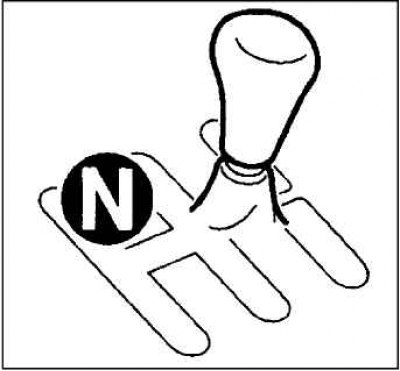
Place the gear shift lever in the "N" (Neutral) position.
Press the clutch pedal all the way down.
After the ignition key has been turned to the "ON" position, check that all indicator lights are working properly before starting the engine.
Turn the ignition key to the "START" position without pressing the accelerator pedal and release the key when the engine starts.
Note: Clicking sounds heard immediately after starting the engine are caused by the design features of the engine. This is not a sign of a malfunction. The clicking sounds will disappear as the engine warms up further. If these noises do not disappear after the engine warms up, contact an authorized MITSUBISHI dealer to have the vehicle checked.
Over-enrichment of the fuel-air mixture (flooding of spark plugs)
If the fuel-air mixture becomes too rich when starting the engine (the so-called "flooding of the spark plugs"), first turn on the starter for 5–6 seconds with the accelerator pedal fully depressed, then start the engine without pressing the accelerator pedal.
At very low ambient temperatures
If the engine does not start, press the accelerator pedal approximately halfway while cranking the engine with the starter. As soon as the engine starts, release the accelerator pedal.