



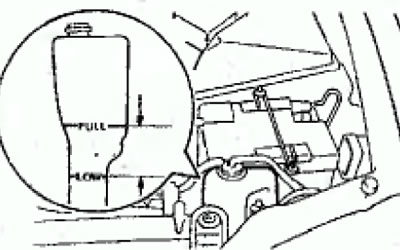
Fig. 1.4. Location of LOW and FULL marks on the expansion tank
If the coolant level in the expansion tank has dropped below the LOW mark, open the tank cap and add liquid. If there is no coolant in the expansion tank at all, also remove the radiator cap and add coolant to it up to the filler neck level.
Warning: Do not remove the radiator cap or expansion tank cap when the engine is hot, as escaping steam can cause severe burns. To avoid this, cover the radiator cap with a thick piece of cloth and slowly unscrew it until a hissing sound is heard. After the hissing stops, unscrew and remove the radiator cap.
Antifreeze
The coolant contains ethylene glycol with an anti-corrosion additive. The cylinder head and water pump housing are made of aluminum alloy and to prevent corrosion, it is necessary to periodically replace the coolant. Use only MITSUBISHI Genuine Coolant or equivalent. Genuine MITSUBISHI coolant has excellent anti-corrosion properties, it protects all metals, including aluminum, from corrosion and rust and helps prevent deposits in the engine radiator, heater, cooling jacket of the cylinder head, cylinder block, etc. The coolant must contain anti-corrosion additives, so it cannot be replaced with plain water even in summer. The required concentration of antifreeze in the coolant depends on the expected air temperature.
Warnings
(1) If the concentration of antifreeze in the coolant is less than 45%, the anti-corrosion performance of the coolant will be significantly reduced. In addition, if the concentration of antifreeze in the coolant is more than 60%, the cooling ability of the coolant will decrease, which will adversely affect the performance of the engine. For these reasons, make sure that the concentration of antifreeze in the coolant is within the required range.
(2) Do not use a mixture of different brands of antifreeze.
[The article is reprinted from a web resource: MITSUBISHIMAN]