



Ignition switch
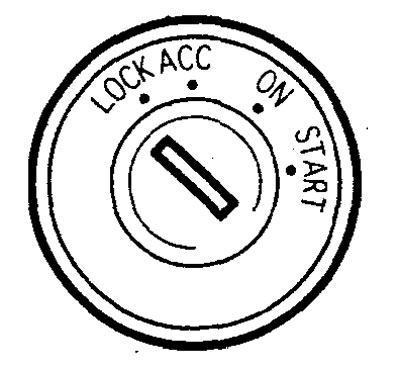
There are four fixed positions of the ignition switch:
- LOCK: In this position, you can insert or remove the key from the ignition switch. When the key is removed, the steering wheel is locked.
- ACC: in this position you can use the following electrical devices: radio, cigarette lighter and control the outside mirrors.
- ON: In this position, the engine is running. When the engine is started, the indicators of various vehicle systems light up.
- START: This position starts the engine.
Starting the engine
Caution: Do not allow the engine to run at high speed for a long time or accelerate sharply when not warmed up.
1. Apply the parking brake.
2. Turn off unnecessary lights and auxiliary equipment.
3. Set the selector to the "P" position (models with a CVT or automatic transmission). If you restart (the engine stalls), set the selector to the "N" position (models with a CVT) or the gearshift lever to the neutral position (models with a manual transmission). Press the brake pedal and hold it until you start moving.
4. Start the engine.
Turn the ignition key to the "ON" position. Without pressing the accelerator pedal, crank the engine by turning the ignition key to the "START" position. Release the ignition key when the engine starts.
Caution: Do not crank the engine for more than 15 seconds at a time. This may cause the starter and electrical connections to overheat. If the engine does not start within 15 seconds, wait about one minute before trying again.
5. After the engine warm-up speed has been automatically reduced, the vehicle is ready to drive. Note: If the weather is frosty, let the engine warm up for a few more minutes before driving. However, if necessary, you can drive immediately after reducing the engine warm-up speed.
If the engine does not start...
1. Before performing any checks, ensure that the starting procedure (see the relevant section) has been performed correctly and that there is sufficient fuel in the tank.
2. If the engine crankshaft does not turn or turns too slowly:
The article is reprinted from a web resource (www.MitsubishiMan.ru)
- a) Check that the battery terminals are securely tightened and clean.
- b) If the battery terminals are OK, turn on the interior lighting. If there is no lighting, it is dim, or it goes out when the engine is cranked by the starter, then the battery is discharged.
- c) If the lighting is normal, but the engine does not start, then the engine is faulty.
3. If the engine crankshaft turns normally, but the engine does not start:
- a) Check the tightness of the connectors (for example: spark plug connections, ignition coils).
- b) If the connectors are OK, the spark plugs may be "flooded" due to repeated cranking of the engine crankshaft.