



General information
To ensure optimum crankcase gas flow, the stroke of the plunger of the positive crankcase ventilation valve always depends on the vacuum in the intake manifold. At low engine loads, the crankcase gas flow is limited to ensure stable engine operation, and as the load increases, the crankcase gas flow through the valve increases to increase the efficiency of crankcase ventilation.
System check
1. Disconnect the ventilation hose from the positive crankcase ventilation valve.
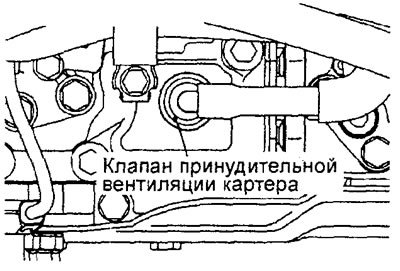
GDI engine.
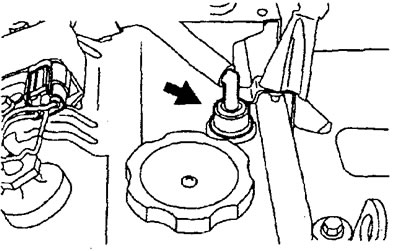
MPI engine.
2. Remove the positive crankcase ventilation valve from the cylinder head cover.
3. Connect the positive crankcase ventilation valve to the ventilation hose.
4. Start the engine and let it idle.
5. Close the valve hole with your finger and check for vacuum in the intake manifold.
[Information copied from the website: MitsubishiMan.ru]
Note: At this point, the PCV valve plunger moves back and forth.
6. If vacuum is not felt, clean the positive crankcase ventilation valve with solvent or, if necessary, replace the valve.
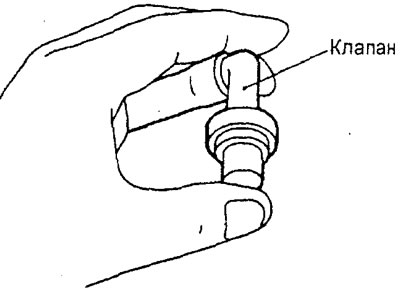
7. Install the positive crankcase ventilation valve back into place.
Checking the Positive Crankcase Ventilation Valve
1. Remove the positive crankcase ventilation valve from the cylinder head cover.
2. Insert a thin rod into the positive crankcase ventilation valve from the threaded side and, moving the rod back and forth (approximately 5 - 10 mm), check that the plunger moves (under the action of the valve spring).
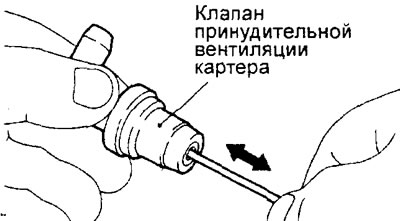
3. If the plunger does not move or moves very slowly, there are deposits in the positive crankcase ventilation valve. In this case, the valve must be cleaned or replaced.