



General information
The three-way catalytic converter works in conjunction with the oxygen sensor feedback air-fuel ratio control system. The catalytic converter oxidizes carbon monoxide (CO) and hydrocarbons (CH) and reduces nitrogen oxide (NOx) emissions. When the stoichiometric air-fuel ratio is maintained, the three-way converter provides the highest cleaning efficiency for three groups of substances, namely CO, HC and NOx.
Removal and installation
− The parts are removed in the order of the numbers indicated in the figure "Removing the catalytic converter".
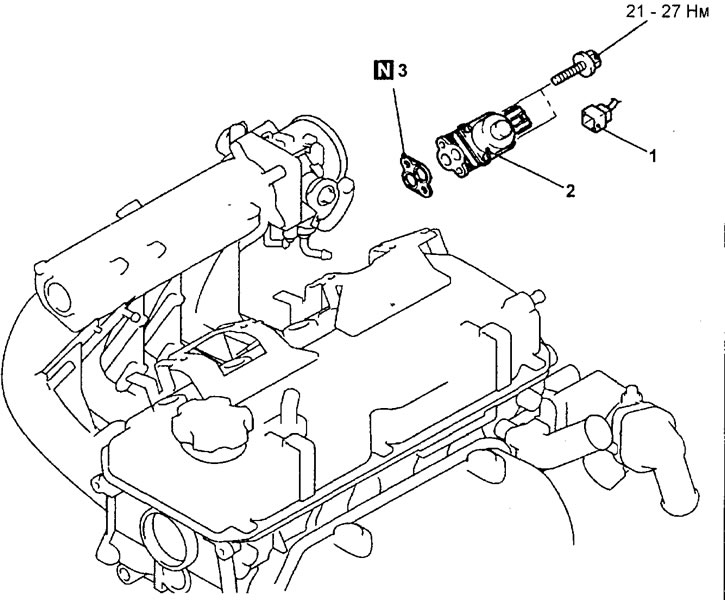
Removal the EGR valve servo (4G93-MPI engine). 1 - EGR valve servo wiring harness connector, 2 - EGR valve, 3 - EGR valve gasket.
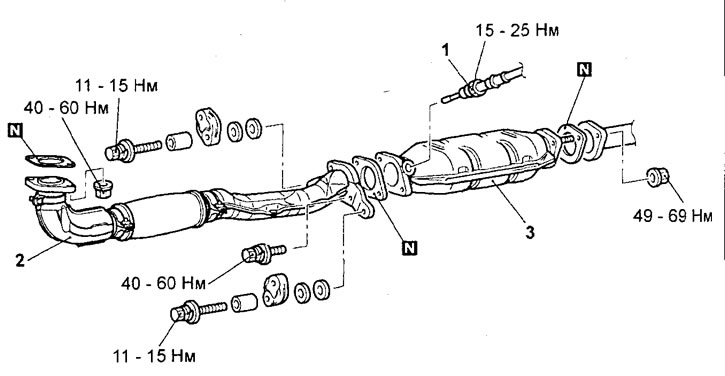
Removal the catalytic converter. 1 - catalytic converter temperature sensor (GDI engines) or oxygen sensor (rear, 4G15-MPI engine), 2 - exhaust pipe, 3 - catalytic converter.
− Installation of parts is carried out in the reverse order of removal.
Checking the catalytic converter
Check for damage, cracks or melting. Replace the catalytic converter if faulty.
Attention:
- - Necessary maintenance and adjustment in accordance with the manufacturer's technical data should be carried out as quickly as possible.
- - Do not run the engine (including idling) if the engine is misfiring, as this will cause abnormally high temperatures in the exhaust system, which may cause damage to the catalytic converter or components under the vehicle body.
- - A change in the design or deterioration of the technical condition (destruction, aging, wear or oxidation) of the ignition system or fuel system, or a change in the operating condition of any other system that may cause misfiring in the engine, must be corrected immediately to avoid overheating of the catalytic converters.