



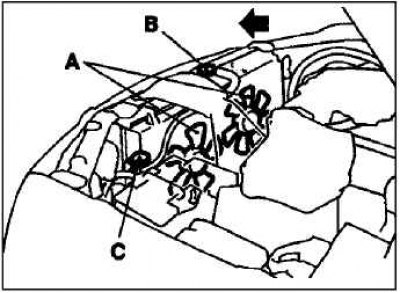
A – cooling system fan.
B – radiator cap.
C – expansion tank.
If the coolant temperature gauge needle is in the overheating zone for a long time, this indicates that the engine is overheating. In this case, take the following measures.
Stop the car in a safe place.
Without turning off the engine, lift the hood to ventilate the engine compartment.
[The material was created based on the website: www.mitsubishiman.ru]
Caution! When opening the hood, be careful as boiling coolant may be ejected. The hood support rod may also be very hot.
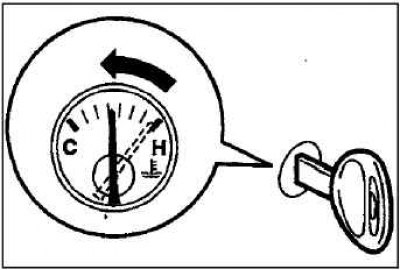
Beware of hot steam that may escape from under the expansion tank cap.
Do not open the radiator cap while the engine is hot.
After the coolant temperature has dropped to normal, turn off the engine.
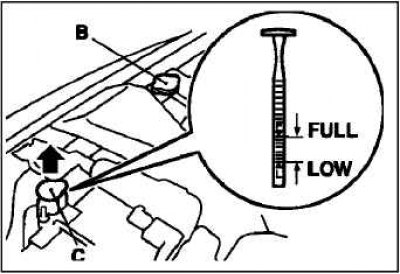
Check the coolant level in the expansion tank. If there is no coolant in the tank, wait until the engine cools down before opening the radiator cap. Otherwise, hot steam or boiling liquid may be ejected from the radiator filler neck.
Add coolant to the radiator and/or expansion tank if necessary.
Caution! Rapidly adding cold water (coolant) when the engine is still hot may cause cracks in the cylinder head and/or cylinder block. Therefore, add water (coolant) in small portions while the engine is running.
Check the radiator hoses for coolant leaks and the fan belt for looseness or damage. If there is any problem with the cooling system or if the fan belt is damaged, contact an authorized MITSUBISHI dealer to have the problem repaired.