



Checking the level and filling the engine oil
The quality of the engine oil used has a significant impact on the technical characteristics of the engine, its service life and starting qualities. Only oil of the recommended quality and viscosity should be used.
All engines consume some amount of oil during normal operation, and oil consumption depends largely on the load, engine speed, etc. Therefore, the oil level should be checked regularly, especially before long trips. The oil level should be checked with the engine warmed up but not running. Stop the vehicle on a level surface, turn off the engine and wait a few minutes for the oil circulating in the lubrication system to drain into the oil pan. This will ensure the accuracy of the engine oil level measurement. Remove the dipstick and wipe it with a clean cloth. Insert the dipstick until it stops. Remove the dipstick and determine the oil level, which should be between the two marks on the dipstick. If the oil level is below the permissible level, remove the plug from the oil filler neck in the cylinder head cover and add oil to the specified level.
Use only the recommended motor oil and do not mix different types of oil. If possible, do not mix oils from different manufacturers.
After adding oil, tighten the oil filler cap tightly.
Use only the recommended ACEA or API grade oils listed in this manual
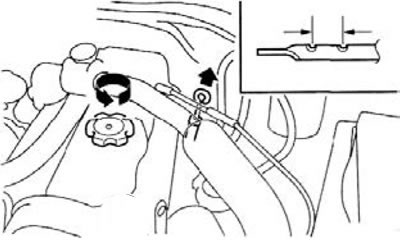
Models with 2500 cc engine
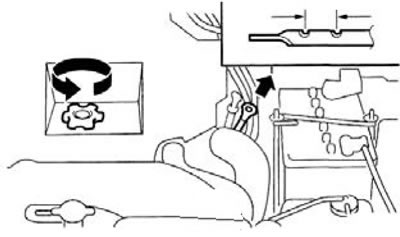
Models with 3200 cc engine
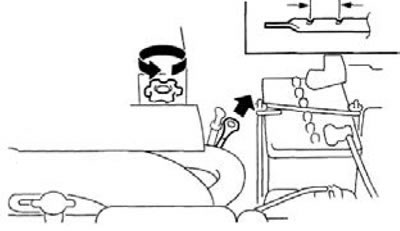
Models with 3500 cc engine
Note:
- Engine oil consumption depends largely on the load, engine speed, etc. It can reach 1 l/1000 km depending on the driving style.
- When operating the vehicle in particularly difficult conditions (for example, when driving on bumpy, mountainous roads, on roads with steep ascents and descents, or when traveling short distances) motor oil quickly loses its properties. In such cases, the frequency of engine oil changes should be reduced.
Selecting motor oil
Cars with gasoline engines
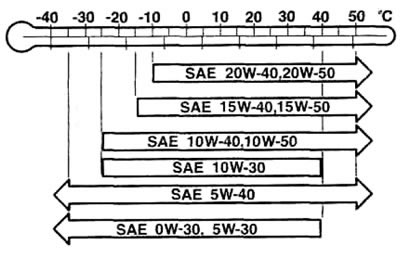
It is necessary to select engine oil of the appropriate viscosity according to the SAE classification depending on the air temperature. Motor oils of SAE 0W-30, 5W-30 and 5W-40 classes can only be used if they meet ACEA 3A and API SG (or higher) classes.
You should use motor oil that meets the following class:
- According to ACEA classification: "For operating conditions A1, A2 or A3";
- API classification: "For SG service conditions" or higher.
Note:
- It is not recommended to use additional additives, as they can reduce the effectiveness of the additives included in the motor oil. As a result, the engine may be damaged.
- Cars with diesel engines
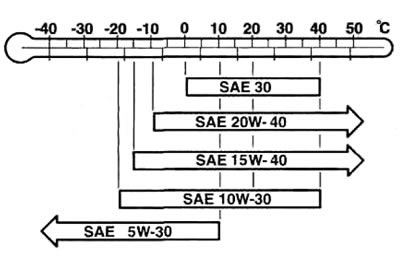
(The original material is here MITSUBISHIMAN.ru)
It is necessary to select engine oil of the appropriate viscosity according to the SAE classification depending on the air temperature.
You should use motor oil that meets the following class:
- According to ACEA classification: "For operating conditions B1, B2, B3 or B4".
- API classification: "For CD operating conditions" or higher.
Note:
- It is not recommended to use additional additives, as they may reduce
- the effectiveness of additives included in the motor oil. As a result, the engine may be damaged.