



During operation, any engine consumes a certain amount of oil. Therefore, it is important to check the oil level in the engine after certain runs (time intervals) and before a long trip.
During the check, the car should be parked on a flat horizontal surface with the engine off and warmed up to normal operating temperature. If the engine was running before the check, wait a few minutes for the oil to drain into the engine oil pan and its level to be determined accurately.
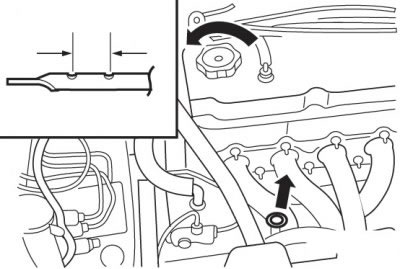
Fig. 2.1. Engine oil level indicator (dipstick) for cars with gasoline engines
Remove the oil level indicator (dipstick), wipe it with a clean rag and reinsert it all the way into the hole. Remove the oil level indicator and check the level. It should always be between the "MIN" and "MAX" marks (Fig. 2.1 and 2.2).
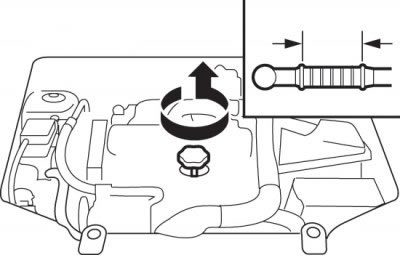
Fig. 2.2. Engine oil level indicator (dipstick) for vehicles with diesel engines
If the oil level is below the specified limit, remove the oil filler cap and add oil. Then check the oil level again. If it is normal, replace the oil filler cap and make sure it is closed tightly and securely.
Use only API or ACEA recommended oils as specified in this manual.
Attention! Engine oil consumption largely depends on the vehicle's payload, engine speed, driving style, etc. and can reach 1.0 l/1000 km.
Attention! The technical characteristics (quality) of engine oil can quickly deteriorate when operating the car in unfavorable conditions (for example, with frequent trips on bad roads and short distances, in high mountains, on roads with many descents and ascents). In these cases, the oil should be changed more often.
Choosing Motor Oil for Cars with Gasoline Engines
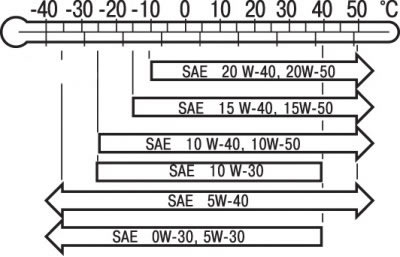
Fig. 2.3. Viscosity of motor oil depending on temperature for cars with gasoline engines
It is necessary to select a motor oil with the appropriate viscosity-temperature characteristic according to SAE depending on the ambient air temperature. Use only motor oils according to the ACEA A3 classification for oils with a viscosity of OW-30, 5W-30 and 5W-40 (Fig. 2.3).
Use the following motor oil:
- according to the ACEA classification - "For service A1, A2 or A3";
- according to API classification - "For service SG" or higher.
Attention! It is not recommended to add any additives to the motor oil, as this may disrupt the balance of additives already present in the oil and as a result lead to damage to engine components and parts.
Choosing Motor Oil for Diesel Cars
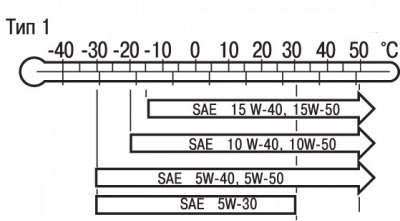
Fig. 2.4. Viscosity of engine oil (type 1) depending on temperature for cars with diesel engines
Select engine oil with the appropriate viscosity-temperature characteristic according to SAE depending on the ambient air temperature (Fig. 2.4).
Use motor oil:
- type 1: according to ACEA classification - "For service B2-96 or B3-96";
- type 2: according to API classification - "For service CF".