



- The location of the air conditioning system pipelines is shown in Figure 18.35.
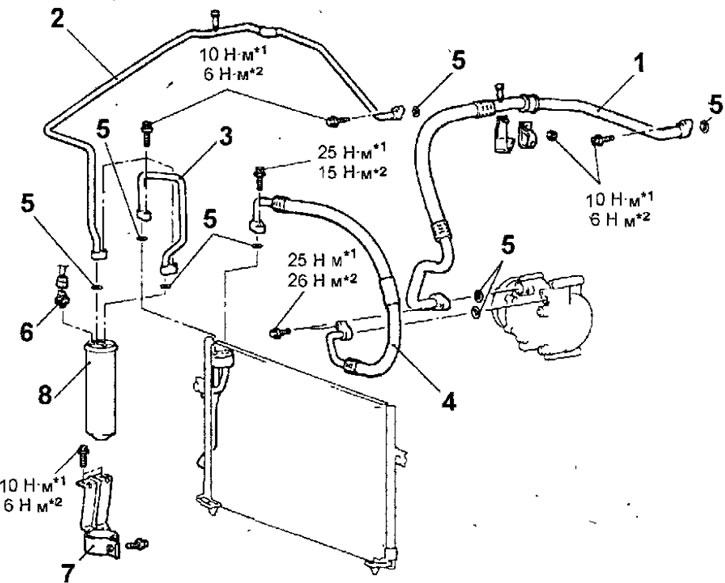
Fig. 18.35. Air conditioning system tubes and hoses: 1 - suction hose; 2 - tube B for refrigerant; 3 - tube A for refrigerant; 4 - discharge hose; 5 - sealing ring; 6 - dual pressure sensor; 7 - receiver-dryer bracket; 8 - receiver-dryer
Note: In Figure 18.35 *1 bolts and nuts with flange are marked, and *2- bolts and nuts with washers.
- The efficient operation and service life of the air conditioning system depend on the chemical stability of the air conditioning system components.
- When impurities such as dirt, air or moisture enter the air conditioning system, they change the stability of cooling, deteriorate the properties of the compressor oil. They also affect the pressure and temperature in the system, reduce the efficiency of its operation and lead to internal corrosion and abnormal wear of moving parts.
- To maintain chemical stability in your air conditioning system, follow these steps:
- after disconnecting the system elements, close the open connections as soon as possible with plugs or adhesive tape, which will prevent dirt, air or oil from entering the system;
- Do not keep the air conditioning system circuit open longer than necessary to complete the job;
The original article is on (MitsubishiMan.ru)
- When installing new air conditioning system components, remove them from their packaging immediately before installation;
- After opening the air conditioning system circuit, evacuate the air and charge the system with refrigerant.
- All O-rings of standard air conditioning system connections are not reusable. Before installing new O-rings, lubricate them with compressor oil.
- When replacing any component of the air conditioning system with a significant refrigerant leak, add oil to the system to maintain its original level.