



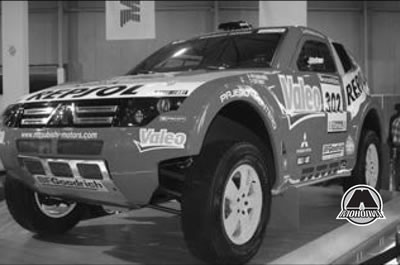
In 2007, the Mitsubishi Pajero won the Dakar Rally, the world's most challenging and intense cross-country automobile race, for the sixth year in a row. Only Pajero, created for harsh conditions, managed 12 times in the history of the famous rally not only to pass the most difficult route to the end with dignity, but also to become the absolute leader of the races. And only the decision to cancel the rally in subsequent years for safety reasons (in connection with the threat of terrorist attacks on African territory) prevented the team from proving its superiority again and again. All this is the result of more than 25 years of development history of the Mitsubishi Pajero model.
The Pajero name first appeared in Mitsubishi in 1978. At that time, at the Tokyo Motor Show, the public was shown a car based on the Jeep model, which had been produced since the middle of the last century. The utilitarian army SUV was decorated with chrome, alloy wheels, and some other little things, thus creating a beach car.
The history of the production model begins in 1981, when the first generation Pajero was first presented in Tokyo. Interestingly, in some export markets, Pajero was sold under the names Montero and Shogun. The angular design of the three-door body, powerful bumper and strong underbody protection indicated that the car was intended primarily for off-road use. The same was indicated by the powerful power units installed on the car and the suspension design - independent torsion bar at the front and leaf spring dependent at the rear.
The utilitarian interior did not spoil the owner with unnecessary luxury. It is for this reason that the first generation of Pajero did not enjoy great success on the world market, but buyers for whom reliability was the main criterion were able to fully appreciate this quality of the car.
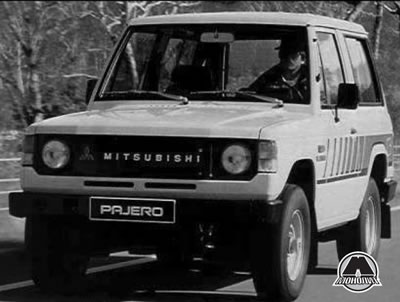
The first generation of Pajero underwent virtually no changes during its ten years of existence.
In January 1991, the second generation Mitsubishi Pajero with a modernized body and a new transmission was enthusiastically received throughout the world. The main design solutions remained the same: a powerful side member frame, independent front suspension on wishbones and longitudinal torsion bars, the rear remained dependent, but received springs instead of archaic leaf springs.
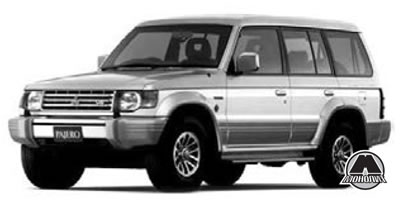
It is this model that has earned the reputation of a comfortable SUV with excellent cross-country performance. The popularity of the 1991 Pajero was due to its good looks, decent performance for an SUV, and the success of its advanced transmission.
The Pajero II was produced with a 3- and 5-door body, the latter had a 30 cm longer base and was usually designated as a Wagon. It was manufactured in 5- and 7-seater versions. The three-door version was also available with a fabric folding roof over the rear seat and a large hatch over the front seat.
In 1997, the company restyled the model, while carefully preserving the main stylistic idea. Pajero received "inflated" barrel-shaped fenders. In Europe, such cars began to be sold in 1998, while versions with narrow wheels and the same fenders continued to be produced, sold under the name Pajero Classic.
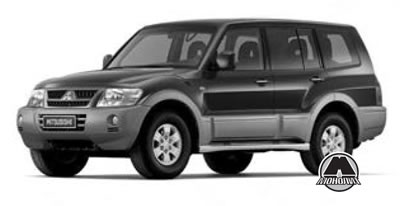
In the fall of 1999, the third generation of Pajero cars appeared (sales in Europe began in 2000). Over the 18 years of its existence, the model has earned a good reputation due to its excellent driving characteristics on roads with any surface and excellent comfort. The third generation Pajero was significantly different from its predecessors. Frame-bearing bodies became more rigid, new spring independent suspensions began to be used: on transverse levers in the front and on longitudinal and transverse levers in the rear. The five-door modification of the Pajero III generation, compared to its predecessor, has become 100 mm wider, 70 mm longer and 45 mm lower. This version can comfortably accommodate seven people. The short 3-door version has a wheelbase of 2545 mm and a capacity of 5 people.
The Pajero III sold well due to its unusual appearance and comfort, but then it became boring and, having merged with the urban landscape, ceased to attract attention. However, there are so many fans of the brand that the cars remaining at dealers were soon sold out, and the market prepared for the appearance of a new model.
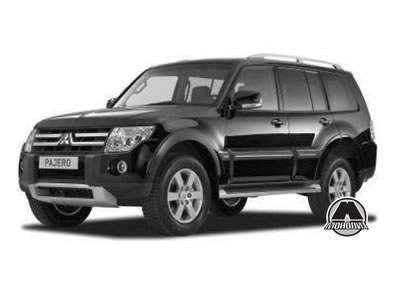
The world premiere of the Mitsubishi Pajero IV took place at the 2006 Paris Motor Show. The philosophy of the car has not changed at all over the years of its production - it still stands out from its competitors with its excellent off-road qualities and high level of comfort.
The exterior of the fourth-generation Pajero has undergone some changes, and they can rather be called a facelift. The headlights have become more slanted, the fenders have become less convex, the rear lights have acquired transparent diffusers, and the spare wheel cover has become more intricate. The front bumper is decorated with a metal plate at the bottom, and the body elements are generously decorated with chrome. Otherwise, it's the same recognizable brutal silhouette of a three- or five-door body.
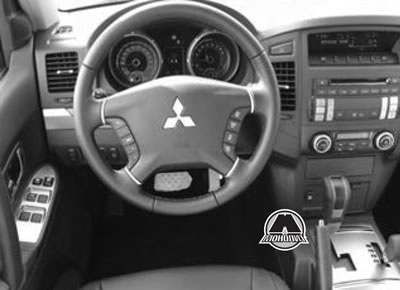
The interior has undergone more significant changes. If the previous Pajero's interior could be called more functional, the current trim lays claim to premium class. The car's interior has become more classic. The Japanese used expensive, high-quality materials in its finishing - from monolithic plastic with metal inserts in standard configurations to wood and good leather in more expensive versions. The design and illumination of the SUV's instrument scales stand out for the better. The car also has premium sound: the Rockford Acoustic Design audio system with 12 speakers, an 860-watt amplifier and a 6-disc CD changer allows you to play MP3s and is controlled from the steering wheel. This equipment is complemented by an audio-video complex with a DVD player and a rear-view video camera for parking assistance.
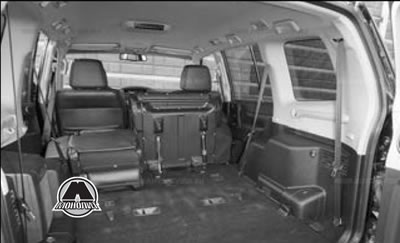
The luggage compartment door opens not upwards, as in most cars of this class, but to the right, which is not entirely usual. However, the loading height is relatively low, and the volume of the cargo compartment allows the vehicle to be used as a cargo van if necessary.
The latest generation model features a new range of engines, a new generation of safety systems, a more efficient braking system, and an improved Super Select 4WD III transmission.
The Mitsubishi Pajero IV powertrain lineup is represented by a new 6-cylinder 3.8-liter gasoline engine with 250 hp, with the proprietary MIVEC electronic valve timing control system, and a 3.2-liter Dl-D diesel engine (Direct Injection Diesel) new generation Common Rail with a capacity of 165 hp. Both engines are adapted for the conditions of countries with cold climates, and the diesel with the Cold Zone Euro 2 package, although it complies with Euro 2 and not Euro 4, should consume low-quality diesel fuel without problems. A little later, to increase sales volumes, the manufacturer added a 3.0-liter gasoline engine with a capacity of 220 hp to the engines already in the range, which has proven itself well in the popular Outlander XL model.
The petrol engine is equipped exclusively with a five-speed sequential adaptive automatic transmission INVECS-II Sports Mode. The diesel engine can be aggregated with a five-speed manual transmission at the customer's request.
The Pajero comes standard with the M-ASTC active safety and cross-country capability suite, which includes the MASC dynamic stability control system (Mitsubishi Active Stability Control), traction control system and engine brake assistance system.
(The original article is on: «www.mitsubishiman.ru»)
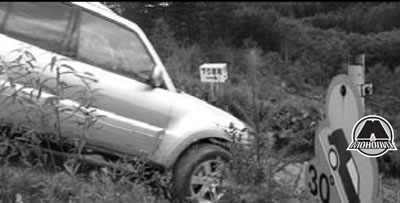
Off-road descent with a 30% slope (quite an impressive sight) for Pajero it is a completely acceptable element among other impressive obstacles when driving off-road. Thanks to its considerable weight and spring rear suspension, even on serious bumps the rear passengers are not thrown around the cabin. Considering the nature of the road and comparing the Pajero with other premium SUVs, one must acknowledge the car's careful care for rear passengers. From the driver's point of view, everything is even simpler: when there is a really difficult obstacle in front of the car, the transmission is switched to differential lock mode, and the car drags at low revs in the desired direction, worrying only about not letting go of the gas pedal completely and not stalling at a crucial moment.
Mitsubishi Pajero IV is available in three trim levels, differing in equipment level: Intense, Instyle and Ultimate. The Intense version offers the buyer a full range of necessary options, including climate control, CD receiver and velour seats. In the Instyle version, the specified set of options is supplemented by leather seats and a CD changer. The Ultimate version is available in two trim levels: the first includes an electric sunroof and a premium audio system, while the second includes a rear-view camera and DVD system.
Pajero is the embodiment of style, prestige and comfort. By choosing this car, the buyer receives excellent reliability and cross-country ability. This vehicle allows you to stand out from other vehicles in the city traffic and helps you overcome the most difficult and impassable sections even where other SUVs cannot.
This manual provides instructions for the operation and repair of all modifications of the fourth generation Mitsubishi Pajero, produced since 2007:
| Mitsubishi Pajero IV | ||
| 3.0 MIVEC Years of production: 2008 - present Body type: station wagon Engine capacity: 2998 | Doors: 3/5 KP: auto. | Fuel: gasoline AI-95 Fuel tank capacity: 88 l Consumption (city / highway): 13.6 / 10.0 l/100 km |
| 3.2 DI-D Years of production: 2007 - present Body type: station wagon Engine capacity: 3200 | Doors: 3/5 Transmission: manual, automatic. | Fuel: diesel Fuel tank capacity: 88 l Consumption (city/highway): 13.1 / 9.1 l/100 km |
| 3.8 MIVEC Years of production: 2007 - present Body type: station wagon Engine capacity: 3828 | Doors: 3/5 KP: auto. | Fuel: gasoline AI-92 Fuel tank capacity: 88 l Consumption (city / highway): 17.7 / 11.2 l/100 km |