



Clutch cover assembly
1. Check the spring disc. If signs of abrasive wear or a height difference exceeding the maximum permissible value are detected, replace the clutch cover with a new part (See the picture).
Maximum permissible height difference: 0.3 mm.
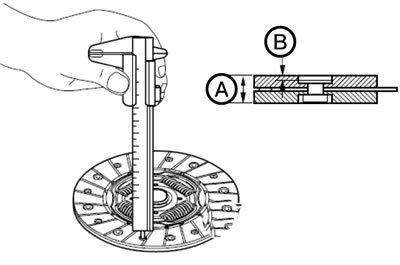
2. Check the pressure plate for abrasion, cracking or discoloration.
3. Check the rivets. If any rivets are found to have fallen out, replace the clutch cover assembly.
Clutch disc
1. Do not clean the clutch disc with gasoline.
2. Check the clutch disc. If carbon deposits, large oil stains on the surface or fallen rivets are found, replace the clutch disc with a new part.
3. Check the shock absorber spring. If weak or damaged springs are found, replace the clutch disc.
4. Install the clutch disc on the input shaft, check the slip and rotation of the disc. If sliding interference occurs, clean the disc. If significant play is detected, replace the clutch disc, input shaft, or both parts simultaneously.
Clutch release bearing
Note: Do not clean the release bearing using gasoline, as the bearing contains grease.
1. Check the release bearing for signs of burning, damage, abnormal noise or interference when rotating.
2. If traces of abrasive wear are detected, replace the release bearing.
3. If traces of abrasive wear are found on the release fork, replace the fork.
Clutch release cylinder
1. Check the inner surface of the release cylinder for signs of abrasive wear.
2. Measure the inside diameter at the base, middle and top of the clutch release cylinder.
If the clearance between the piston and the cylinder exceeds the maximum permissible value, replace the release cylinder with a new part.
Maximum allowable value: 0.15 mm.