



- hardened rubber on the outside of the belt. The outside of the belt is shiny, inelastic and so hard that no marks are left on it when pressed firmly with a fingernail (Figure 4.3);
- cracks in the rubber on the outer side 1 (Figure 4.4a);
- cracks or delaminated material 2 (Figure 4.4b);
- cracks at the base of tooth 3 (Figure 4.4);
- cracks along the sides of belt 4 (Figure 4.5);
- the sides of the belt are badly worn (Figure 4.5);
- heavily worn teeth (Figure 4.6);
- Initial stage: The material on the side of the belt that was subjected to greater load is worn out (the fabric is frayed, the rubber is peeling, the color has turned white); the structure of the material is not determined).
- Final stage: The fabric on the side surface of the teeth on the side of greater load is worn out and the rubber is completely exposed (the width of the tooth has decreased);
- broken teeth (Figure 4.6).
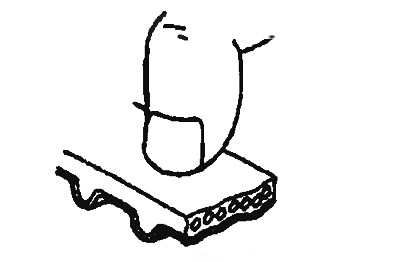
Figure 4.4a. The outer side of the belt is so hard that no marks are left on it when you press hard with your fingernail | 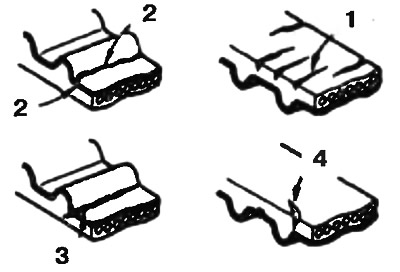
Figure 4.4b. Cracks and delamination of the drive belt |
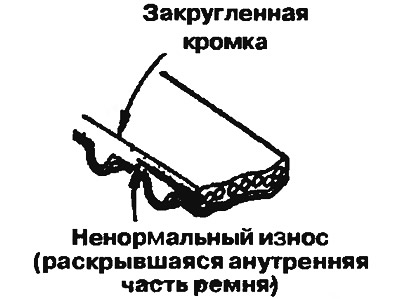
Figure 4.5. Condition of the side surface of the belt | 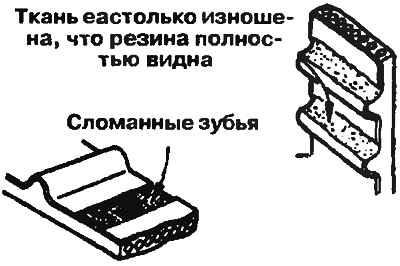
Figure 4.6. Belt wear |