
English Русский
Български
Беларускі
Український
Српски
Hrvatski
Română
Polski
Slovenský
Magyar
Articles Bookmark Contacts Sitemap   
Company Audi Company Ford Company Hyundai Company Kia Company Mazda Company Mercedes-Benz Company Nissan
MitsubishiMan.ru


Home Colt Lancer Galant L200 Outlander Pajero Others
Pajero 4 (2006-2021) Pajero 1 and 2 (1982-1999)

Control and measuring instruments (Mitsubishi Pajero 4)

  • Home
  • Pajero
  • 4 (2006-2021)
  • General information
  • User manual
  • Control and measuring instruments
0


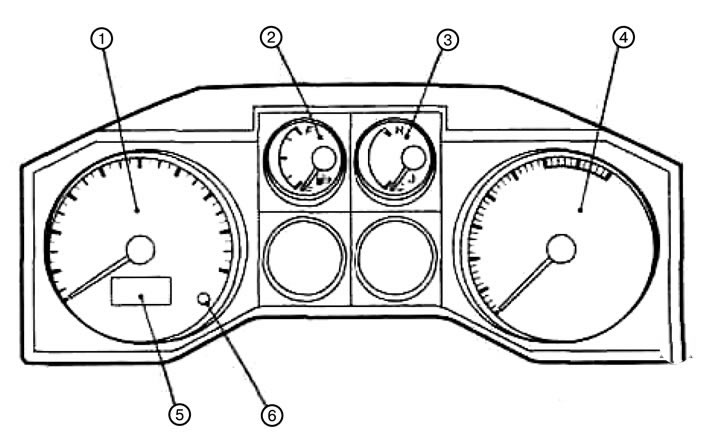
1. Speedometer. 2. Fuel gauge. 3. Coolant temperature gauge. 4. Tachometer. 5. Odometer/trip meter. 6. Trip meter reset button.


Speedometer


Kilometers per hour readings
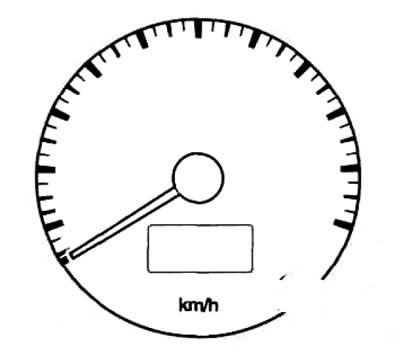


This speedometer shows the speed of the car in kilometers per hour (km/h, km/h).

Kilometers per hour and miles per hour readings
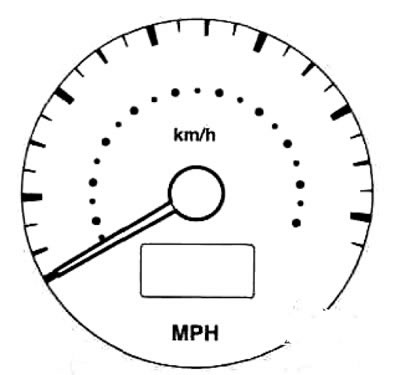


This speedometer shows the speed of the car in miles per hour (miles/hour, mph) and kilometers per hour (km/h, km/h).


Tachometer
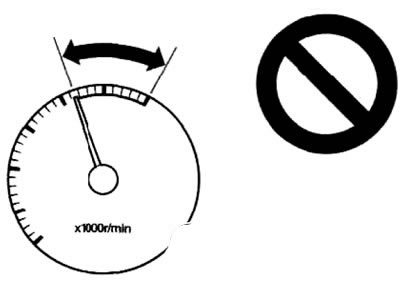


The tachometer indicates the engine crankshaft speed (rpm). The tachometer allows you to select a more economical driving mode and warns you when the engine speed reaches excessive levels.

Caution: While driving, do not allow the tachometer needle to enter the red zone (engine speed too high).


Odometer/trip counter
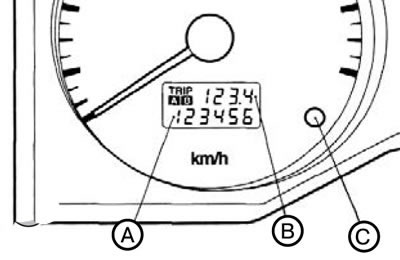


A. Odometer. B. Trip meter. C. Reset button.


When the ignition key is turned to the ON position, the odometer and trip meter are turned on.

Odometer


The odometer shows the total mileage of the vehicle.

Daily mileage counter
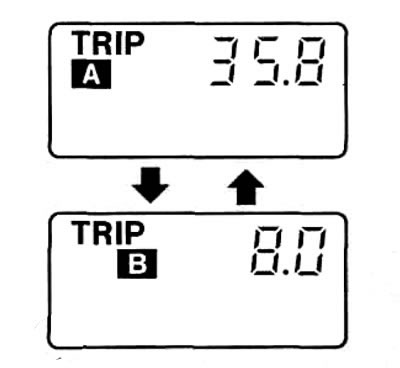


The trip meter shows the distance traveled during a single trip or over a specified period of time. The device can display two counter readings: TRIP (A) and (B).


The TRIP (A) reading can be used to measure the distance traveled since the start of the current trip.

At the same time, the TRIP (B) value can be used to measure the mileage from some intermediate moment. At each short-term (less than 1 second) by pressing the reset button (C), the daily mileage counter readings are switched between trips (A) and (B).

Resetting the trip meter


To reset the counter, press the reset button (0) for more than 1 second. Only the value currently displayed is reset; for example, if the value (A) was displayed, only it will be reset.

Note.
  • The maximum value displayed for trips (A) and (B) is 999.9 km (or miles).
  • If the battery terminal is disconnected for a long period of time, the memory of the trip meters (A) and (B) is cleared and "O" is displayed on the display.


Fuel level indicator
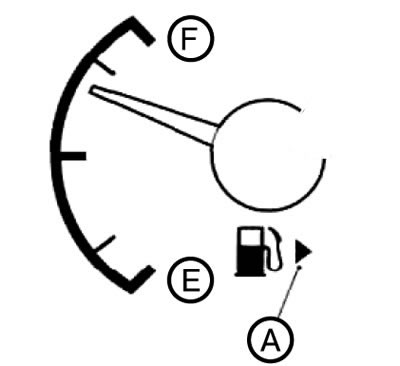


F. Full tank. E. Empty tank.


When the ignition is on, the fuel gauge shows the amount of fuel in the tank.

Warning: It is not recommended to drive a car with a gasoline engine with very little fuel in the tank; complete fuel exhaustion may damage the catalytic converter.


Note: When a diesel vehicle runs out of fuel, it may sometimes be difficult to start the engine after refueling. This occurs due to air entering the fuel system. Therefore, it is necessary to remove air from the system.


Fuel filler cap location indicator


The fuel filler cap location indicator (A) shows that the fuel filler cap is on the right side of the vehicle.

Low fuel warning light
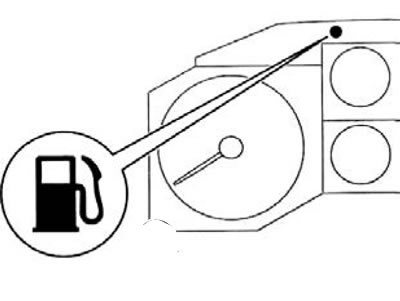


This lamp lights up when the fuel level in the tank is low.

The warning lamp comes on when the remaining fuel level is:
  • 3-door versions: approximately 10 l;
  • 5-door versions: approximately 13 l.

You should refuel as soon as possible.

Note: This lamp may come on falsely on inclines or turns due to fuel movement in the tank.


Coolant temperature gauge
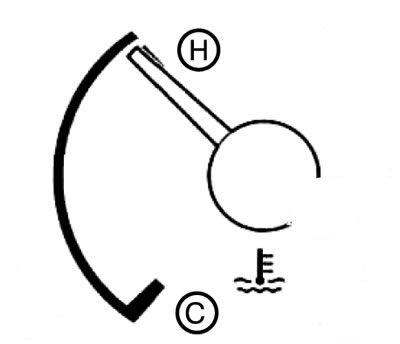


This device shows the temperature of the liquid in the engine cooling system when the ignition is on.

Caution: If the pointer enters the H zone while the engine is running, this indicates possible engine overheating. Stop the vehicle immediately in a safe place and take necessary measures. While driving, it is necessary to ensure that the engine temperature is within normal limits.


(The original can be found on the website: «www.mitsubishiman.ru»)
This article is available at: russian, bulgarian, belarusian, ukrainian, serbian, croatian, romanian, polish, slovak, hungarian
This article was reviewed by: Miroslav Rakov
Share with friends:
◀ Previous
Pajero 4: User manual
Next ▶

Replacing fuses
Driving in difficult conditions
Actions in case of unstable engine operation after replacing the battery
Towing a car
Wheel replacement
Control lamps and warning lamps for malfunctions
Central multifunction display (optional)
On-board computer (optional)
Trip computer (optional) — change display mode
Trip computer (optional) — date and time
Similar materials for other Mitsubishi models

➤ Instrument panel and control instruments Mitsubishi Colt 2 and 3 (1983-1993)
➤ Current circuit of instruments and control lamps Mitsubishi Lancer 3 and 5 (1984-1992)
➤ Window lift control Mitsubishi Galant 6 and 7 (1987-1998)
➤ Control and emergency indicator lights Mitsubishi L200 4 (2005-2014, diesel)
➤ Remote control door lock system Mitsubishi Outlander 1 (2003-2008)
➤ Control and measuring instruments and controls Mitsubishi Carisma (1995-2004)
Link in different formats to this article
Comments and feedback from visitors
No comments yet


Add up two numbers 46 + 39


Pajero 4 (2006-2021) 
  • General information
  • User manual
  • Troubleshooting
  • Maintenance
  • Technical specifications
  • Power unit
  • Engine repair
  • Cooling system
  • Lubrication system
  • Fuel system
  • Engine management system
  • Intake and exhaust system
  • Engine electrical equipment
  • Transmission
  • Clutch
  • Manual gearbox
  • Automatic gearbox
  • Drive shafts
  • Chassis and running gear
  • Front suspension
  • Rear suspension
  • Brake system
  • Steering
  • Body and interior
  • Exterior (external elements)
  • Interior (internal elements)
  • Doors, locks and windows
  • Body dimensions
  • Electrical equipment
  • Safety system (SRS)
  • Air conditioner
  • Equipment and devices
  • Electrical diagrams
Pajero 1 and 2 (1982-1999) 
  • General information
  • User manual
  • Seats and seat belts
  • Instruments and controls
  • Driving and operation
  • Maintenance
  • Power unit
  • Gasoline engines
  • Diesel engines
  • Ignition system
  • Engine electrical equipment
  • Cooling and lubrication system
  • Power and exhaust system
  • Fuel system (gasoline)
  • Fuel system (diesel)
  • Transmission
  • Clutch
  • Mechanical gearbox
  • Automatic gearbox
  • Drive shafts and axles
  • Chassis and running gear
  • Front suspension
  • Rear suspension
  • Steering
  • Brake system
  • Body and interior
  • Exterior (external elements)
  • Interior (internal elements)
  • Doors, locks and windows
  • Electrical equipment
  • Equipment and devices
  • Heater and air conditioner
  • Cruise control
  • Headlights and lighting
  • Electrical circuits
MitsubishiMan.ru © 2018–2026 • Mobile version • Articles about Mitsubishi • Contacts • Sitemap: EN BG BY UA RS HR RO PL SK HU • Site search • Bookmark
Colt 2 and 3 (1983-1993) · Colt 4 and 5 (1991-2003) · Colt 5 (1995-2003) · Lancer 3 and 5 (1984-1992) · Lancer 9 (2000-2007) · Galant 5 (1983-1989) · Galant 6 and 7 (1987-1998) · L200 4 (2005-2014) · Outlander 1 (2003-2008) · Pajero 1 and 2 (1982-1999) · Pajero 4 (2006-2021) · Carisma (1995-2004) · Space Star (1998-2005) ·
This resource sets cookies 🍪 to avoid bothering you with repeated data entry.