



Check your tires for cuts, cracks, or other damage. Replace tires with deep cuts or cracks. Inspect all tires periodically and remove any metal objects or stones that may be lodged in them. Operating tires with worn treads is very dangerous due to the high risk of skidding or hydroplaning (tires floating above the road surface filled with water). To meet the minimum performance requirements, tires must have a tread depth of more than 1.6 mm.
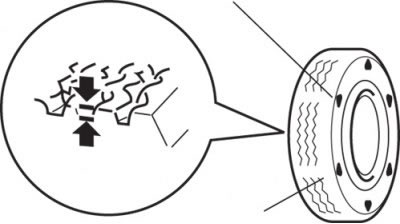
Fig. 2.14. Location of tire tread wear indicators
If the tires are equipped with wear indicators (located around the circumference), then as the tire wears, they become visible at six points on its surface, indicating that it is time to replace the tires with new ones (Fig. 2.14).
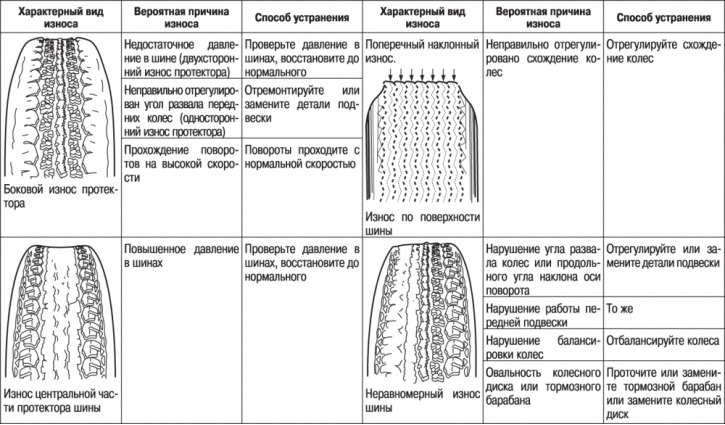
If there is uneven wear of the tires, it is necessary to find the cause and eliminate it. The types and causes of tire tread wear are given in Table 2.1.
Table 2.1. Types and causes of tire tread wear
Air leaks from a tire can be identified using soapy foam.
Carefully inspect the inside sidewall of each tire for traces of brake fluid.
Correct tire pressure prolongs the life of the tire, so it is necessary to check it regularly. Check the pressure only when the tires are cold.
Tire wear may vary depending on vehicle condition, road conditions and individual driving style. To ensure more even tire wear and extend their service life, it is recommended to rotate the wheels immediately after uneven wear or differences in wear between the front and rear tires appear.
Note: Do not install wheels of different types of tires and rims on the vehicle. This may adversely affect driving safety.