



Note: If you decide to overhaul the brake cylinders yourself, purchase a repair kit. Overhaul both brake cylinders at once - overhauling one of them is not allowed
Removal
1. Jack up the rear of the vehicle and place it on stands. Block the front wheels to prevent the vehicle from rolling.
2. Remove the brake pads (see section 6).
3. Remove dirt from around the brake cylinder.
4. Disconnect the brake line nipple from the inside of the brake shield. Use a special key to avoid rounding the corners of the fitting. Do not remove the line from the brake cylinder
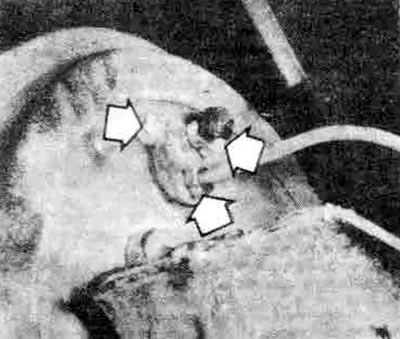
7.4 Disconnect the brake pipe connections, then unscrew the two brake cylinder bolts (shown by arrows)
5. Unscrew the brake cylinder mounting bolts from the inside of the brake shield
6. Disconnect the cylinder from the drum brake shield and place it on a clean table. Immediately plug the line to prevent dirt from entering and fluid loss.
Note: If the brake pad linings are contaminated with brake fluid, install new brake pads.
Bulkhead
7. Remove the bleeder nipple, caps, pistons, dust boots and spring from the cylinder body. Remove the sealing caps from the pistons.
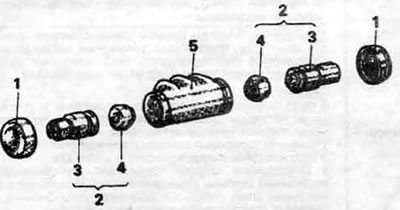
7.7. Exploded view of a brake cylinder (typical). 1. Boot, 2. Piston assembly, 3. Piston, 4. Piston cover, 5. Cylinder body
8. Clean the brake cylinder with brake fluid, alcohol or brake cleaner.
Warning: Never use kerosene-based solvents to clean brake system parts!
The text of the article was taken from the website MITSUBISHIMAN.ru
9. Use compressed air to remove any remaining liquid and blow out the channels.
10. Check the inside of the cylinder bore for corrosion and scratches. You can use velvet sandpaper to remove corrosion spots. If the defects cannot be easily removed or the bore is heavily scratched, the cylinder will have to be replaced
11. Soak the new caps in brake fluid. Inject anti-corrosion compound (included in the repair kit) into the cylinder.
12. Assemble the brake cylinder. The edges of the cap must be directed inward, otherwise the seal will be damaged.
Installation
13. Apply a thin layer of silicone sealant to the brake shield where the cylinder is installed, install the cylinder in place and tighten the bolts (but do not tighten them completely).
14. Connect the brake pipe and tighten the hose nipple, then tighten the brake cylinder mounting bolts to the torque specified in the specifications of this Chapter. Install the brake shoes.
15. Bleed the system (see section 11).
16. Before starting normal operation of the vehicle, carefully check the operation of the brakes.