



Caution: Do not remove the radiator cap when the coolant temperature is high, as this may cause injury because the coolant is under pressure.
Caution: When draining the coolant, make sure that the coolant does not come into contact with the underhood relay and fuse box, electrical devices, or painted surfaces. If coolant comes into contact with these surfaces, clean up the spilled coolant immediately.
1. Turn the heater temperature control lever to the maximum heating position. Make sure the engine and radiator are cool to the touch.
2. Remove the radiator cap.
3. Unscrew the drain plug (A) and drain the coolant.
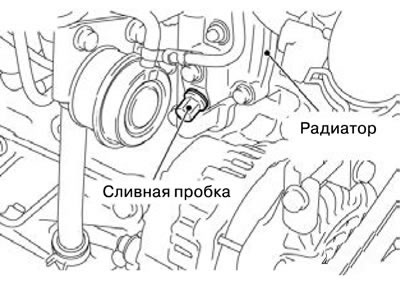
4. Tighten the radiator drain plug completely.
5. Remove the coolant expansion tank. Drain the coolant and install the expansion tank back in place. Pour new coolant into the expansion tank up to the "MAX" mark.
6. Pour coolant into the radiator.
Note: Press the inlet and outlet ports by hand several times. If the coolant level drops, add coolant.
Note: Check the concentration of antifreeze. To check the concentration of antifreeze in the coolant, it is necessary to measure the temperature and specific gravity of the coolant. Nominal value: 50%.
Attention: If the concentration of antifreeze is less than 30%, its anti-corrosion properties are significantly reduced. On the other hand, if the concentration of antifreeze is higher than 60%, both the antifreeze properties and the cooling properties of the liquid deteriorate, which negatively affects the operation of the engine. For these reasons, make sure that the antifreeze concentration is within the specified acceptable concentration range.
Caution: Do not remove the radiator cap when the coolant temperature is high, as this may cause injury because the coolant is under pressure.
7. Start the engine and let it run until the thermostat opens.
Note: Press the intake and exhaust ports by hand several times while the engine is running.
8. Repeat step 7 several times to completely bleed the air from the cooling system.
9. Install the radiator cap and fill the expansion tank with coolant up to the "MAX" mark.
10. Start the engine and let it run until the cooling fan runs two or three times.
11. Turn off the engine and wait until the coolant cools down.
12. Repeat steps 6 through 11 until the coolant level is constant and all air has been bled from the cooling system.
Note: Check the coolant level after changing the coolant after two or three days.
Coolant quantity:
- 9 l (short wheelbase model);
- 10.5 l (long wheelbase model).
(The text of the article was taken from the website mitsubishiman.ru)